Best for water
Best Underwater Metal Detectors: Submersible Machines and Wired Audio
Quick answer
A submersible machine needs wired waterproof headphones, because radio does not travel through water and wireless audio simply stops. The Minelab Equinox 900 at $999.00 is rated to 16 feet, the Minelab Excalibur II 1000 is the diving specialist, and the Nokta Simplex Ultra is the cheap way in.
There are two separate questions hiding inside underwater detecting, and most buying guides only answer one of them. The first is which detectors can go under water and how deep. The second, which decides whether you can actually hunt once you are under, is how you are going to hear the machine. Those questions have different answers and the second one is expensive.
Wireless audio does not work under water. Bluetooth and the 2.4 GHz protocols that detector makers use are radio, radio is absorbed almost immediately by water, and the connection drops the moment the control box goes under. That is physics rather than a product defect, and it applies to every wireless set on the market including the ones bundled with the machines below. A submerged machine needs a wired, waterproof, physically connected headphone set, and it is a separate purchase on most of them. The wireless headphones page covers the dry-land side of that decision.
Top pick
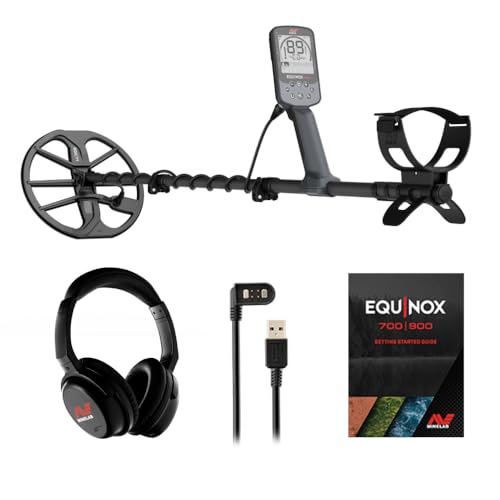
Minelab Equinox 900
Minelab publishes full waterproofing and submersion to 16 feet, Multi-IQ simultaneous multi-frequency with six single frequencies, four modes including Beach, and 2.8 lb, at $999.00. Its wired waterproof headphone option is the cleanest in the catalog.
Price was accurate when this page was compiled and changes often.
On this page
- What does "waterproof" actually mean on a metal detector?
- Beginner: wading, snorkelling and finding out if you like it
- Intermediate: the machine most water hunters settle on
- Expert: the diving and surf specialists
- How do the submersible machines compare on paper?
- Why does wireless audio stop working under water?
- What changes about technique once you are in the water?
What does "waterproof" actually mean on a metal detector?
It means one of three quite different things, and the listing will usually tell you which if you read it carefully. A waterproof searchcoil means the coil alone can go under, which covers puddles, damp sand and wading up to your ankles. Garrett states this about the Garrett ACE 200 explicitly: the coil can be submerged, the control box cannot. A weatherproof body means rain and spray but not immersion. A published submersion rating, usually stated as IP68 and a depth in feet or metres, means the whole assembled machine can go under to that depth.
The current crop of submersible machines cluster at one figure. Minelab publishes 16 feet for the Minelab Equinox 700, the Minelab Equinox 900 and the Minelab Manticore. Nokta publishes 16 feet for the Nokta Simplex Ultra and IP68 to 16 feet for the Nokta Double Score. Garrett publishes 16 feet for the Garrett Vortex VX9 and 10 feet for the older Garrett AT Pro. XP publishes 66 feet for the XP Deus II, which is an outlier and the reason it turns up in diving conversations.
Depth ratings are static pressure ratings, not promises about how you will treat the machine. Seals age, battery doors get grit in them, and a rinse in fresh water after every salt session is the difference between a machine that stays sealed and one that does not. The Minelab ratings reference and the Nokta ratings reference collect the published numbers so you are not reading marketing copy for them.
Beginner: wading, snorkelling and finding out if you like it
Most people who think they want an underwater detector actually want a machine they can wade with and not worry about. That is a much cheaper problem. A machine rated to 16 feet is entirely adequate for standing chest deep, and at that depth you can still hear a wired set clipped to your shoulder.
The Nokta PulseDive Pinpointer deserves its own mention here because it is not a detector in the usual sense. Nokta publishes IP68 to 200 feet and pulse induction operation, and sells it as a pinpointer that converts to a small scuba detector with a replaceable coil. For snorkelling around rocks and swim platforms it does a job no full-size machine does.

Nokta Simplex Ultra
$299.00Nokta publishes full waterproofing to 16 feet, a carbon fibre shaft that retracts to 25 inches for diving and transport, firmware updates over USB and 2.6 lb, at $299.00. Bluetooth headphones are not in the box, and they would not work under anyway.
Best for: wading, rivers and fresh water on a first budget
Check price on Amazon
Nokta PulseDive Pinpointer
$165.00Nokta publishes IP68 waterproofing to 200 feet, pulse induction operation that stays stable in salt water and any soil, an LED flashlight and a lost alarm, at $165.00. It converts between pinpointer and small scuba detector with a replaceable coil.
Best for: snorkelling, rock crevices and shallow diving
Check price on Amazon
Thresher Submersible Headphones for Nokta
$157.99Wired and submersible with a published depth rating over 100 feet and oversized speaker elements, at $157.99. The Simplex and the Legend both go under water and both ship with wireless sets that will not, so this is the part that makes them usable.
Best for: Simplex and Legend owners who actually submerge the machine
Check price on AmazonIntermediate: the machine most water hunters settle on
The Equinox pair is the default answer for people who hunt both land and water, and the reason is that they are genuinely good at both rather than being a compromise at either. Minelab publishes 16 feet of submersion, Multi-IQ, a Beach mode and carbon fibre shafts at 2.8 lb, and the wired waterproof headphone option is a stocked accessory rather than a hunt through the aftermarket.
Budget for the headphones at the same time as the machine, not later. A submersible detector with no wired audio is a detector you can only use as far as your ears stay dry, which is not what you paid for.
Minelab Equinox 900
$999.00Minelab publishes full submersion to 16 feet, Multi-IQ with six single frequencies, four modes including Beach and Gold, 119 high-resolution target IDs and 2.8 lb, at $999.00. Both the 11 inch and 6 inch waterproof coils are in the box.
Best for: one machine for beach, surf, rivers and dry land
Check price on Amazon
Minelab Equinox Waterproof Headphones
$170.00Wired and waterproof, made by Minelab for the Equinox series, at $170.00. The wireless set bundled with the machine stops working the moment the control box goes under, so this is not an upgrade, it is the thing that makes the machine work.
Best for: anyone submerging an Equinox
Check price on Amazon
Gray Ghost Amphibian Headphones for Minelab
$169.95DetectorPro publishes waterproofing to 200 feet, solid-state speakers built for wet conditions, sound-blocking muffs rated to 24 decibels of ambient reduction and a muff-to-muff cable with no wire frame to rust, at $169.95.
Best for: Manticore and Equinox owners who dive rather than wade
Check price on AmazonExpert: the diving and surf specialists
Up here the machines stop pretending to be all-rounders. The Minelab Excalibur II 1000 is the reference point for serious salt-water hunting: Minelab publishes BBS multiple frequency technology from 1.5 to 25.5 kHz, a NiMH pack rated to 12 hours, high-visibility fluorescent bodywork and an optional side-mount shaft for surf wading. It has no modern screen and no usable visual target ID, and the people who own one do not want those things.
The Minelab Manticore is the depth machine, and the XP Deus II is the one with the published 66 foot rating and an IP68 underwater remote. XP also lists optional bone conduction headphones for it, which is a different approach to the audio problem entirely. The Excalibur II review goes through what it gives up.
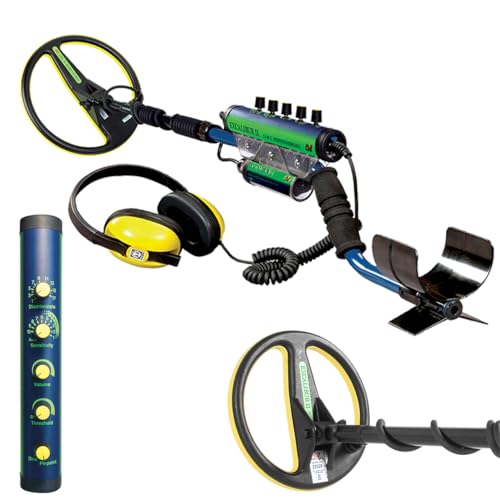
Minelab Excalibur II 1000
$1,699.00Minelab publishes BBS multiple frequency technology from 1.5 to 25.5 kHz, RCB signal amplification inside the coil for faint deep targets, a NiMH pack rated to 12 hours and an optional side-mount shaft for surf wading, at $1,699.00.
Best for: surf hunting and diving by people who want nothing else
Check price on Amazon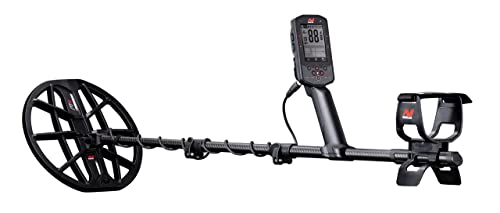
Minelab Manticore
$1,499.00Minelab publishes Multi-IQ+ at 50 percent more power than its traditional models, a 2D target ID map, ten search modes including Beach and Goldfield, and IP68 waterproofing to 16 feet, at $1,499.00. Pair it with a wired waterproof set before you go under.
Best for: an experienced hunter chasing depth in worked water
Check price on Amazon
XP Deus II
$1,299.00XP publishes 66 feet of waterproofing with an IP68 underwater remote control, Fast Multi-Frequency with 12 factory programs and 49 single frequencies from 4 to 45 kHz, and optional bone conduction headphones, at $1,299.00.
Best for: diving, and anyone who wants the lightest flagship
Check price on AmazonWho should not buy this tier: Do not buy this tier to stand in a river. The Minelab Excalibur II 1000 gives you no usable visual target ID, no menu and nothing at all for dry land, so as a one-machine household it is a poor purchase. The Minelab Manticore asks you to learn a two-dimensional target display before it repays the money, and in Beach mode on factory settings the Minelab Equinox 700 will match it for most of what you do. The XP Deus II is the most expensive machine here and its 66 foot rating is only worth paying for if you genuinely dive, because at wading depth the Nokta Simplex Ultra at $299.00 is rated far deeper than you will ever go.
How do the submersible machines compare on paper?
The audio column is the one to read twice. A machine with no wired waterproof headphone option is a machine you cannot use below shoulder depth, whatever its submersion rating says.
Most current submersible detectors are published at 16 feet, the Nokta PulseDive at 200 feet and the XP Deus II at 66 feet, and every one of them needs wired audio once the control box is under.
| Machine | Published submersion rating | Frequency approach | Wired waterproof audio option | Price |
|---|---|---|---|---|
| Nokta PulseDive | IP68 to 200 ft | Pulse induction | Wireless module, so use it by feel and vibration | $165.00 |
| Nokta Simplex Ultra | 16 ft (5 m) | Single frequency | Thresher submersible set | $299.00 |
| Nokta Double Score | IP68 to 16 ft | Simultaneous multi-frequency | Thresher submersible set | $349.00 |
| Garrett AT Pro | 10 ft | Single frequency | Garrett submersible set | $459.99 |
| Garrett Vortex VX9 | 16 ft (5 m) | Singles 5 to 25 kHz plus multi and Multi-Salt | Garrett submersible set | $599.99 |
| Minelab Equinox 700 | 16 ft (5 m) | Multi-IQ plus 4 single frequencies | Minelab waterproof set | $749.00 |
| Minelab Equinox 900 | 16 ft (5 m) | Multi-IQ plus 6 single frequencies | Minelab waterproof set | $999.00 |
| Minelab Manticore | IP68 to 16 ft | Multi-IQ+ with a 2D target display | Gray Ghost Amphibian | $1,499.00 |
| XP Deus II | 66 ft, IP68 remote | Fast Multi-Frequency, 49 singles | Optional bone conduction headphones | $1,299.00 |
| Minelab Excalibur II | Not stated in this listing | BBS, 1.5 to 25.5 kHz | Supplied as a sealed water machine | $1,699.00 |
Ratings are as published in each manufacturer listing or manual. Minelab does not state a submersion depth in the Excalibur II listing used here, so read the manual before taking it under. Nothing in this table is a measured result.
Why does wireless audio stop working under water?
Because radio does not travel through water. Bluetooth runs at 2.4 GHz and the proprietary low-latency protocols the detector makers use sit in the same band, and water absorbs signals at those frequencies over a distance measured in inches rather than feet. As soon as the control box goes under, the link to the headphones breaks. It is not a range problem you can solve by moving the headphones closer, and no manufacturer claims otherwise.
So every submersible machine needs a physically wired connection to a sealed headphone set. Minelab sells the Minelab Equinox Waterproof Headphones at $170.00 for the Equinox series. Garrett sells the Garrett Submersible Headphones at $149.99 for the AT series. For the Nokta machines the Thresher Submersible Headphones for Nokta at $157.99 fills the same role, and DetectorPro's Gray Ghost Amphibian Headphones for Minelab is the aftermarket answer for Minelab bodies.
There is a second, quieter reason the wired sets matter: a sealed muff blocks the noise of surf, which is loud and constant and sits right on top of the faint signals you are listening for. DetectorPro publishes 24 decibels of ambient noise reduction on its muff design. That is worth as much in the wet as the waterproofing is. If you want the background on reading a marginal signal in the first place, the signal reading guide covers it.
What changes about technique once you are in the water?
Recovery becomes the hard part. On land you dig a plug and put it back. In water you are working a scoop by feel against a current, and the target moves while you are doing it. That is why water hunters run long-handled scoops and why they work slowly across a small area rather than covering acres. It is also why a pinpointer that is rated for immersion, such as the Garrett Pro-Pointer AT which Garrett publishes as submersible to 20 feet, earns its place immediately.
Salt is the other change, and it affects the machine more than it affects you. A multi-frequency machine or a dedicated Beach mode is what keeps the detector stable in a conductive medium, which is the whole argument of the salt water guide. Rinse everything in fresh water afterwards, including the shaft threads and the headphone connector, and dry the machine before you close it away.
Finally, plan the exit before the entry. Water hunting concentrates entirely on the ground in front of you and it is genuinely easy to look up an hour later and find the tide has moved. If most of your hunting is going to be at the water's edge rather than in it, the beach roundup is the more useful page, and it covers scoops in detail.
How we chose
We did not test any of this in person and we have not taken any of it under water. Every depth rating quoted below is the figure the manufacturer publishes in its listing or manual, named as such, and where a maker does not publish a figure the page says so rather than estimating. Picks were made on published submersion depth, on whether a wired waterproof headphone option exists for that machine, and on price.
Sources
- Minelab Equinox 900 and Equinox 700 product listings and instruction manuals
- Minelab Manticore product listing
- Minelab Excalibur II 1000 product listing
- Nokta Simplex Ultra, Double Score and PulseDive product listings
- Garrett Vortex VX9, AT Pro and Pro-Pointer AT product listings
- XP Deus II product listing
- DetectorPro Gray Ghost Amphibian product listing
Frequently asked questions
Can I use Bluetooth headphones with a submerged metal detector?
No. Radio at 2.4 GHz is absorbed by water within inches, so the link drops as soon as the control box goes under. This applies to every wireless set including the low-latency ones bundled with these machines. A submerged detector needs a wired, sealed headphone set such as the Minelab Equinox Waterproof Headphones, the Garrett Submersible Headphones or the Thresher Submersible Headphones for Nokta.
How deep can I actually take a detector rated to 16 feet?
To 16 feet, as a static pressure rating, assuming the seals and battery door are in good order and correctly closed. In practice almost nobody hunts that deep, because most water finds are in the first few feet where people swim and stand. Treat the rating as headroom rather than a target, rinse the machine in fresh water after salt, and check the seals before every trip.
Is a pulse induction machine better than multi-frequency in salt water?
Pulse induction is inherently stable in salt, which is why Nokta publishes it on the Nokta PulseDive Pinpointer and why PI machines dominate serious diving. The trade is discrimination: a PI machine tells you far less about what is under the coil, so you dig everything. Simultaneous multi-frequency machines give you target ID and salt stability together, which is why most beach and wading hunters choose them.
Do I need a different pinpointer for water hunting?
You need one with a published immersion rating, and most good ones have it. Garrett publishes 20 feet for the Garrett Pro-Pointer AT at $109.99, Minelab publishes 10 feet for the Minelab PRO-FIND 35 and 5 feet for the Minelab PRO-FIND 15, and Quest publishes 15 feet for the Quest Xpointer Max. Check the figure rather than the word waterproof on the box.
What maintenance does a machine need after salt water?
Rinse the whole assembled machine in fresh water, including the shaft joints, the coil ears and the headphone socket, then dry it before storing. Salt left to dry in a thread or a seal is what eventually causes a leak, and the damage is not covered as a fault. Check the battery door seal for grit before every session, because that is the most common point of failure.
Researched, not professional advice. This page is compiled from published specifications, manuals and owner-review consensus, not hands-on testing. Target ID numbers, depth figures and settings vary with soil chemistry, moisture, target size, depth, orientation and firmware version, so treat every figure here as a starting point and verify it against your own machine's manual and your own ground. As an Amazon Associate we earn from qualifying purchases.