Flagship machines
Minelab Excalibur II Review: Still the Salt Water Benchmark, and Still Analog
Quick answer
Buy the Excalibur II if you dive or hunt surf in salt water and you are willing to learn to hunt by ear. Skip it if you want a screen, a number and a machine that also works inland, because at $1,699.00 it is the most single-purpose detector in this catalog.
Reviewed here
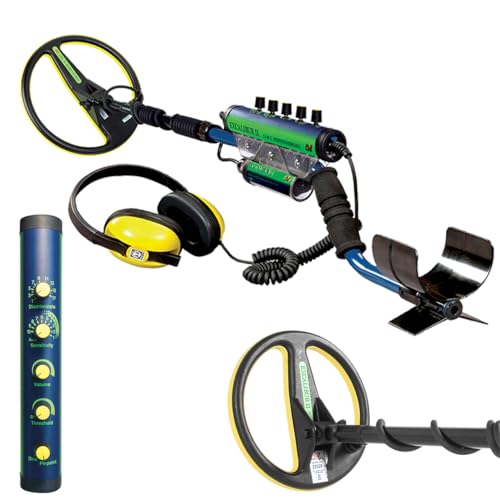
Minelab Excalibur II 1000
Minelab publishes BBS multiple frequency technology from 1.5 to 25.5 kHz with RCB signal amplification in the coil, which is the specification serious salt water hunting is still measured against.
Price was accurate when this page was compiled and changes often.
The Minelab Excalibur II 1000 is the right machine for a water hunter who works salt, and the wrong machine for everyone else. It is the most expensive detector on this site at $1,699.00, it has no screen, and it will not print a target ID number for you at any price.
What it has instead is BBS, Minelab broad band spectrum technology, published as running from 1.5 to 25.5 kHz. Transmitting across that spread at once is what lets a machine separate the conductive salt response from a target response, which is the problem that defeats single-frequency machines on wet sand. Minelab also publishes RCB, which amplifies weak target signals inside the coil to reduce noise and lift faint deep objects, high visibility fluorescent bodywork and skid plate, and a NiMH rechargeable pack good for up to 12 hours.
On this page
- Why does this machine still get bought?
- How does it compare to the machines that could replace it?
- What the Excalibur II listing publishes
- The honest weakness: no numbers, and that is a real learning cost
- What do owners consistently report?
- Who should buy it, and who should skip it
- What should you buy instead?
Why does this machine still get bought?
Because salt water is the hardest environment in the hobby and this design was built for nothing else. Sea water conducts, so a detector sweeping wet sand sees the ground itself as a target. A single-frequency machine has one response to work with and cannot tell salt from metal, which is why owners of good inland machines describe the surf as unhuntable. Transmitting many frequencies at once gives the processor enough information to subtract the salt, and the frequency chart sets out why that works.
The second reason is the build. Minelab publishes high visibility fluorescent bodywork and a high visibility skid plate, which sounds cosmetic until you have put a black detector down in three feet of murky water. The NiMH pack is published at up to 12 hours, which covers a full tide. This is a machine designed by people who understood that the hard parts of water hunting are finding your gear and staying out long enough to work a gully properly.
How does it compare to the machines that could replace it?
The table below is built from published figures only. Note how little Minelab publishes about this model compared with its current machines, which is what a long production run looks like.
Minelab publishes 16 feet of waterproofing and 2.8 lb for the Equinox 900, while the Excalibur II listing publishes neither a depth rating nor a weight despite being sold as a diving machine.
| Model | Price | Frequency type | Target ID range | Stock coil | Coil type | Waterproof depth | Weight | Collapsed length | Headphones included | Search modes |
|---|---|---|---|---|---|---|---|---|---|---|
| Minelab Excalibur II 1000 | $1,699.00 | - | - | - | - | - | - | - | - | - |
| Minelab Equinox 900 | $999.00 | Simultaneous multi-frequency plus 6 single frequencies | 0 to 99 | 11 and 6 | Double-D | 16 ft | 2.8 lb | 24 in | Yes | 4 |
| XP Deus II | $1,299.00 | - | - | - | - | - | - | - | - | - |
| Minelab Manticore | $1,499.00 | Simultaneous multi-frequency (Multi-IQ+) | - | - | - | - | - | - | - | - |
Figures are taken from each manufacturer's own published listing and specification sheet. A dash means the maker does not publish that figure for that model, not that the feature is absent.
What the Excalibur II listing publishes
Everything below is quoted from Minelab own listing for this model. What is missing from it matters as much as what is in it.
Minelab publishes a BBS range of 1.5 to 25.5 kHz and up to 12 hours of NiMH runtime, and publishes no target ID scale, no weight and no depth rating for this model.
| Specification | What Minelab publishes | What it means in the water |
|---|---|---|
| Frequency technology | BBS multiple frequency, 1.5 to 25.5 kHz | Separates the salt response from the target response |
| Signal handling | RCB amplifies weak target signals inside the coil | Aimed at faint deep targets rather than raw depth claims |
| Battery | NiMH rechargeable pack, up to 12 hours | Covers a full tide, and is a proprietary consumable |
| Visibility | Hi-Vis fluorescent bodywork and skid plate | You can find the machine again in murky water |
| Shaft | Side-mount shaft for shallow and surf wading, optional accessory | The wading configuration is a further purchase |
| Target ID | No numeric target ID published | All target information arrives as audio |
| Depth rating | Not published in this listing | Check the current manual for your model before diving |
Quoted from the Minelab Excalibur II product listing. This site does not print a diving depth figure for this model because the listing does not publish one, and a wrong number here would be a safety issue rather than a typo.
The honest weakness: no numbers, and that is a real learning cost
This is an analog machine. There is no screen, no numeric target ID and no discrimination segment to notch, so everything the detector knows reaches you as a tone. Experienced water hunters will tell you that audio carries more information than a number does, and they are right, but that skill takes a season to build and the machine gives you nothing to lean on while you build it. Anyone who has learned on a target ID scale is giving up their main decision tool, and on a beach where every second signal is a bottle cap that is genuinely difficult.
The second weakness is that it is single-purpose at a flagship price. At $1,699.00 you could buy an Minelab Equinox 900 and a Minelab EQX 15 Coil (15 inch) and have change, and that combination hunts parks, fields, beaches and goldfields with a screen. The Excalibur earns its money in salt water and nowhere else. Taken inland it is a heavy, awkward, expensive way to hunt a park.
Third, the configuration gaps. Minelab lists the side-mount shaft, which is the setup most surf waders actually want, as an optional accessory rather than as part of the machine, and publishes no weight and no depth rating in this listing. The battery is a proprietary NiMH pack rather than cells you can replace from a shop. None of that is disqualifying, but at this price you should know you are buying a platform that needs finishing rather than a complete kit.
What do owners consistently report?
The most consistent theme across published owner reviews is longevity: this is a design that has been in the water for a very long time, and reviews from people running decade-old units are common, which is not something you can say about most electronics. The second theme is that it remains the reference point in surf and at depth. Owners who moved to a modern screen-based machine and then went back to the Excalibur for salt work are a recurring pattern in the reviews, and that pattern is the strongest argument the machine has.
The complaints are equally consistent and they are about ergonomics rather than performance: the machine is bulky, the standard configuration is awkward for wading until you move to a side-mount, and the learning period is real. Owners also consistently recommend rinsing in fresh water after every salt session, which applies to every machine but matters more on one you intend to keep for fifteen years. A titanium scoop such as CKG Titanium Sand Scoop is the usual companion purchase, because steel corrodes and a scoop that reads as a target wastes your day.
Who should buy it, and who should skip it
Buy it if:
- You hunt salt water: surf, wading or diving, where BBS is still the benchmark.
- You are willing to learn to hunt by ear and give up numeric target ID entirely.
- You want a machine built to survive years of salt rather than a season.
- You already own an inland machine and this is a second, specialised tool.
Skip it if:
- This would be your only detector. Buy the Equinox 900 and hunt everywhere.
- You want a screen and a number to sort targets with.
- You hunt fresh water or dry inland ground, where the salt advantage is worth nothing.
- You want a published depth rating before you dive, in which case read the Deus II review.
What should you buy instead?
Three alternatives, each better than the Excalibur at something the Excalibur does not try to do.
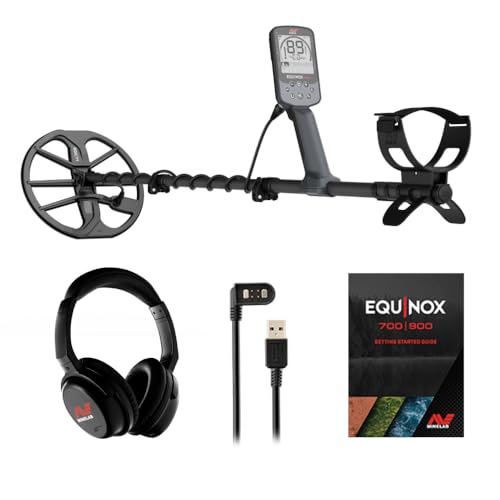
Minelab Equinox 900
$999.00Multi-IQ with a dedicated Beach mode, 119 target IDs, a published 16 foot rating and both coils in the box at $999.00. Handles wet salt sand and then hunts a park on the way home.
Best for: anyone who wants one machine rather than a specialist
Check price on Amazon
XP Deus II
$1,299.00XP publishes 66 feet on an IP68 shockproof underwater remote control, plus numeric target ID and 49 single frequencies. The modern answer to the same question, with a screen.
Best for: divers who want target ID numbers
Check price on Amazon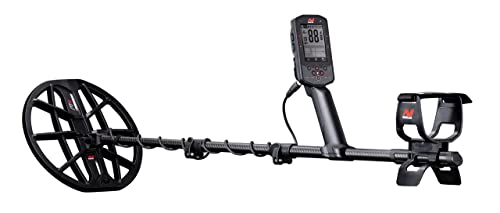
Minelab Manticore
$1,499.00Minelab publishes a Beach mode for sand, surf and seawater alongside Multi-IQ+ at 50 percent more power and a 16 foot rating, so it wades and then works mineralised inland ground properly.
Best for: surf plus serious inland hunting
Check price on AmazonHow we chose
We did not test these machines in person and we publish no find claims. Picks are researched from manufacturer specifications and owner manuals, published listing features, waterproof ratings and warranty terms, and the recurring themes in verified owner reviews. We favour the established detector brands because coils, shafts and control boxes have to stay available years after a model is discontinued, and we place every pick in the tier where its price and capability honestly belong.
Sources
- Minelab Excalibur II product listing and instruction manual
- Minelab Equinox 700 and 900 instruction manual
- XP Deus II product specifications
- Published owner reviews of the Minelab Excalibur II
Frequently asked questions
Excalibur II vs Equinox 900 for beach hunting: which is better?
For salt water specifically the Excalibur remains the benchmark, and for everything else the Equinox 900 is the better buy. Minelab publishes BBS from 1.5 to 25.5 kHz on the Excalibur against Multi-IQ with a dedicated Beach mode on the 900. The 900 costs far less, gives you numeric target ID and a screen, publishes a 16 foot rating and hunts parks and fields just as well. Buy the Excalibur only if salt is most of your hunting.
Does the Excalibur II have a target ID number?
No. It is an analog machine and Minelab publishes no numeric target ID scale for it. Every piece of information the detector gives you arrives as audio, so target discrimination is a listening skill rather than a reading one. Experienced water hunters argue that tone carries more information than a number does, which is true, but it takes a season of digging to develop and the machine offers no numeric crutch while you learn.
How deep can you dive with an Excalibur II?
Minelab does not publish a depth rating in this product listing, so this site does not print one. The machine is built and sold for diving and surf work, but a diving depth is a safety figure and the right source for it is the current manual for your exact model rather than a review. Confirm it in the manual before you take the machine below wading depth.
Is the Excalibur II still worth buying?
In salt water, yes, and published owner reviews include people who moved to modern screen-based machines and returned to it for surf work. Elsewhere it is hard to justify. It is the most expensive machine in this catalog, it has no screen, the side-mount shaft is an optional extra and the battery is a proprietary pack. As a specialist second machine it makes sense, as a first machine it does not.
Researched, not professional advice. This page is compiled from published specifications, manuals and owner-review consensus, not hands-on testing. Target ID numbers, depth figures and settings vary with soil chemistry, moisture, target size, depth, orientation and firmware version, so treat every figure here as a starting point and verify it against your own machine's manual and your own ground. As an Amazon Associate we earn from qualifying purchases.