Flagship machines
XP Deus II Review: The Wireless Flagship and Its Three Batteries
Quick answer
Buy the Deus II if you hunt long sessions, want the lightest flagship on the market and will learn a deep menu. Skip it if you want to switch on and hunt, because 12 multi-frequency programs and 49 single frequencies is a lot of machine to absorb for the same coins.
Reviewed here

XP Deus II
XP publishes a fully wireless machine with 49 single frequencies from 4 to 45 kHz, 12 multi-frequency programs, a 66 foot IP68 rating and a 5 year warranty.
Price was accurate when this page was compiled and changes often.
The XP Deus II is the right machine for a detectorist who hunts for hours and treats settings as part of the hobby, and the wrong machine for someone who wants to press a preset and swing. At $1,299.00 it is the second most expensive general-purpose detector in this catalog, and what it sells is ergonomics and range of adjustment rather than raw power.
XP publishes it as the first fully wireless Fast Multi-Frequency machine: there is no cable from the coil to the control unit and none to the headphones, which is a genuine structural difference rather than a feature list item. It also publishes 12 fast simultaneous multi-frequency factory programs, 49 single frequencies from 4 to 45 kHz, an IP68 remote control rated to 66 feet, headphones using a radio protocol XP states is ten times faster than low latency Bluetooth, and a 5 year warranty.
On this page
What does fully wireless actually change?
It changes weight distribution and it removes the component that fails most. A conventional detector runs a cable from the coil, up the shaft, into the control box, and that cable flexes every time you collapse the machine or swing it against undergrowth. Removing it removes a wear point, and it lets XP put the control unit wherever you want it, including off the shaft entirely, which is why this machine has a reputation for feeling lighter than its competitors before anyone weighs it.
The frequency range is the other structural difference. Publishing 49 single frequencies from 4 to 45 kHz means one machine covers the whole span that the frequency chart describes, from the low end where silver and copper coins respond best to the high end where small gold starts to give a usable signal. Most flagships publish four to six single frequencies. XP publishes a range, and the 12 factory multi-frequency programs exist because nobody sane would choose from 49 options on a wet morning.
How does the Deus II compare on paper?
Only figures each maker publishes appear below. Note how little XP publishes about weight, which is awkward on a machine whose main claim is lightness.
XP publishes a 66 foot waterproof rating for the Deus II, four times the 16 feet Minelab publishes for the Equinox 900 and the Manticore, and no weight figure at all.
| Model | Price | Frequency type | Target ID range | Stock coil | Coil type | Waterproof depth | Weight | Collapsed length | Headphones included | Search modes |
|---|---|---|---|---|---|---|---|---|---|---|
| XP Deus II | $1,299.00 | - | - | - | - | - | - | - | - | - |
| Minelab Manticore | $1,499.00 | Simultaneous multi-frequency (Multi-IQ+) | - | - | - | - | - | - | - | - |
| Minelab Equinox 900 | $999.00 | Simultaneous multi-frequency plus 6 single frequencies | 0 to 99 | 11 and 6 | Double-D | 16 ft | 2.8 lb | 24 in | Yes | 4 |
| Nokta The Legend 2 | $999.00 | Simultaneous multi-frequency | - | - | - | - | - | - | - | - |
Figures are taken from each manufacturer's own published listing and specification sheet. A dash means the maker does not publish that figure for that model, not that the feature is absent.
What XP publishes, and what it leaves out
This is the table to read before you spend $1,299.00, because the gaps are where the surprises live.
XP publishes 66 feet of waterproofing for the remote control and lists the bone conduction headphones as the optional BH-01, so the diving capability is not complete as sold.
| What XP publishes | The figure | What it means for the purchase |
|---|---|---|
| Frequency behaviour | 12 FMF programs, 49 single frequencies 4 to 45 kHz | One machine covers the coin end and the gold end of the chart |
| Waterproof rating | 66 ft, IP68 shockproof remote control | Rated far beyond wading, which is unusual outside dedicated water machines |
| Headphones | Included set on an XP radio protocol, stated as 10 times faster than low latency Bluetooth | Latency matters because pinpointing by ear fails on ordinary Bluetooth |
| Diving audio | Bone conduction BH-01 listed as optional | The 66 foot rating needs a further purchase to be usable |
| Warranty | 5 years | The longest published warranty on any machine in this catalog |
| Weight | Not published in the listing | The lightest flagship claim is not backed by a printed figure |
Quoted from the XP Deus II product listing and specification sheet. Where XP does not publish a figure this table says so rather than repeating a number from a forum.
The honest weakness: three batteries and a menu with no bottom
Fully wireless means fully battery powered, in three places. The coil has its own battery, the remote control has its own battery, and the headphones have a third. Every one of them has to be charged before a hunt, and any one of them can end a hunt. Owners consistently report this as the single biggest adjustment when moving from a cabled machine, and it is the reason a habit of charging everything the night before matters more on this detector than on any other in the catalog.
The second weakness is the menu. Twelve factory programs and 49 single frequencies is an enormous surface area, and published owner reviews divide cleanly between people who love that and people who found it overwhelming enough to sell the machine. There is no middle ground in the reviews, which is unusual and is worth taking seriously. If your honest preference is to select Park and swing, the Equinox 900 will give you the same coins with a tenth of the reading.
Third, the accessory position. XP publishes 66 feet of waterproofing but lists the bone conduction headphones as the optional BH-01, so the diving capability requires a further purchase, and this catalog carries a XP Deus II Control Box Cover but no third-party coils for the platform. Compare that with the aftermarket depth of the Equinox or the Garrett AT line, where NEL Hunter 12.5 by 8.5 Coil for AT Pro and Coiltek 10 by 5 NOX Search Coil exist. A closed ecosystem is a real cost at this price.
What do owners consistently report?
The most consistent positive theme is fatigue: owners report hunting for substantially longer than on their previous machine, and since a machine you can swing for four hours out-finds a better machine you put down after ninety minutes, that is a real performance claim rather than a comfort one. The second theme is speed in iron. XP built the platform around fast recovery, and owners working old iron-littered sites report it separating targets that slower machines blend together.
The recurring criticisms are the charging routine, the price of replacement parts, and the learning curve. A fourth theme worth naming is that owner opinion on this machine is more polarised than on any other flagship, which usually indicates a machine that rewards a particular kind of user rather than one with a defect. Work out which kind you are before ordering, and if you are unsure, the expert kit lists what a serious setup costs in total.
Who should buy it, and who should skip it
Buy it if:
- Session length is your limiting factor and a lighter, better balanced machine means more hours in the field.
- You want the widest published frequency range in one body, from 4 kHz coin work to 45 kHz gold.
- You dive or hunt surf and want a rating well beyond wading depth.
- You enjoy settings and will build custom programs rather than run factory presets.
Skip it if:
- You want to switch on and hunt. Buy an Equinox 700 and spend the difference on ground.
- Charging three separate batteries before every hunt sounds like a reason to leave the machine at home.
- You want a wide aftermarket coil choice.
- Your ground is heavily mineralised, where the Manticore power claim is more relevant.
What should you buy instead?
Three honest alternatives, each better than the Deus II at one specific thing.
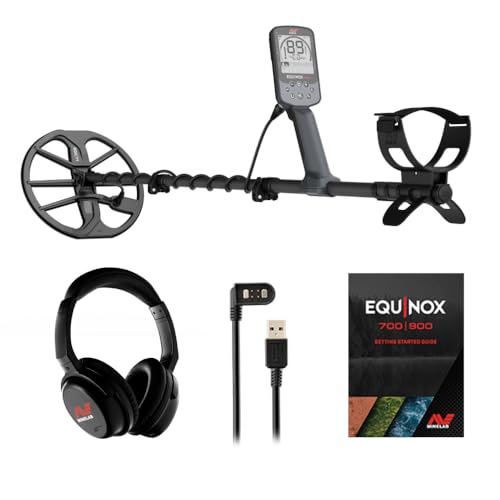
Minelab Equinox 900
$999.00Four preset modes, 119 target IDs, both coils in the box and a published 2.8 lb, at $999.00. The machine to buy if you want results before you want options.
Best for: people who would rather hunt than configure
Check price on Amazon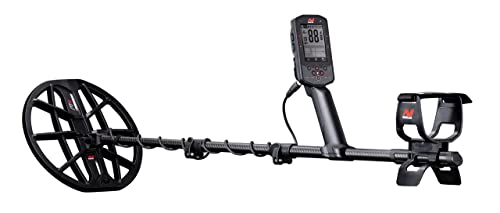
Minelab Manticore
$1,499.00Minelab publishes Multi-IQ+ as 50 percent more power plus a 2D target ID map, which is the more relevant upgrade if your problem is soil rather than stamina.
Best for: red clay, iron-rich sites and hunted-out ground
Check price on Amazon
Nokta The Legend 2
$999.00Nokta publishes 2.6 lb, 99 target IDs, 15 customisable user profiles and wireless firmware updates at $999.00, which covers most of the adjustability argument for less.
Best for: tinkerers on a smaller budget
Check price on AmazonHow we chose
We did not test these machines in person and we publish no find claims. Picks are researched from manufacturer specifications and owner manuals, published listing features, waterproof ratings and warranty terms, and the recurring themes in verified owner reviews. We favour the established detector brands because coils, shafts and control boxes have to stay available years after a model is discontinued, and we place every pick in the tier where its price and capability honestly belong.
Sources
- XP Deus II product specifications and user manual
- Minelab Equinox 700 and 900 instruction manual
- Minelab Manticore product specifications
- Published owner reviews of the XP Deus II
Frequently asked questions
XP Deus II vs Minelab Equinox 900: which should I buy?
Buy the Equinox 900 unless lightness, wireless operation or the frequency range are decisive for you. The 900 costs less, publishes both coils in the box and gets a beginner finding coins on preset modes immediately. The Deus II publishes 49 single frequencies, 12 multi programs, a 66 foot rating and a 5 year warranty, and rewards an operator who will learn it. Owner opinion on the Deus II is genuinely polarised, which the Equinox is not.
How deep is the XP Deus II waterproof rating?
XP publishes 66 feet, based on an IP68 certified shockproof underwater remote control design. That is four times what Minelab publishes for the Equinox 900 or the Manticore. The catch is the audio: XP lists bone conduction headphones as the optional BH-01, so diving with the machine means a further purchase. Wireless audio does not propagate underwater, which is a constraint on every wireless machine rather than a fault of this one.
Is the Deus II hard to learn?
Harder than a preset-driven machine, yes. XP publishes 12 factory multi-frequency programs and 49 single frequencies, which is more adjustment than most detectorists use in a decade. The factory programs mean you do not have to start from scratch, but published owner reviews divide sharply between people who enjoyed the depth of the menu and people who found it overwhelming. Be honest about which you are before spending this much.
Does the Deus II need special headphones?
It ships with them. XP includes a wireless set using its own radio protocol, which the company states is ten times faster than low latency Bluetooth. That speed is not marketing: ordinary Bluetooth delay makes pinpointing by ear impossible, because the tone arrives after the coil has passed the target. For underwater use you need the optional bone conduction set, since no wireless audio works submerged.
Researched, not professional advice. This page is compiled from published specifications, manuals and owner-review consensus, not hands-on testing. Target ID numbers, depth figures and settings vary with soil chemistry, moisture, target size, depth, orientation and firmware version, so treat every figure here as a starting point and verify it against your own machine's manual and your own ground. As an Amazon Associate we earn from qualifying purchases.