Best supporting kit
Best Wired Headphones for Metal Detecting
Quick answer
Wired headphones are the only option once a detector goes under water, because Bluetooth and other wireless protocols are radio and radio does not travel through water. The Garrett MS-2 Headphones at $33.99 is the cheapest dry-land wired set, and the Gray Ghost Amphibian Headphones for Minelab is a submersible wired option built specifically for Minelab machines.
Wireless audio is the default on most current detectors, and for dry land use it works well: low-latency protocols like Garrett's Z-Lynk and Minelab's own wireless system remove the cable without adding noticeable delay. The reason wired headphones still have a page of their own is that wireless has one failure mode no firmware update can fix. Bluetooth and the proprietary low-latency protocols detector makers use are radio, and radio is absorbed by water within inches rather than feet. The instant a submersible machine's control box goes under, the wireless link to the headphones drops, and no manufacturer claims otherwise.
That single fact is why every submersible machine on the underwater roundup and the freshwater roundup needs a wired waterproof headphone set as a genuinely separate purchase, not an accessory upgrade. Wired sets also have a second, quieter advantage even on dry land: they cannot run out of battery mid-hunt, which matters more than it sounds on a long day.
Top pick

Gray Ghost Original Platinum Headphones
DetectorPro publishes USA-manufactured Platinum speakers, a sound-blocking muff design that reduces ambient noise by up to 24 decibels, and a selector switch for compatibility with any single-output detector without adapters, at $129.95. It is the aftermarket reference for wired detector audio across brands.
Price was accurate when this page was compiled and changes often.
On this page
- Why does a submersible detector need wired headphones at all?
- Beginner: the cheapest wired set worth owning
- Intermediate: aftermarket audio built for faint signals
- Expert: submersible audio, matched to the machine
- How do the wired headphone options compare on paper?
- Wired versus wireless: what do you actually give up?
- What should you look for in the connector before buying?
Why does a submersible detector need wired headphones at all?
This catalog's own listing for the Minelab Equinox Waterproof Headphones states the reason plainly: wireless does not work under water, so a submerged machine needs a wired set instead. Radio waves at the frequencies Bluetooth and detector-specific wireless protocols use are absorbed almost immediately by water, which is why the wireless headphones bundled with machines like the Minelab Equinox 900 and the Minelab Manticore stop transmitting the moment the control box goes under, regardless of how good the connection was a second earlier on dry sand.
Several machines that are fully submersible, including the Nokta Simplex Ultra and The Legend, still ship with a wireless headphone set as standard, because most owners use them on dry land or in shallow wading where the link never actually breaks. The wired set only becomes necessary the moment the plan changes to genuine submersion, which is worth knowing before assuming the headphones in the box already cover every situation the detector itself is rated for.
Beginner: the cheapest wired set worth owning
A plain wired set costs a fraction of an aftermarket or waterproof pair and does the basic job perfectly well on dry land. It is also worth owning as a backup even if you normally run wireless, because it cannot run out of charge and it cannot lose its pairing.

Garrett MS-2 Headphones
$33.99Garrett publishes a 1/4 inch right angle stereo phone plug, volume control and a reinforced 10 foot coiled cable on the Garrett MS-2 Headphones, at $33.99. It cannot run out of battery and it fits any detector with a standard headphone jack.
Best for: a first wired set, or a spare in the bag
Check price on AmazonIntermediate: aftermarket audio built for faint signals
Both picks here are built specifically for detector audio rather than adapted from consumer headphones, and both are aimed at hearing a faint, deep target rather than at comfort for its own sake.

Gray Ghost Original Headphones
$109.95DetectorPro sells the Gray Ghost Original Headphones at $109.95 as the entry point into its long-standing detector-specific headphone line, built for detector audio rather than for music.
Best for: an aftermarket upgrade on a budget
Check price on Amazon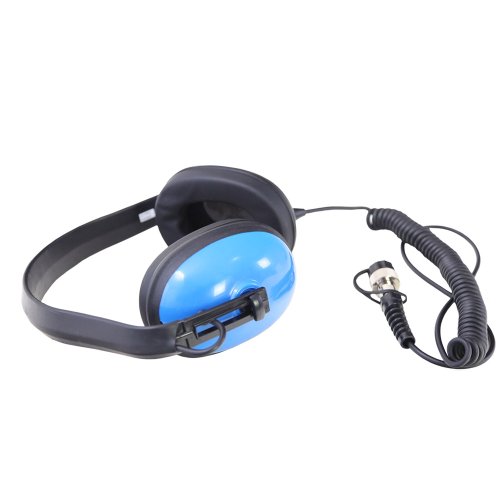
Garrett Submersible Headphones
$149.99Garrett publishes a wired submersible set matched to the AT series at $149.99, which is the accessory that makes submerging an AT Pro or AT Max usable rather than only waterproof.
Best for: Garrett AT series owners who hunt in shallow water
Check price on AmazonExpert: submersible audio, matched to the machine
All three picks here solve the same problem for a different brand. Each is matched to a specific machine or machine family rather than being a universal fit, which is worth checking before ordering.

Gray Ghost Amphibian Headphones for Minelab
$169.95DetectorPro publishes waterproofing to 200 feet, solid-state speakers designed for wet conditions, sound-blocking muffs rated to 24 decibels of ambient reduction and a muff-to-muff cable with no wire frame to rust, on the Gray Ghost Amphibian Headphones for Minelab at $169.95, built for Minelab Manticore and Equinox machines.
Best for: Manticore and Equinox owners who dive rather than wade
Check price on Amazon
Minelab Equinox Waterproof Headphones
$170.00Minelab publishes a wired, waterproof set for the Equinox series specifically, at $170.00, and its own listing states the reason directly: wireless does not work under water, so a submerged Equinox needs this instead.
Best for: Equinox owners who submerge the machine
Check price on Amazon
Thresher Submersible Headphones for Nokta
$157.99Detecting Adventure publishes a submersible set rated past 100 feet with oversized speaker elements for deep, rich tone, built for the Simplex and Legend at $157.99, both of which ship with wireless sets that stop working the moment the machine is submerged.
Best for: Simplex and Legend owners who actually submerge the machine
Check price on AmazonWho should not buy this tier: Do not buy a submersible wired set if you only ever hunt dry land or shallow wading with your ears above the water. The Garrett MS-2 Headphones at $33.99 does the same audio job for a fraction of the price in that situation, and the extra waterproofing on these three sets goes entirely unused until a session actually puts the control box under.
How do the wired headphone options compare on paper?
The "fits" column is the one to check first. Submersible wired sets in particular tend to be built for one brand's connector and cable routing rather than being universal.
Four of these six sets are built for one specific brand or machine family, and only the two cheapest are a universal fit for any detector with a standard headphone jack.
| Headphones | Connector or fit | Waterproof rating | Fits | Price |
|---|---|---|---|---|
| Garrett MS-2 Headphones | 1/4 inch right angle plug | Not waterproof | Any detector with a standard jack | $33.99 |
| Gray Ghost Original Headphones | 1/4 inch, universal selector | Not waterproof | Any single-output detector | $109.95 |
| Gray Ghost Original Platinum Headphones | 1/4 inch, universal selector | Not waterproof | Any single-output detector | $129.95 |
| Garrett Submersible Headphones | Wired | Submersible | Garrett AT series | $149.99 |
| Minelab Equinox Waterproof Headphones | Wired | Waterproof | Minelab Equinox series | $170.00 |
| Thresher Submersible Headphones for Nokta | Wired | Rated past 100 ft | Nokta Simplex, Legend | $157.99 |
| Gray Ghost Amphibian Headphones for Minelab | Wired | Rated to 200 ft | Minelab Manticore, Equinox | $169.95 |
Figures are quoted from the manufacturer listing for that product. Always confirm fitment against your specific machine before buying a brand-matched or submersible set.
Wired versus wireless: what do you actually give up?
A wired connection is lag-free by definition, since there is no radio link to introduce latency in the first place, and it cannot run flat mid-hunt because there is no separate battery to manage. What it costs is a cable, which can snag on brush, reeds or your own coat on a windy day, and which most people simply find less convenient than a wireless pair for ordinary dry-land use. That trade is why the wireless headphones roundup and the general headphones roundup exist alongside this page rather than being replaced by it.
The honest recommendation for most people running a submersible machine is to own both: a wireless set for ordinary dry-land sessions, and one of the wired options here kept in the bag specifically for the day the machine goes under. That is exactly the gap the saltwater beach roundup and the freshwater roundup flag on every submersible machine they recommend.
What should you look for in the connector before buying?
A standard 1/4 inch or 1/8 inch jack, as published on the Garrett MS-2 Headphones, fits most detectors that accept wired headphones at all, but several current machines use a proprietary connector or a sealed port instead, particularly on fully submersible bodies where an exposed jack would compromise the seal. That is why the brand-matched sets on this page, such as the Minelab Equinox Waterproof Headphones for the Equinox series and the Thresher Submersible Headphones for Nokta for the Simplex and Legend, exist as separate products rather than a single universal wired set covering every submersible machine. Check your specific model's manual for its headphone connector before assuming any wired set on this page will plug in without an adapter.
Comfort over a long session matters more than most buyers expect on their first purchase. A cheap plastic headband that pinches after two hours gets left in the bag on the third trip regardless of how good the audio is, which is part of why aftermarket sets built specifically for this hobby, rather than adapted from consumer audio, tend to hold onto their owners for years.
How we chose
We did not test any of these headphones in person and no comfort or sound quality claim on this page is a result of our own use. Every feature is quoted from the manufacturer listing for that product. Picks were chosen on published connector type, waterproofing where relevant, and which specific machines each set is built to fit.
Sources
- Garrett MS-2 and Garrett Submersible Headphones product listings
- DetectorPro Gray Ghost Original, Platinum and Amphibian product listings
- Minelab Equinox Waterproof Headphones product listing
- Thresher Submersible Headphones for Nokta product listing
Frequently asked questions
Do wired headphones sound better than wireless ones?
Not inherently, but they remove one variable that can affect sound quality: wireless compression and any processing a low-latency protocol applies. Aftermarket wired sets like the Gray Ghost Original Platinum Headphones are built around speakers chosen specifically for faint detector tones, which is a bigger factor in perceived quality than the wired connection itself.
Can I use ordinary music headphones with a metal detector?
Yes, as long as the connector matches your detector's headphone jack, which is usually a standard 1/4 inch or 1/8 inch plug. Ordinary headphones will work but are not built to isolate the faint, low-volume tones a detector produces the way detector-specific sets like the Gray Ghost Original Headphones are, so quiet deep signals can be easier to miss.
Which wired headphones actually work underwater?
Only sets published as waterproof or submersible, such as the Minelab Equinox Waterproof Headphones for Minelab Equinox machines, the Thresher Submersible Headphones for Nokta for Nokta's Simplex and Legend, or the Gray Ghost Amphibian Headphones for Minelab for Manticore and Equinox. A plain wired set like the Garrett MS-2 Headphones is not rated for submersion even though it has no battery to worry about.
Why do detector makers still sell wired sets when wireless exists?
Because wireless has a hard limit that wired audio does not: it stops working entirely under water. Every submersible detector still needs a wired option available for exactly that reason, and several makers, including Minelab and Nokta, publish wired waterproof sets specifically for their submersible machines.
Does a wired connection add any lag at all?
No. A wired connection is a direct electrical signal with no radio transmission step, so there is no latency to introduce. This is part of why some experienced hunters keep a wired set even for dry-land use, alongside the more common reason of never running out of charge mid-hunt.
Researched, not professional advice. This page is compiled from published specifications, manuals and owner-review consensus, not hands-on testing. Target ID numbers, depth figures and settings vary with soil chemistry, moisture, target size, depth, orientation and firmware version, so treat every figure here as a starting point and verify it against your own machine's manual and your own ground. As an Amazon Associate we earn from qualifying purchases.