Best detectors
Best Multi-Frequency Metal Detectors: From $259 to $1,499
Quick answer
Simultaneous multi-frequency means the machine transmits and processes several frequencies at once rather than switching between them. Minelab Equinox 700 at $749.00 is the best buy for most people. Minelab Vanquish 340 at $258.99 is the cheapest genuine entry, and Minelab Manticore is the most powerful.
Simultaneous multi-frequency is the one specification in this hobby that genuinely changed what a mid-priced machine can do, and it is also the one most heavily oversold. The definition first, because the marketing blurs it: a simultaneous multi-frequency machine transmits several frequencies at the same time and processes all of their returns together. A selectable single-frequency machine, which is a different thing, transmits one frequency at a time and lets you change which one. Both get called multi-frequency in advertising copy. Only the first is what people mean.
Why it matters is narrower than the marketing suggests. Different frequencies respond differently to different targets and to the ground itself, so processing several at once lets the machine separate the response of wet salt sand from the response of a gold ring. That is the headline case and it is a real one. On mild damp inland soil the advantage shrinks a great deal, which is why plenty of experienced detectorists still hunt fields with a single frequency machine and do very well. The frequency chart sets out which band suits which target, and the Equinox 900 against The Legend comparison covers the two machines people most often agonise between.
Top pick

Minelab Equinox 700
Minelab publishes Multi-IQ simultaneous multi-frequency plus four single frequencies, full waterproofing to 16 feet and 2.8 lb on carbon fibre shafts, which is the point on the curve where more money stops buying most people more finds.
Price was accurate when this page was compiled and changes often.
On this page
- What does simultaneous multi-frequency actually do for you?
- Which machines are genuinely simultaneous, and what do they publish?
- What is the cheapest genuine multi-frequency machine?
- What does four hundred to seven hundred dollars buy?
- When does the flagship multi-frequency machine earn its price?
- When is a single frequency machine still the right answer?
What does simultaneous multi-frequency actually do for you?
It solves ground, not targets. Every detector has to tell the difference between the signal from a buried object and the signal from the ground itself, and on wet salt sand or mineralised clay the ground signal is large enough to swamp a small target. A machine running several frequencies at once has more information to work with, so it can subtract more of the ground and leave more of the target. That is why the beach is the case everybody cites, and the saltwater guide explains why wet salt is genuinely the hardest ground most people ever cross.
The second real benefit is target ID stability. A single frequency machine gives a target number that drifts as depth and soil change, which is why every target ID chart on this site gives ranges rather than values. Multi-frequency machines hold the number steadier at depth, which is not the same as being more accurate but is a great deal easier to trust. Compare the ranges in the Equinox 900 target ID chart against the budget machine comparison and the difference in how tightly each machine is described is the point.
What it does not do is find deeper targets in easy ground. On mild damp soil with an average coin, the depth difference between a good single frequency machine and a multi-frequency machine is small enough that sweep speed and coil choice matter more. Anyone telling you otherwise is selling something.
Which machines are genuinely simultaneous, and what do they publish?
Only what each maker prints appears here. Note the second column carefully: some machines switch between single frequencies rather than running several at once, and the listing language usually gives it away.
Genuine simultaneous multi-frequency starts at $258.99 with the Minelab Vanquish 340 and runs to $1,499.00 for the Manticore, while the switchable single-frequency machines sit lower and are a different thing.
| Machine | Price | What the maker publishes | Waterproof rating published | Coils in the box |
|---|---|---|---|---|
| Minelab Vanquish 340 | $258.99 | Multi-IQ, five frequencies at once | Not published in this listing | 10 by 7 waterproof coil |
| Nokta Double Score | $349.00 | Simultaneous multi-frequency, rechargeable | IP68 to 16 ft | One coil, not specified in this listing |
| Minelab X-Terra Elite | $387.09 | Multi-IQ, with 2 Park, 2 Field and 2 Beach modes | Fully waterproof, 3-piece shafts, 2.9 lb | One coil, not specified in this listing |
| Garrett ACE Apex | $384.99 | 5, 10, 15, 20 kHz plus Multi-Frequency and Multi-Salt | Waterproof searchcoil | 6 by 11 DD Viper coil |
| Minelab Vanquish 540 Pro-Pack | $399.00 | Multi-IQ, five frequencies at once, 4 modes | Water-resistant interface | 12 by 9 and 8 by 5 coils |
| Nokta Triple Score Pro Pack | $499.00 | Simultaneous multi-frequency, 3 search modes, 2.7 lb | IP68 to 16 ft | Sold as a pack |
| Garrett Vortex VX9 | $599.99 | Simultaneous multi plus 5, 9, 13, 18 and 25 kHz | Submersible to 16 ft | 2.9 lb, folds to 24.75 inches |
| Nokta The Legend Pro Pack | $659.00 | Two multi profiles plus 4, 10, 15, 20 and 40 kHz | Fully waterproof to 16 ft per the manual | 11 and 6 inch DD coils |
| Minelab Equinox 700 | $749.00 | Multi-IQ plus 4 single frequencies | Fully waterproof to 16 ft | EQX 11 |
| Minelab Equinox 900 | $999.00 | Multi-IQ plus 6 single frequencies, 119 target IDs | Fully waterproof to 16 ft | EQX 11 and EQX 6 |
| XP Deus II | $1,299.00 | 12 simultaneous programs, 49 single frequencies 4 to 45 kHz | IP68 to 66 ft | Fully wireless coil |
| Minelab Manticore | $1,499.00 | Multi-IQ+, published as 50 percent more power | IP68 to 16 ft | Folds 56.7 to 24.8 inches |
Prices come from the catalog and move. Every figure is quoted from the maker listing or manual named in the sources. Nothing here is a measured depth or separation comparison, and no machine on this page has been tested by us.
What is the cheapest genuine multi-frequency machine?
Minelab Vanquish 340 at $258.99, and it is not a token entry. Minelab publishes the same Multi-IQ technology here as on machines costing three times as much, employing five frequencies at once, with a 10 by 7 waterproof coil and three modes for coin, jewellery and relic. What you give up is adjustment, waterproofing of the control box and the finer audio control further up the range. What you keep is the one feature that cannot be added later.

Minelab Vanquish 340
$258.99Minelab publishes Multi-IQ running five frequencies at once, a 10 by 7 waterproof DD coil, three modes and a collapsible fully adjustable shaft with a carry bag included. It is the cheapest honest way to own simultaneous multi-frequency, and it is the reason a beginner does not have to give up on a beach.
Best for: a first machine for somebody who already knows they will hunt more than one kind of site
Check price on Amazon
Nokta Double Score
$349.00Nokta publishes simultaneous multi-frequency, IP68 waterproofing to 16 feet and a 3250 mAh rechargeable battery giving up to 12 hours. Full waterproofing at this price is unusual, and it means the machine is not the limiting factor when you decide to wade.
Best for: a beginner who wants to put the whole machine in water
Check price on Amazon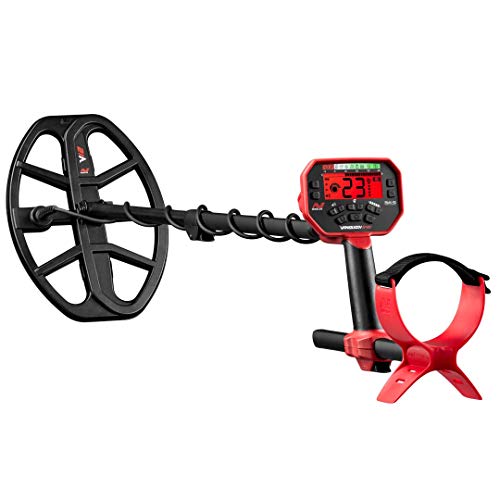
Minelab Vanquish 540 Pro-Pack
$399.00The Pro-Pack ships with both the 12 by 9 and the 8 by 5 coils, so the small-coil trash option is in the box rather than on a wish list. Minelab publishes Multi-IQ, four modes, 2.8 lb and a collapse to 30 inches with automatic noise cancelling and Bluetooth headphones included.
Best for: trashy parks, where the small coil is the upgrade that matters
Check price on AmazonWhat does four hundred to seven hundred dollars buy?
Full waterproofing, more frequency choice and audio you can shape. This is where most people should stop. Nokta The Legend Pro Pack arrives as a Pro Pack with two coils and a frequency spread from 4 to 40 kHz. Minelab X-Terra Elite puts Multi-IQ in a fully waterproof body for under four hundred. Minelab Equinox 700 is the machine this site recommends most often, and the reason is not depth but that it does not force a compromise anywhere.

Minelab X-Terra Elite
$387.09Minelab publishes Multi-IQ in a fully waterproof body with 2 Park, 2 Field and 2 Beach modes, 30 discrimination segments, a control pod flashlight, red backlight display and handgrip vibration, at 2.9 lb on 3-piece shafts. Multi-IQ plus full waterproofing at this price is the value story of the class.
Best for: wet ground and wading on a real budget
Check price on Amazon
Garrett ACE Apex
$384.99Garrett publishes Multi-Flex with 5, 10, 15 and 20 kHz single frequencies alongside a Multi-Frequency and a Multi-Salt mode, a 6 by 11 DD Viper coil, Z-Lynk wireless and a lithium battery rated to 15 hours at 2.5 lb. Multi-Salt is the mode that matters if salt water is in your plans.
Best for: Garrett owners who want multi-frequency without leaving the ecosystem
Check price on Amazon
Nokta The Legend Pro Pack
$659.00Nokta publishes two simultaneous multi-frequency profiles plus 4, 10, 15, 20 and 40 kHz single frequencies, and the Pro Pack includes both 11 inch and 6 inch DD coils. Two coils and that spread at this price is the best raw value in the class, which is why it comes up in every buying argument.
Best for: somebody who wants the second coil included rather than promised
Check price on Amazon
Garrett Vortex VX9
$599.99Garrett publishes simultaneous multi-frequency plus 5, 9, 13, 18 and 25 kHz singles, submersibility to 16 feet, 2.9 lb, a fold to 24.75 inches, eight sensitivity levels and 15 hours from the internal lithium battery. The VX5 and VX7 upgrade into this by software, which is an unusual and genuinely useful arrangement.
Best for: an AT series owner stepping up without changing brand
Check price on Amazon Minelab Equinox 700
$749.00Minelab publishes Multi-IQ with four single frequencies, full waterproofing to 16 feet, three detect modes, 2.8 lb on carbon fibre shafts, a 24 inch packed length and low latency wireless headphones in the box. Nothing about it forces a compromise, which is why it is the default recommendation.
Best for: the one machine most adults should buy
Check price on AmazonWhen does the flagship multi-frequency machine earn its price?
In ground that is fighting you, and nowhere else. Heavily mineralised red clay, black sand, salt surf and sites hunted continuously since the 1970s are the conditions where flagship processing genuinely pulls ahead. Minelab Equinox 900 adds two more single frequencies, a Gold mode, a second coil and 119 high-resolution target IDs. Minelab Manticore adds transmit power and a two-dimensional target display. XP Deus II removes the cable from the system entirely.
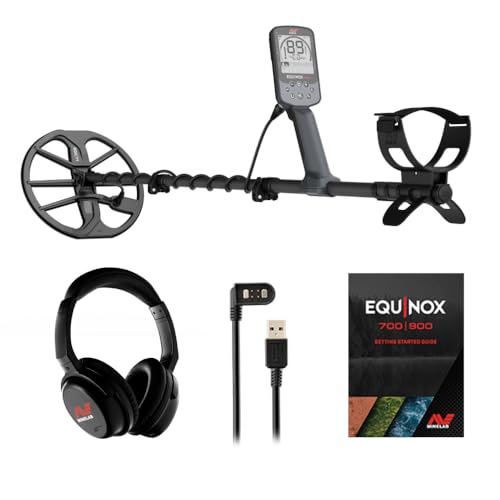
Minelab Equinox 900
$999.00Ships with both the EQX 11 and EQX 6 waterproof Double-D coils, six single frequencies alongside Multi-IQ, four modes including Gold, 119 high-resolution target IDs, 2.8 lb and 16 feet of waterproofing. The second coil alone closes a fair part of the gap to the 700 price.
Best for: one machine covering park, field, beach and gold
Check price on Amazon
Nokta The Legend 2
$999.00Nokta publishes 99 target IDs with harmonic tones and adjustable frequencies, 15 customisable user profiles, wired and wireless firmware updates, a 6700 mAh battery increasing runtime by up to 33 percent, and 2.6 lb. The profile system is the real feature: you save a site setup and recall it rather than rebuilding it.
Best for: somebody who hunts several very different sites and wants each one saved
Check price on Amazon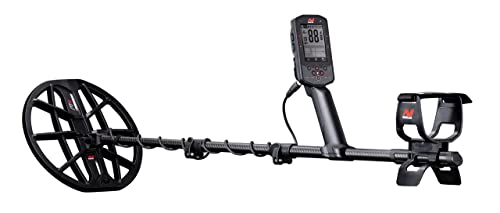
Minelab Manticore
$1,499.00Minelab publishes Multi-IQ+ as 50 percent more power than traditional models, with a 2D target ID map, 10 search modes including Goldfield, IP68 to 16 feet and a fold from 56.7 to 24.8 inches. The 2D display separates targets that a single number blends together, which is the argument for it.
Best for: mineralised ground and historic sites hunted for decades
Check price on Amazon
XP Deus II
$1,299.00XP publishes 12 simultaneous multi-frequency programs, 49 single frequencies from 4 to 45 kHz, IP68 to 66 feet, a 5 year warranty and a wireless system XP describes as ten times faster than Bluetooth low latency. Nothing else on this page removes the cable from coil to headphones completely.
Best for: all-day sessions and anybody who has had enough of cables
Check price on AmazonWho should not buy this tier: Do not buy any of these as a first machine. A flagship does not find targets a beginner would miss, it gives an experienced operator finer control over decisions a beginner has not learned to make yet, and the menu depth actively slows learning. Skip the Minelab Manticore if your ground is mild and damp, because the power it sells you is power against mineralisation you do not have. Skip the XP Deus II if you want to borrow coils or headphones from a friend, because the wireless system that makes it excellent also makes it an island. And if you already own a working multi-frequency machine, a second coil from the coil compatibility chart will change your find rate more than any upgrade here.
When is a single frequency machine still the right answer?
More often than the marketing admits. If you hunt mild inland soil, fresh water shorelines and pasture, a good single frequency machine gives up very little. The Garrett AT Pro is published as submersible to 10 feet with proportional audio and 40 levels of iron discrimination, and it remains the machine a very large number of American detectorists learned on and never replaced. The Minelab X-Terra Pro gives you switchable frequencies and IP68 waterproofing to 16 feet for under three hundred dollars, and switching frequency covers a surprising amount of the same ground as running several at once.
Gold is the clearest case where single frequency wins outright. Small gold responds best to a high frequency, and the machines built for it run one frequency very high rather than several in the middle: the Garrett Goldmaster 24k at 48 kHz, the Fisher Gold Bug 2 at 71 kHz, and the Minelab Gold Monster 1000 at 45 kHz with fully automatic ground balance. A multi-frequency machine with a Gold mode is a compromise against those, which the gold roundup goes into properly.
How we chose
We have not swung any of these machines and this page contains no in-person comparison. Frequency counts, waterproof ratings, weights and mode lists are quoted from each maker own published listing or manual, named in the sources below, and where a listing omits a figure the table says so rather than carrying a guess. The ordering reflects what each machine is documented to do against what it costs, plus the consistent pattern of which ground owners report each one suiting. Treat it as a shortlist to argue with.
Sources
- Minelab Equinox 700 and 900 instruction manual
- Minelab Manticore, X-Terra Elite and Vanquish product specifications
- Nokta The Legend, Legend 2, Double Score and Triple Score listings
- Garrett ACE Apex and Vortex VX9 published specifications
- XP Deus II product specifications
Frequently asked questions
What is the difference between multi-frequency and selectable frequency?
A simultaneous multi-frequency machine transmits several frequencies at once and processes all of the returns together. A selectable machine transmits one at a time and lets you change which one. Minelab calls the first Multi-IQ. The Minelab X-Terra Pro is the second sort, and its listing says it switches frequencies rather than running them together. Both get called multi-frequency in advertising, and only the first is what people mean.
Is multi-frequency worth it if I only hunt inland?
Less than the marketing suggests. The clearest benefit is on wet salt sand and in mineralised soil, where processing several frequencies at once lets the machine subtract more ground signal. On mild damp inland soil the advantage narrows to steadier target ID numbers at depth, which is useful but not transformative. Plenty of experienced detectorists hunt fields with a single frequency machine and do very well.
Which is the cheapest real multi-frequency detector?
The Minelab Vanquish 340 at $258.99. Minelab publishes the same Multi-IQ technology as on its dearer machines, employing five frequencies at once, with a 10 by 7 waterproof coil and three modes. Below that price you are buying a single frequency machine, however the listing is worded, and multi-frequency is the one feature that cannot be added to a detector later.
Does multi-frequency find targets deeper?
A little, and mostly in difficult ground rather than easy ground. Depth is set mainly by target size, soil mineralisation and coil diameter, and only then by the electronics. Where multi-frequency genuinely helps is holding a usable signal at depth in soil that would swamp a single frequency machine. Build a test garden with known targets at marked depths and measure your own ground rather than trusting any published figure.
Should I buy the Equinox 900 or The Legend?
Both ship with two coils and both publish full waterproofing to 16 feet, so the decision is about the platform rather than the specification sheet. The Equinox has the deeper aftermarket coil supply and a larger community. The Legend costs less and publishes a wider spread of single frequencies. The head to head comparison on this site goes through it target class by target class.
Researched, not professional advice. This page is compiled from published specifications, manuals and owner-review consensus, not hands-on testing. Target ID numbers, depth figures and settings vary with soil chemistry, moisture, target size, depth, orientation and firmware version, so treat every figure here as a starting point and verify it against your own machine's manual and your own ground. As an Amazon Associate we earn from qualifying purchases.