Best detectors
Best Metal Detector for Gold: Nuggets, Jewellery and the Difference
Quick answer
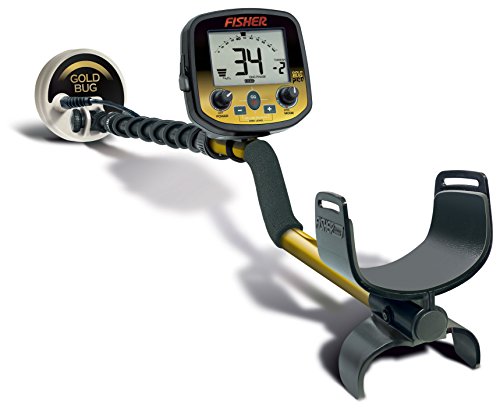
The Fisher Gold Bug Pro at $339.00 is the best gold metal detector for most buyers: 19 kHz, real-time ground balancing and 2.5 lb, and it works as a relic machine too. For the smallest nuggets the Fisher Gold Bug 2 runs 71 kHz. For gold jewellery rather than nuggets, buy a general machine instead.
Two completely different questions arrive at this page, and answering the wrong one costs people several hundred dollars. The first is nugget prospecting: swinging a high-frequency machine over gold-bearing ground, usually in a known goldfield, looking for natural gold measured in grains. The second, and far more common, is gold jewellery: rings and chains lost in parks, on beaches and in swimming holes. Those two jobs want different machines.
If you want jewellery, a prospecting detector is the wrong purchase. Gold is a mediocre electrical conductor and jewellery reads low on the scale, in the same band as pull tabs, as the target ID chart sets out. A general machine with good discrimination and a beach mode will find you far more gold than a 71 kHz nugget machine will, because it can be used where jewellery actually is. Read the main roundup instead, and the frequency chart to see why.
Top pick
Fisher Gold Bug Pro
Fisher publishes 19 kHz, V-Break variable breakpoint tone discrimination, real-time computerised ground balancing with a mineralisation readout, and 2.5 lb, and it doubles as a serious relic machine in mineralised soil.
Price was accurate when this page was compiled and changes often.
On this page
- Why do gold machines run such high frequencies?
- How do the gold machines compare on what the makers publish?
- What should you buy before you buy a gold machine at all?
- Which gold machine handles difficult ground with the least fuss?
- When do you need 71 kHz or a flagship Goldfield mode?
- What else does nugget hunting actually require?
Why do gold machines run such high frequencies?
Because small gold is a poor conductor with very little mass, and a low frequency barely excites it. Raising the operating frequency raises sensitivity to small low-conductive targets, which is why prospecting machines sit far above the coin-hunting band. Minelab publishes 45 kHz for the Minelab Gold Monster 1000, Garrett publishes 48 kHz for the Garrett Goldmaster 24k, and Fisher publishes 71 kHz for the Fisher Gold Bug 2. A coin machine at 5 kHz will walk straight past the gold those three are built to hear.
The cost of that sensitivity is everything else. High frequencies lose more signal in mineralised soil, they respond enthusiastically to hot rocks and black sand, and they are poor on large high-conductive targets, which is to say on coins. That is the trade, and it is why a dedicated prospecting machine is a bad general detector rather than a better one.
How do the gold machines compare on what the makers publish?
Ground balance is the column most buyers ignore and the one that decides whether you enjoy the machine. Fully automatic setup is worth real money on difficult ground, and a manual 16-turn control is work.
Published gold frequencies in this catalog run from 18 kHz on the Garrett AT Gold to 71 kHz on the Fisher Gold Bug 2, and only the Minelab Gold Monster 1000 publishes fully automatic ground balancing.
| Machine | Price | Published frequency | What it is built to find | Ground balancing |
|---|---|---|---|---|
| Garrett AT Gold | $640.99 | 18 kHz | Small gold and relics in mineralised soil | Manual and automatic, with a Ground Balance Window |
| Fisher Gold Bug Pro | $339.00 | 19 kHz | Small gold, and relics in heavy mineralisation | Computerised Ground Grab, real time, with a mineralisation readout |
| Minelab Gold Monster 1000 | $899.00 | 45 kHz VLF | Small gold across a wide range of nugget sizes | Fully automatic, along with noise cancel and sensitivity |
| Garrett Goldmaster 24k | $679.99 | 48 kHz | Fine gold in known goldfields | Not detailed in this listing |
| Fisher Gold Bug 2 | $739.00 | 71 kHz | The smallest gold, and very little else | Manual 16-turn control plus a 3-position mineralisation switch |
| Minelab Equinox 900 | $999.00 | Multi-IQ plus 6 single frequencies | A Gold mode inside a general purpose machine | Not detailed in this listing |
| Minelab Manticore | $1,499.00 | Multi-IQ+, published as 50 percent more power | A Goldfield mode among 10 search modes | High resolution ground balance, per the listing |
Every frequency here is quoted from the maker listing or manual. Nothing on this page has been tested in the field by us, and no nugget depth figure is published by any of these makers in comparable conditions.
What should you buy before you buy a gold machine at all?
A gold pan, and this is not a joke at your expense. A prospecting detector only works on ground that contains gold, and the cheapest way to find out whether your ground does is to pan it. An ASR Outdoor Gold Pan Beginners Kit, 5 piece at $16.95 and an SE Stackable Classifier, 1/8 inch mesh cost a fraction of any detector here, and they answer the only question that matters before you spend $899.00. If the ground pans nothing over several sessions, no detector is going to rescue it.

ASR Outdoor Gold Pan Beginners Kit, 5 piece
$16.95Pans, a classifier and the small recovery tools in one inexpensive box. Panning tells you whether gold is present at all, which is the question a detector cannot answer and which decides whether the rest of this page is relevant to you.
Best for: establishing that your ground actually carries gold
Check price on Amazon Fisher Gold Bug Pro
$339.00Fisher publishes 19 kHz, V-Break variable breakpoint tone discrimination, computerised real-time ground balancing with a continuous mineralisation readout, independent threshold and gain control, and 2.5 lb. It is also a capable relic machine, so it is not wasted if the gold does not appear.
Best for: small gold and mineralised relic ground on a lower budget
Check price on Amazon
SE Stackable Classifier, 1/8 inch mesh
$24.99Classifying material before you pan is what separates people who recover gold from people who wash gravel. A 1/8 inch stainless mesh over a bucket sorts the material in one pass and makes every subsequent pan honest.
Best for: making panning results mean something
Check price on AmazonWhich gold machine handles difficult ground with the least fuss?
Minelab Gold Monster 1000 at $899.00, because Minelab took the setup away from you entirely. The listing publishes a 45 kHz VLF front end with a 24-bit signal processor and fully automatic operation covering noise cancel, ground balance and sensitivity, with a gold chance indicator and both a gold iron-reject mode and a deep all-metal mode. On hot ground that automation is worth more than another ten kilohertz would be.

Minelab Gold Monster 1000
$899.0045 kHz VLF with a 24-bit signal processor, fully automatic noise cancel, ground balance and sensitivity, a gold chance indicator, a 5 inch waterproof coil rated to 3 ft and a telescoping shaft. Minelab notes that headphones are not included, so budget for a pair.
Best for: small gold when you would rather hunt than tune
Check price on Amazon
Garrett AT Gold
$640.99Garrett publishes 18 kHz, a true all-metal mode for maximum depth and sensitivity, manual and automatic ground balance with the Ground Balance Window, iron audio, and full submersibility to 10 feet. The waterproofing matters because creek work is where a lot of small gold lives.
Best for: creeks, mineralised relic ground and small gold on one machine
Check price on Amazon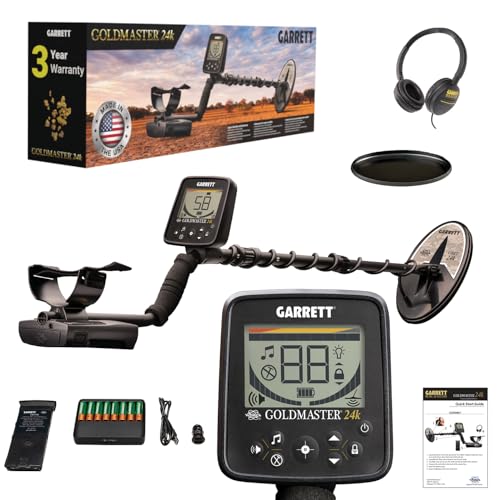
Garrett Goldmaster 24k
$679.99Garrett publishes 48 kHz as a single high frequency, which is squarely in the band where very fine gold gives a usable signal and where a coin machine gives none at all. This is a machine for ground you already know produces.
Best for: fine gold in a known goldfield
Check price on AmazonWhen do you need 71 kHz or a flagship Goldfield mode?
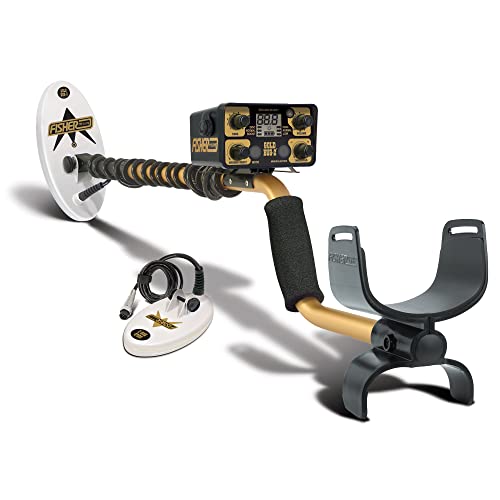
When the gold you are chasing is smaller than the gold your current machine hears, and you already know it is there. Fisher publishes 71 kHz for the Fisher Gold Bug 2, sold with 6 inch and 10 inch elliptical coils, a manual 16-turn ground balance and a three-position mineralisation switch for high, normal and low ground. That is a specialist instrument. The alternative route is a flagship with a gold mode: Minelab Equinox 900 carries a Gold mode among its four, and Minelab Manticore carries Goldfield among ten.
Fisher Gold Bug 2
$739.0071 kHz with 6 inch and 10 inch elliptical waterproof coils carrying full ESI shielding, a 16-turn manual ground balance, a three-position mineralisation switch, an iron discrimination mode and an audio boost that lifts faint deep signals. 2.9 lb with a hip-mountable control housing.
Best for: the smallest natural gold, where almost nothing else responds
Check price on Amazon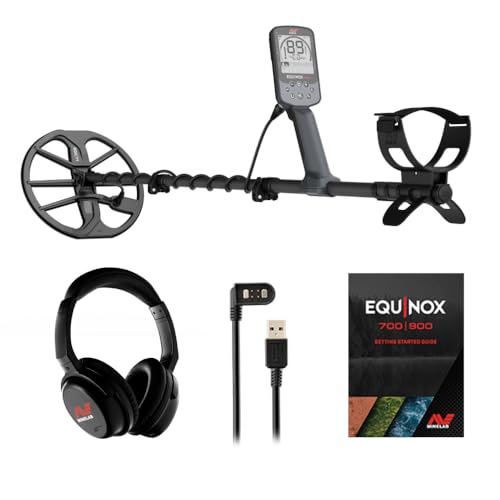
Minelab Equinox 900
$999.00Six single frequencies alongside Multi-IQ, four modes including Gold, 119 high-resolution target IDs, both the EQX 11 and EQX 6 coils, 16 ft of waterproofing and 2.8 lb. It will not out-hear a 71 kHz specialist on the finest gold, and it will be useful every other day of the year.
Best for: someone who wants gold capability without a single-purpose machine
Check price on Amazon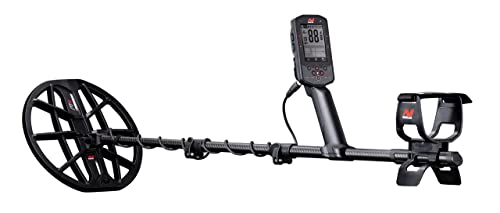
Minelab Manticore
$1,499.00Multi-IQ+ published as 50 percent more power than traditional models, a 2D target ID map, a Goldfield mode among 10 search modes and IP68 waterproofing to 16 ft. The extra power is aimed squarely at the mineralisation that makes goldfields difficult.
Best for: black sand, hot rocks and heavily mineralised goldfields
Check price on AmazonWho should not buy this tier: Do not buy the Fisher Gold Bug 2 unless you are genuinely standing on gold-bearing ground. At 71 kHz it is poor on coins, poor on large targets and unhappy in trash, and in a city park it will find you less than a $120.76 machine would. Do not buy any prospecting detector to look for lost rings: gold jewellery lives in the same target ID band as pull tabs on any machine, and a beach-capable general detector such as the Minelab Equinox 700 will find far more of it. And do not buy the Minelab Manticore for gold unless your ground is genuinely hot, because the power you are paying for is power against mineralisation. If the honest answer is that you want jewellery, the waterproof roundup is a better page for you than this one.
What else does nugget hunting actually require?
Recovery gear, because a gold signal that you cannot locate in the spoil is a signal wasted. A pinpointer is close to mandatory: Garrett publishes three sensitivity levels on the Garrett Pro-Pointer AT specifically for small targets such as nuggets, and $109.99 is trivial against the cost of the machine. Add a Garrett Gold Guzzler Snuffer Bottle snuffer bottle, because fine gold cannot be picked up with fingers, and Gold Collection Glass Vials, 12 pack so it has somewhere to go that is not a pocket.
Then weigh what you find honestly. A Digital Pocket Scale, 200 g by 0.01 g reading to 0.01 g is the starting point for every value calculation, and the gold nugget value calculator converts weight to a melt value at your own purity assumption and spot price. Most people overestimate what a nugget is worth by assuming pure gold, and natural gold rarely is.
How we chose
We have not prospected with any of these machines and are not going to claim we have. Every frequency, weight and control described here is quoted from the manufacturer's published listing or manual, named in the sources. The ordering is driven by published operating frequency against target size, which is the physics that decides what a gold machine can hear, and by how much ground balancing work each machine asks of the operator. Where a listing publishes no figure, the table says so. No depth figure on this page has been measured by anyone here.
Sources
- Fisher Gold Bug Pro and Gold Bug 2 owner manuals
- Minelab Gold Monster 1000 instruction manual
- Garrett AT Gold owner manual
- Garrett Goldmaster 24k product specifications
- Minelab Equinox 900 and Manticore instruction manuals
Frequently asked questions
What is the best metal detector for finding gold?
For natural gold, the Fisher Gold Bug Pro at $339.00 is the best starting point, with 19 kHz, real-time ground balancing and 2.5 lb. For the smallest nuggets the Fisher Gold Bug 2 runs 71 kHz. For gold jewellery rather than nuggets, a general machine such as the Minelab Equinox 700 will find far more, because jewellery is where people are and nuggets are not.
Can a normal metal detector find gold?
Yes, and it finds gold jewellery better than a prospecting machine does. Any machine that detects non-ferrous metal will detect a gold ring. What a general detector struggles with is very small natural gold, which needs a high frequency to respond at all. If your target is rings and chains rather than nuggets, you do not need a gold machine and should not buy one.
What frequency do I need for gold?
High, and the smaller the gold the higher. Published prospecting frequencies in this catalog run 45 kHz for the Gold Monster 1000, 48 kHz for the Goldmaster 24k and 71 kHz for the Gold Bug 2. Machines in the 18 to 19 kHz band such as the AT Gold and Gold Bug Pro find larger nuggets and most jewellery while remaining usable on relics and coins.
Why does gold read so low on the target ID scale?
Because conductivity has nothing to do with value. Gold is a mediocre electrical conductor compared with copper or silver, and jewellery is usually small and thin, which lowers the reading further. That puts most gold in the same band as foil and pull tabs. Anyone who notches out that band to avoid trash has also stopped finding gold, which is a trade worth making consciously.
Do I need a pinpointer for gold prospecting?
More than for any other kind of detecting. Natural gold is often small, often deep in loose material, and easily lost in the spoil pile once you have dug it out. Garrett publishes three sensitivity levels on the Pro-Pointer AT aimed at small targets such as nuggets. A snuffer bottle and a small vial complete the recovery chain, because fine gold cannot be picked up by hand.
Researched, not professional advice. This page is compiled from published specifications, manuals and owner-review consensus, not hands-on testing. Target ID numbers, depth figures and settings vary with soil chemistry, moisture, target size, depth, orientation and firmware version, so treat every figure here as a starting point and verify it against your own machine's manual and your own ground. As an Amazon Associate we earn from qualifying purchases.