Best detectors
Best Metal Detector for Beginners: What to Buy and What to Skip
Quick answer
The Minelab Vanquish 340 at $258.99 is the best first metal detector for most adults, because it brings simultaneous multi-frequency and a waterproof coil to an entry price. If you are unsure you will stick with the hobby, the Bounty Hunter Tracker IV at $120.76 is the cheapest machine genuinely worth owning.
The beginner market is where this hobby loses most of its recruits, and it loses them to two mistakes in opposite directions. The first is buying a toy: a machine so insensitive and so noisy that the new owner digs forty bottle caps, finds nothing, and puts it in the garage. The second is buying a flagship, which does not go in the garage but does bury the new owner under a menu system they cannot yet evaluate.
The useful question is not which machine is best but which machine teaches you fastest. That means stable audio, a target ID number you can check against what comes out of the hole, and a weight you can swing for three hours. It also means a pinpointer, which is not optional and is the single highest-return purchase in the hobby. Read the target ID chart alongside whatever you buy, because learning to read the number is most of the first season.
Top pick

Minelab Vanquish 340
The cheapest route into Multi-IQ simultaneous multi-frequency, with a 10 by 7 waterproof coil and three modes, which means a beginner is not locked out of beaches from day one.
Price was accurate when this page was compiled and changes often.
On this page
- What does a beginner actually need from a first detector?
- How do the beginner machines compare?
- What is the least you can spend and still be detecting properly?
- What is the machine most beginners should actually buy?
- Is it ever right for a beginner to buy once and buy well?
- What else belongs in a first kit?
- How do you avoid the first-season mistakes?
What does a beginner actually need from a first detector?
Four things. A numeric target ID, so you can compare what the screen said with what came out of the ground and build a mental model that will serve you for years. A discrimination control, so you can quiet the iron while you learn. A weight under about 2.9 pounds, because a machine you put down after an hour finds nothing. And an audio response that is proportional rather than binary, so a faint deep signal sounds different from a loud shallow one.
Notice what is not on that list: depth, frequency choice and search modes. Those are real, and they matter later. In a first season you will find nearly everything you find in the top six inches of a park you have permission to hunt, and nothing about a machine changes that. What changes it is hours swung and ground covered, which is a question the coil coverage calculator puts real numbers on.
How do the beginner machines compare?
Read the right hand column first. The reason to spend more is almost always a specific capability you can name, and if you cannot name it, the cheaper machine is the correct purchase.
The cheapest machine here worth owning is the Bounty Hunter Tracker IV at $120.76, and the cheapest with simultaneous multi-frequency is the Minelab Vanquish 340 at $258.99.
| Machine | Price | Target ID | The reason to spend more |
|---|---|---|---|
| Bounty Hunter Tracker IV | $120.76 | None, analog with no screen | Nothing, if you are still deciding whether you like the hobby |
| Garrett ACE 200 | $149.99 | 0 to 99 digital | A number on a screen to check against the hole |
| Teknetics Delta 4000 | $189.00 | LCD with target ID and a depth reading | A depth indicator and an 8 inch waterproof coil |
| Fisher F22 | $229.00 | 0 to 99 numeric with 4-tone audio | Weatherproofing and roughly 2 lb in the hand |
| Minelab Vanquish 340 | $258.99 | Three modes, Multi-IQ | Simultaneous multi-frequency, which cannot be added later |
| Garrett ACE 300 | $269.99 | 0 to 99 digital with iron resolution | Adjustable frequency to beat interference in crowded parks |
| Minelab X-Terra Pro | $282.14 | 30 discrimination segments | Full IP68 waterproofing to 16 ft |
| Minelab Equinox 700 | $749.00 | Multi-IQ with high-resolution IDs | A machine you will not replace for a decade |
Specifications are quoted from each maker listing or manual. Prices come from the catalog and change. None of these machines has been tested in person by us.
What is the least you can spend and still be detecting properly?
About $120.76, and that is a real answer rather than a hedge. The Bounty Hunter Tracker IV is analog: two knobs, three modes, an 8 inch waterproof coil, no screen and no numbers. Bounty Hunter publishes 2.6 lb and up to 25 hours of runtime, with a digger and a pouch included. What you give up is the target ID number, which means you dig more trash and learn more slowly. What you gain is that the decision costs you almost nothing if the hobby turns out not to suit you.

Bounty Hunter Tracker IV
$120.76Three search modes, an 8 inch waterproof coil, adjustable sensitivity and discrimination, 2.6 lb, and a digger and carry pouch in the box. There is no numeric target ID and no display, so every judgement is made by ear, which is slower to learn but builds a better ear.
Best for: a first machine when you are not yet committed
Check price on Amazon
Garrett ACE 200
$149.99Garrett publishes a 0 to 99 digital target ID scale, a 6.5 by 9 inch waterproof PROformance concentric searchcoil, a weight under 3 lb, made in the USA with a 3-year warranty. The control box is explicitly not waterproof, so treat it as a dry-land and shoreline machine.
Best for: learning to read a target ID number in parks and yards
Check price on Amazon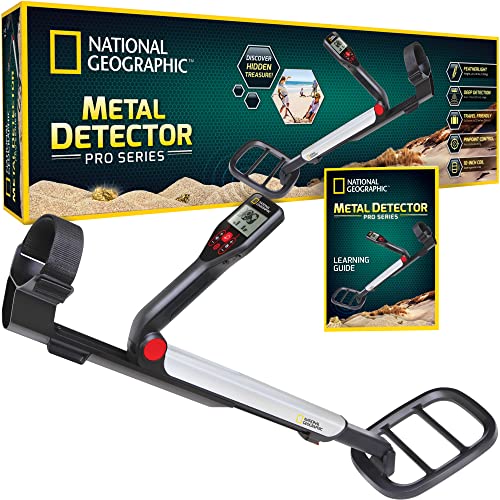
National Geographic PRO Series Metal Detector and Pinpointer Set
$159.95Bundles a detector with a pinpointer, which is the accessory that most shortens the learning curve and the one beginners most often skip. National Geographic publishes a 10 inch waterproof coil, an LCD display, 4 sensitivity levels and 3 detection modes.
Best for: a cautious first buyer who wants both pieces in one box
Check price on AmazonWhat is the machine most beginners should actually buy?
Something in the $258.99 to $282.14 band, because this is where a beginner machine stops being a beginner machine. Minelab Vanquish 340 gives you simultaneous multi-frequency, which is the one capability that cannot be added later and the one that decides whether a wet beach is hunting ground or a wall of noise. Minelab X-Terra Pro gives you full IP68 waterproofing to 16 feet at a price where most machines are merely rain-resistant.
Minelab Vanquish 340
$258.99Multi-IQ simultaneous multi-frequency with a 10 by 7 waterproof DD coil, three modes for coin, jewellery and relic, running on four AA cells with a padded carry bag included. This is the cheapest machine here that will not stop you hunting a beach.
Best for: most first-time adult buyers
Check price on Amazon
Garrett ACE 300
$269.99Adds a 0 to 99 digital target ID, improved iron resolution, electronic pinpointing in a non-motion all-metal mode and an adjustable frequency that lets you tune out interference from other detectors and power lines in a crowded park.
Best for: busy public parks and anyone who wants fewer settings
Check price on Amazon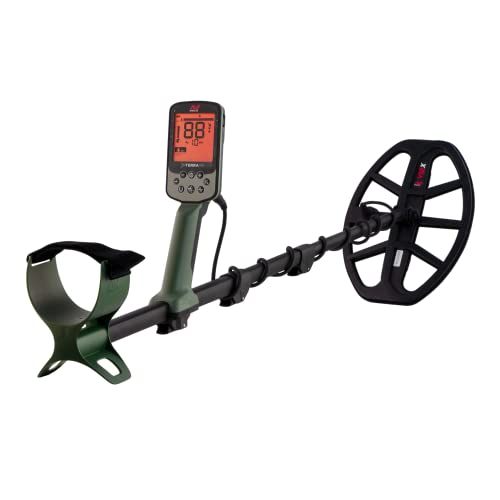
Minelab X-Terra Pro
$282.14Minelab publishes IP68 waterproofing to 16 ft, six preset search modes across Park, Field and Beach, 30 discrimination segments, 2.9 lb, a 25 inch packed length, a control pod flashlight and handgrip vibration. It switches single frequencies rather than running several at once.
Best for: a beginner who already knows they want to hunt water
Check price on Amazon
Nokta Simplex Ultra
$299.00Fully waterproof to 16 ft on a carbon fibre shaft that retracts to 25 inches, at 2.6 lb, with firmware updates over USB. Nokta states in the listing that Bluetooth headphones are not included, so budget for a pair if you want wireless audio.
Best for: smaller or older users who feel every ounce
Check price on AmazonIs it ever right for a beginner to buy once and buy well?
Yes, for one specific reader: the person who already knows they are going to do this for years, usually because they have hunted with somebody else's machine and enjoyed it. For that reader the Minelab Equinox 700 or the Nokta The Legend Pro Pack Pro Pack removes the upgrade step entirely. Minelab publishes 2.8 lb, 16 feet of waterproofing and low latency wireless headphones included with the 700; Nokta ships the Legend with both a 6 inch and an 11 inch DD coil in the box.

Minelab Equinox 700
$749.00Multi-IQ plus four single frequencies, full waterproofing to 16 ft, three detect modes, carbon fibre shafts at 2.8 lb, a 24 inch packed length, a built-in flashlight, handgrip vibration and low latency wireless headphones included. There is no obvious reason to replace it.
Best for: a beginner who is certain they are staying
Check price on Amazon
Nokta The Legend Pro Pack
$659.00The Pro Pack includes the 6 inch and 11 inch DD coils, and Nokta publishes two simultaneous multi-frequency profiles plus 4, 10, 15, 20 and 40 kHz single frequencies. Having the small coil from day one means trashy ground is workable in your first season rather than your third.
Best for: someone whose local sites are old and full of iron
Check price on Amazon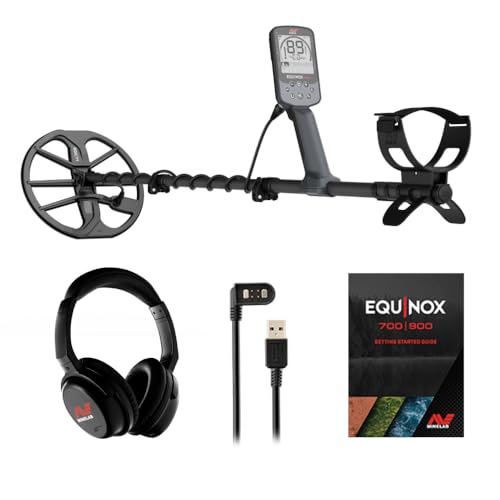
Minelab Equinox 900
$999.00Six single frequencies alongside Multi-IQ, four modes including Gold, 119 high-resolution target IDs, and both the EQX 11 and EQX 6 coils in the box. For a beginner this is more adjustment than you can yet evaluate, and most of it will sit at factory settings for a year.
Best for: a beginner with genuinely difficult soil or salt beaches
Check price on AmazonWho should not buy this tier: Almost nobody starting out should buy this tier, and the reason is not money, it is learning. A flagship gives you a dozen ways to change a setting you do not yet know is wrong, and the commonest beginner failure mode is changing three things at once and having no idea which one helped. If you are buying a gift for somebody who has never detected, do not buy from this tier: the Minelab Vanquish 340 plus a Garrett Pro-Pointer AT costs less and will be used more. And if you have not yet established where you have permission to dig, buy nothing at all until you have, because a detector with nowhere to go is the most expensive ornament in this hobby.
What else belongs in a first kit?
A pinpointer, a digger, a finds pouch and gloves. That is roughly a hundred and fifty dollars on top of the machine and it will do more for your first season than spending the same amount on a better detector would. A Minelab PRO-FIND 15 at $69.00 is the cheapest way to stop digging blind; a Garrett Pro-Pointer AT at $109.99 is the one most people end up with. A CKG Double Serrated Hand Digger cuts a plug without costing Lesche money, and Serious Detecting Gloves (large) matter because broken glass and rusted metal are what actually comes out of old ground.
Add Rechargeable AA NiMH Batteries, 8 pack if your machine runs on AA cells, because low batteries change how a detector behaves before they stop it working, and a new detectorist will blame the machine. The beginner setup lists a complete kit with a running total, and the digger roundup explains why a full size shovel is the wrong first purchase on turf.
How do you avoid the first-season mistakes?
- Get permission before you buy. Written permission on one decent site is worth more than any machine. Public parks often have their own rules, and those rules are set locally.
- Learn the machine in your own garden. Bury known targets at marked depths, let the soil settle through a few rains, then sweep them in the modes you actually use and write down what the machine says.
- Dig everything for the first month. Including the iron. You cannot learn what a good signal sounds like without hearing what a bad one sounds like and confirming it.
- Slow the sweep down. A slow, low, overlapping sweep gives the electronics several looks at a deep target. Most beginners sweep about twice as fast as they should.
- Fill every hole properly. Cut a plug, fold it back, tread it down. The reason permissions get withdrawn is holes, not finds.
- Keep a log. Site, hours, targets, what the ID said and what it turned out to be. After one season that log is more useful than any chart on the internet.
How we chose
We have not swung any of these machines and make no claim to have done so. The specifications below are quoted from each manufacturer's published listing or manual, named in the sources. For a beginner page the weighting is deliberately different from the general roundup: stable audio, low weight, a short menu and a resale market matter more here than depth in mineralised ground, because a machine that is confusing or heavy stops being used long before its limitations are reached. Where a maker publishes no figure for weight or waterproofing, the text says so.
Sources
- Minelab Vanquish 340 and X-Terra Pro product specifications
- Minelab Equinox 700 and 900 instruction manual
- Garrett ACE 200 and ACE 300 owner manuals
- Nokta Simplex Ultra and The Legend user manuals
- Bounty Hunter Tracker IV owner manual
Frequently asked questions
What is the best metal detector for a complete beginner?
The Minelab Vanquish 340 at $258.99 for most adults, because Multi-IQ simultaneous multi-frequency is the one capability you cannot add later and it keeps beaches open to you. If the budget is tighter or the commitment less certain, the Bounty Hunter Tracker IV at $120.76 is an honest starting point with an 8 inch waterproof coil and nothing to misconfigure.
Should a beginner buy a cheap detector or spend more?
Spend as little as your certainty justifies, then put the saved money into a pinpointer and a digger. A beginner with a modest machine and a good pinpointer recovers more targets per hour than a beginner with an expensive machine and neither. The exception is anyone who already knows they are staying in the hobby, who should look at the Minelab Equinox 700 and stop upgrading forever.
Do beginners need a pinpointer?
Yes, and it is the highest-return purchase in the hobby. Without one you widen the hole until the target appears, which takes several minutes, damages turf and gets permissions withdrawn. With one you cut a small plug and find the target in seconds. The Minelab PRO-FIND 15 at $69.00 is the cheapest sensible option and the Garrett Pro-Pointer AT at $109.99 is the one most people settle on.
How long before a beginner finds something worth keeping?
That depends far more on the sites you can access than on the machine. An old permission with a century of foot traffic produces on the first outing; a modern housing estate lawn may produce nothing for months. Get permission on the oldest ground you can reach, dig everything at first, and keep a log. Ground covered and holes dug are the variables you control.
Is a multi-frequency detector necessary for a beginner?
Necessary only if you want to hunt salt water beaches, where the salt itself is conductive and a single frequency cannot separate it from the target. For dry inland parks a good single-frequency machine finds exactly the same coins. Because multi-frequency cannot be retrofitted, buying it at the start is the cheapest way to own it, which is why the Vanquish 340 is the recommendation here.
Researched, not professional advice. This page is compiled from published specifications, manuals and owner-review consensus, not hands-on testing. Target ID numbers, depth figures and settings vary with soil chemistry, moisture, target size, depth, orientation and firmware version, so treat every figure here as a starting point and verify it against your own machine's manual and your own ground. As an Amazon Associate we earn from qualifying purchases.