Best accessories
Best Metal Detecting Shovel: Why Most People Should Buy a Hand Digger
Quick answer
The Lesche Digging Tool with sheath at $59.95 is the right first purchase for most detectorists: a 7 inch serrated blade, 12 inches overall, and a belt sheath because the edge is genuinely sharp. A full size T-handle shovel such as the Lesche Sampson 31 is for relic ground, not parks.
Most roundups on this term sell you a shovel. Most detectorists should be buying a hand digger. On turf, in a park, on a permission you want to keep, the tool you need cuts a neat plug that folds back and leaves ground that looks untouched. A 31 inch T-handle shovel does not do that, and pulling one out of the car in a public park is how a hobby acquires a reputation.
Where a shovel genuinely earns its place is relic ground: ploughed fields, pasture, woodland and anywhere the target is ten inches down in compacted soil full of roots. That is real work and a hand digger will punish your wrists for it. So this page is organised by ground rather than by price, and the honest recommendation for a first buyer is the cheapest tier. Pair whatever you buy with a pinpointer, because the two together are what make a small hole possible at all.
Top pick

Lesche Digging Tool and Sod Cutter with sheath
Lesche publishes a 7 inch by 1.75 inch serrated blade on a 12 inch tool, with a belt holder included, and the blade is attached perpendicular to the handle for leverage. It is the reference hand digger and it comes with the sheath the edge deserves.
Price was accurate when this page was compiled and changes often.
On this page
- When do you need a shovel rather than a hand digger?
- How do the diggers and shovels compare on published dimensions?
- What should your first digging tool be?
- When is it worth stepping up to a full size shovel?
- What do serious relic hunters actually carry?
- How do you cut a plug that closes invisibly?
- What else belongs in the recovery kit?
When do you need a shovel rather than a hand digger?
Three conditions, and you want at least two of them. The ground is hard, compacted or full of roots. The targets are deep, which on relic sites means eight inches and more. And nobody is watching, which is to say you are on private ground with permission rather than in a public park. Ploughed fields and pasture tick all three; a school playing field ticks none.
Everywhere else, a hand digger is faster as well as more discreet. You are kneeling for the target anyway once the pinpointer comes out, and the time saved by a big shovel on a six inch plug is close to zero. The serration is what actually matters: Lesche publishes sharp serrated teeth that slice roots, weeds, vines and sod, and that is the feature that separates a detecting digger from a garden trowel. A plain trowel bends on its first root.
How do the diggers and shovels compare on published dimensions?
Length is the specification that decides comfort, and weight decides whether the tool actually comes with you. Only figures the makers publish are shown.
Published lengths run from a 12 inch Lesche hand digger to a 36 inch Lesche T-handle shovel, and Lesche publishes 2 lb 6 oz for the 31 inch Sampson against 2 lb 9 oz for the 36 inch version.
| Tool | Price | Published length | Blade | Published weight |
|---|---|---|---|---|
| CKG Double Serrated Hand Digger | $29.99 | 10.24 in overall | Double serrated stainless, sheath and belt loop included | Not published in this listing |
| Lesche Digging Tool | $59.95 | 12 in overall | 7 in by 1.75 in serrated alloy steel | Not published in this listing |
| Lesche Digging Tool with sheath | $59.95 | 12 in overall | 7 in by 1.75 in serrated, belt holder included | Not published in this listing |
| Root Slayer Nomad | $46.69 | About 70 percent the size of the full Root Slayer | Serrated with an inverted V tip, fibreglass shaft | Not published in this listing |
| CKG Double Serrated Shovel | $59.99 | Not published in this listing | Double serrated tempered steel, sharpened tip | Not published in this listing |
| CKG Carbon Detecting Shovel | $71.99 | Not published in this listing | Same blade on a carbon handle rated over 170 lb | Not published, but lighter by design |
| Lesche Mini Sampson 18 | $84.00 | 18 in overall | 7.5 in by 4 in serrated, pre-sharpened | Not published in this listing |
| Lesche Sampson Pro-Series 31 | $89.40 | 31 in overall | 7.5 in by 4 in serrated, pre-sharpened | 2 lb 6 oz |
| Lesche T-Handle 36 | $99.80 | 36 in overall, 29 in shaft | 7.3 in by 4 in double serrated | 2 lb 9 oz |
Dimensions and weights are quoted from the maker listings named in the sources. Where a listing publishes no weight, the cell says so rather than carrying an estimate. Nothing here has been used in the ground by us.
What should your first digging tool be?
A serrated hand digger with a sheath, and CKG Double Serrated Hand Digger at $29.99 does the job for about half the price of the reference tool. CKG publishes stainless steel construction with double serrated edges that cut roots, branches, rope and bags, a reinforced handle-to-blade weld, 10.24 inches overall and a sheath with a belt loop. If it eventually bends or you lose it, you have lost thirty dollars rather than sixty.
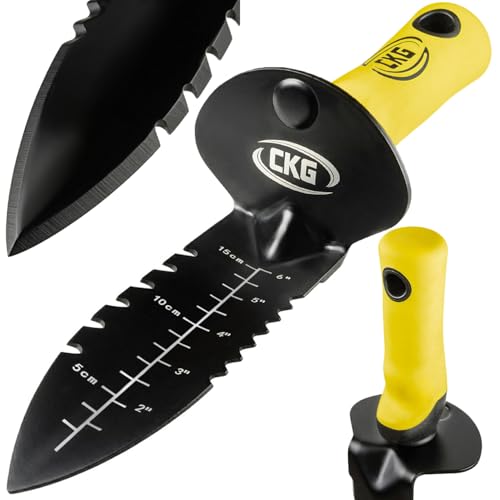
CKG Double Serrated Hand Digger
$29.99Double serrated stainless steel that cuts roots, branches, rope and bags, with a reinforced welded handle joint, an ergonomic non-slip rubberised grip, 10.24 inches overall, and a durable sheath with a belt loop included. It does ninety percent of what the reference tool does.
Best for: a first digger, or a spare to keep in the car
Check price on Amazon
Root Slayer Nomad Garden Spade
$46.69A short serrated spade at about 70 percent the size of the full Root Slayer, with an inverted V cutting tip, a powder-coated carbon steel blade and a fibreglass shaft with non-latex grips. Short enough not to draw attention on a permission where a long shovel would.
Best for: permission hunts where a full shovel would look wrong
Check price on Amazon Lesche Digging Tool and Sod Cutter with sheath
$59.95Lesche publishes a 7 inch by 1.75 inch serrated blade on a 12 inch tool in heat-treated alloy steel, guaranteed not to bend, with the blade perpendicular to the handle for prying leverage, and a belt holder included. The sheath is not optional: the edge is genuinely sharp.
Best for: cutting a clean plug in turf, for years
Check price on AmazonWhen is it worth stepping up to a full size shovel?
Once you are hunting fields and pasture regularly, and once you have hit the point where your wrists are the limiting factor rather than your patience. CKG Double Serrated Detecting Shovel at $59.99 is a heavy-duty double serrated shovel at a third of the price of the name-brand equivalent, and CKG Carbon Detecting Shovel at $71.99 puts the same blade on a carbon handle CKG publishes as supporting over 170 pounds. The lighter shaft is the difference between carrying it all day and leaving it in the car, which is the only specification that really matters in a shovel.

CKG Double Serrated Detecting Shovel
$59.99Tempered steel with a sharpened edge, a pointed tip and a double serrated blade designed for cutting through large roots, heat-treated and sharpened from the factory. It does the same job as the reference shovels at a fraction of the price, and it is the sensible first full-size tool.
Best for: a first full size shovel for fields and pasture
Check price on Amazon
CKG Carbon Detecting Shovel
$71.99The same serrated blade on a lightweight carbon handle that CKG publishes as supporting over 170 pounds. Weight is the specification that decides whether a shovel gets carried to the far end of a field or abandoned at the gate, and this is the one that gets carried.
Best for: long walks between spots
Check price on Amazon
Lesche Mini Sampson T-Handle Shovel, 18 inch
$84.00Lesche publishes 18 inches overall with a 7.5 by 4 inch serrated pre-sharpened blade, giving real leverage in a low profile that straps to a pack. It is the answer when a full shovel is too much to carry but a hand digger is not enough for the ground.
Best for: hiking in to a site
Check price on AmazonWhat do serious relic hunters actually carry?
A Lesche T-handle, and they have carried one for decades. Lesche Sampson Pro-Series T-Handle Shovel, 31 inch at $89.40 is the standard relic shovel: Lesche publishes 31 inches overall, a 7.5 by 4 inch serrated and pre-sharpened blade, 2 pounds 6 ounces, hand-made in the USA. Lesche T-Handle Shovel, 36 inch double serrated at $99.80 is the same idea at 36 inches overall with a 29 inch shaft and a double serrated blade, published at 2 pounds 9 ounces, which saves your back if you are tall.

Lesche Sampson Pro-Series T-Handle Shovel, 31 inch
$89.40Lesche publishes 31 inches overall with a 7.5 by 4 inch serrated pre-sharpened blade at 2 lb 6 oz, hand-made in the USA. The T-handle lets you put body weight behind the cut rather than wrist strength, which is the whole point on compacted ground full of roots.
Best for: relic hunting and deep targets in hard ground
Check price on Amazon
Lesche T-Handle Shovel, 36 inch double serrated
$99.80The longer version at 36 inches overall with a 29 inch shaft, a 7.3 by 4 inch double serrated blade and a published weight of 2 lb 9 oz. Five extra inches of shaft removes a surprising amount of stooping across a full day, which is where back trouble comes from.
Best for: taller users and all-day digging in fields
Check price on Amazon
Lesche Digging Tool (right handed)
$59.95Even with a T-handle shovel on your shoulder, the final recovery is done kneeling. Lesche publishes a 7 by 1.75 inch serrated alloy steel blade, heat-treated and guaranteed not to bend, on a 12 inch tool with the blade perpendicular to the handle for leverage.
Best for: the close work that a shovel cannot do
Check price on AmazonWho should not buy this tier: Do not take a 31 or 36 inch T-handle shovel into a public park, a school field or a village green. It is the wrong tool for turf, it cuts holes you cannot close invisibly, and more than anything it looks like exactly what people worry detectorists are doing. A full size shovel is for private ground with permission, and the Lesche T-Handle Shovel, 36 inch double serrated in particular is a specialist tool for tall people digging fields all day. If you detect mainly in parks and gardens, skip this tier entirely and put the money into a pinpointer or a second coil instead. Also skip it if you have any back or shoulder trouble, because a T-handle encourages you to lever with your spine.
How do you cut a plug that closes invisibly?
- Pinpoint before you cut. Narrow the target down with your detector pinpoint mode, then mark the centre. Cutting before you know where the target is guarantees a bigger hole than you need.
- Cut a horseshoe, not a circle. Cut three sides and leave one hinged. A flap that stays attached keeps the grass alive and drops back into exactly the position it came from.
- Cut deep and at an angle. Angle the blade slightly inward so the plug is wedge-shaped. A wedge seats itself back down instead of sitting proud of the surface.
- Fold the plug back onto a cloth. Keep the soil off the surrounding grass. Loose soil left on turf is what makes a repaired hole visible a week later.
- Search the plug as well as the hole. Sweep the underside of the flap with the pinpointer. A good share of targets come out in the plug rather than in the ground beneath it.
- Backfill, fold and tread. Return the soil, fold the flap back, press it down firmly with your foot and water it if the ground is dry. Done properly, nobody can find the hole the next day.
What else belongs in the recovery kit?
Gloves and knee pads, and they are not luxuries. Serious Detecting Gloves (large) at $13.95 exist because broken glass and rusted metal are what actually comes out of old ground, and the listing notes padded palms plus touchscreen-capable fingers. NoCry Professional Gel Knee Pads at $26.99 are the accessory people buy second and wish they had bought first, because you kneel for every single target.
Add a pouch that separates finds from trash, such as CKG Finds and Digger Pouch, and a LHKNL Rechargeable LED Headlamp if you ever finish a hole after sunset, because backfilling properly in fading light needs both hands and a light. A Mini Waterproof First Aid Kit in the bag is sensible for the same reason the gloves are. The expert setup lists a full relic-hunting kit with totals, and the dig time budget calculator will tell you how many of these holes you can realistically cut in an afternoon.
How we chose
None of these tools has been put in the ground by us and we will not suggest otherwise. Blade dimensions, overall lengths, weights and materials are quoted from each manufacturer's published listing, named in the sources. Ranking is driven by the ground each tool suits rather than by price: turf and parks need a short serrated blade that cuts a clean plug, and compacted relic ground needs length, a T-handle and a foot platform. Weight is weighted heavily in the shovel tiers, because a shovel you leave in the car digs nothing.
Sources
- Lesche digging tool and Sampson shovel product specifications
- CKG hand digger and detecting shovel product listings
- Radius Garden Root Slayer Nomad product listing
Frequently asked questions
What is the best shovel for metal detecting?
For relic ground, the Lesche Sampson Pro-Series 31, published at 31 inches overall with a 7.5 by 4 inch serrated pre-sharpened blade at 2 lb 6 oz, hand-made in the USA. For most detectorists most of the time, the honest answer is not a shovel at all but a serrated hand digger such as the Lesche Digging Tool with sheath at $59.95.
Do I need a shovel or a hand digger?
A hand digger, unless you regularly hunt ploughed fields, pasture or woodland where targets sit eight inches down in compacted root-filled soil. On turf a hand digger cuts a plug that closes invisibly, which is what keeps permissions open. Buy the hand digger first and add a shovel later if the ground you hunt genuinely demands it.
Why do detecting diggers have serrated edges?
Because roots are what stop a blade, not soil. Lesche publishes sharp serrated teeth that slice through roots, weeds, vines and sod, and CKG publishes double serrated edges that work like a saw. A plain garden trowel has no way through a root mat and will bend at the neck the first time you lever against one, which is why detecting-specific tools exist.
How long should a metal detecting shovel be?
Match it to your height and your back. Lesche publishes 31 inches overall for the standard Sampson and 36 inches with a 29 inch shaft for the longer T-handle, and taller users generally want the longer one to avoid stooping all day. If you walk long distances between spots, the 18 inch Mini Sampson straps to a pack and is a better compromise than either.
Can I use a garden spade for metal detecting?
You can, and it will be slower, heavier and worse at cutting a plug you can close. A garden spade has a wide flat blade with no serration, so it tears turf rather than slicing it and stalls on roots. It also makes a hole far larger than the target needs. The cost gap to a purpose-made digger is small enough that it is rarely worth it.
Researched, not professional advice. This page is compiled from published specifications, manuals and owner-review consensus, not hands-on testing. Target ID numbers, depth figures and settings vary with soil chemistry, moisture, target size, depth, orientation and firmware version, so treat every figure here as a starting point and verify it against your own machine's manual and your own ground. As an Amazon Associate we earn from qualifying purchases.