Best for water
Best Sand Scoops for Dry Sand: Long Handles, Not Titanium
Quick answer
A dry sand scoop needs a long handle so you are not bending for every target, and a mesh fine enough to hold a ring while sand falls through. The RTG 33 inch Beach Sand Scoop at $88.95 is built specifically for dry sand with a fixed 28 inch handle, and a cheap stainless scoop does the job just as well as titanium above the tideline.
Sand scoops get sold as one category, but a scoop built for the dry sand above the tideline and a scoop built for wading in current are different tools solving different problems. Dry sand scooping is about repetition: you are bending, scooping, sifting and standing back up dozens of times in a session, and a long handle is what keeps your back in the game. Wading and surf scooping is about resisting current and reaching under moving water, which asks for a shorter, more aggressive design and often a foot-push handle. The general sand scoop roundup covers both jobs together. This page is the dry sand half on its own.
The other confusion this category invites is material. Titanium and stainless steel scoops exist because salt water corrodes cheaper metals over a season of use. Above the tideline, in dry sand, that corrosion pressure barely exists, which changes the honest advice here quite a lot compared with a scoop bought for wet salt work.
Top pick

RTG 33 inch Beach Sand Scoop
RTG publishes a fixed 28 inch handle, a 5 inch diameter bucket in 16 gauge steel with a welded wire screen, and a weight under two pounds, at $88.95. It is built for dry sand specifically rather than adapted from a wading design.
Price was accurate when this page was compiled and changes often.
On this page
- What makes a scoop suited to dry sand rather than wading?
- Beginner: finding out if dry sand hunting is worth the gear
- Intermediate: the purpose-built dry sand designs
- Expert: the flagship materials, and when they actually earn their keep
- How do the dry sand scoops compare on paper?
- What else makes a dry sand session faster?
- Does scoop shape matter as much as size?
What makes a scoop suited to dry sand rather than wading?
Handle length is the biggest difference. A long-handled scoop like the RTG 33 inch Beach Sand Scoop lets you scoop and sift while standing, which matters far more over a three hour dry sand session than it does for a few minutes wading a tide pool. Compare that with the RTG Pro Aluminum 47 inch Mini Water Scoop, which RTG builds with a foot-push angle specifically for working under moving water: it is the right tool for wading and the wrong one for dry sand, where you have no current to push against and a shorter reach is just wasted bending.
Mesh hole size is the second difference, and it is a genuine trade-off rather than a simple bigger-is-better choice. GADFISH publishes 8.5 mm hexahedron holes on its scoop, which sifts sand quickly but will also let very small items pass through with it. A finer mesh holds onto more, including thin gold and small jewellery, at the cost of taking longer to drain a scoopful. Neither setting is correct in general: it depends on whether you are chasing coins and larger jewellery or specifically hunting for fine gold and small pieces.
Beginner: finding out if dry sand hunting is worth the gear
A mesh pouch and a garden trowel will get a first session done, but a dedicated scoop changes how much ground you cover in an hour. This is the cheapest way to find that out without committing to a long-handled model you might not need.

GADFISH Stainless Sand Scoop
$32.99GADFISH publishes a 201 stainless steel build, a detachable long-handle design with 8.5 mm hexahedron holes, and a full kit including a sand shovel, at $32.99.
Best for: a first dry sand scoop, or trying the hobby at the beach once
Check price on AmazonIntermediate: the purpose-built dry sand designs
Both picks here are built with dry sand specifically in mind rather than adapted from a wading scoop. The RTG 33 inch Beach Sand Scoop commits fully to a long fixed handle, while the CKG 304 Stainless Sand Scoop gives the same stainless durability as the flagship scoops at roughly half the price.
RTG 33 inch Beach Sand Scoop
$88.95RTG publishes a fixed 28 inch handle, a 5 inch diameter bucket in 16 gauge steel and a rubber hand grip, at a weight RTG states as under two pounds, for $88.95.
Best for: covering a lot of dry sand without bending
Check price on Amazon
CKG 304 Stainless Sand Scoop
$89.99CKG publishes 304 stainless steel construction with a shark tooth sifter and a carbon fibre handle, at $89.99, roughly half the price of its flagship stainless and titanium scoops.
Best for: stainless durability without the flagship price
Check price on AmazonExpert: the flagship materials, and when they actually earn their keep
Both picks here are the most expensive scoops in the catalog, and the honest case for either one is thinner on pure dry sand than the marketing suggests. Titanium and premium stainless earn their price back through corrosion resistance in salt water, which dry sand above the tideline barely exposes them to.
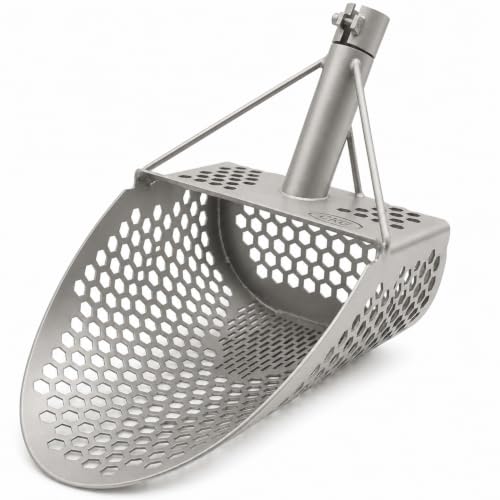
CKG Titanium Sand Scoop
$198.99CKG publishes titanium construction, which does not rust in salt water and does not set off a detector, at $198.99. In dry sand alone the weight saving is real, but the corrosion resistance the price is mostly paying for is not being used.
Best for: someone who also works wet sand and salt on the same trips
Check price on Amazon
CKG Carbon Fiber Sand Scoop Handle
$86.99CKG publishes a universal carbon fibre handle at 28.5 mm diameter, at $86.99, which lightens a heavy scoop you already own for less than a third of the price of a full titanium replacement.
Best for: making a cheap scoop usable for a full day
Check price on AmazonWho should not buy this tier: Do not buy the CKG Titanium Sand Scoop for a beach you only ever hunt above the tideline. Its real advantage over stainless is corrosion resistance in salt water, and dry sand does not expose a scoop to that at all. The CKG 304 Stainless Sand Scoop at $89.99 will outlast most people's interest in the hobby at roughly half the cost, and the titanium price only makes sense once wet salt sand and surf are part of your regular routine.
How do the dry sand scoops compare on paper?
Handle length and material are the two columns worth reading closely. Bucket size varies less between these than the marketing implies.
Handle length ranges from a detachable short grip to a fixed 47 inch wading pole, and only two of these six scoops are built primarily for dry sand rather than wet sand or wading.
| Scoop | Handle | Material | Best suited to | Price |
|---|---|---|---|---|
| GADFISH Stainless Sand Scoop | Detachable, adjustable | Stainless steel | A first scoop, dry or damp sand | $32.99 |
| RTG 33 inch Beach Sand Scoop | Fixed 28 inch | 16 gauge steel | Dry sand specifically | $88.95 |
| CKG 304 Stainless Sand Scoop | Carbon fibre | 304 stainless steel | General dry and damp sand use | $89.99 |
| CKG Stainless Steel Sand Scoop | Carbon fibre | Stainless steel | Regular beach hunting, dry or wet | $194.99 |
| CKG Titanium Sand Scoop | Sold separately | Titanium | Mixed dry sand and wet salt work | $198.99 |
| RTG Pro Aluminum 47 inch Mini Water Scoop | Fixed 47 inch, foot-push angle | Aluminium | Wading and surf, not dry sand | $122.88 |
Figures are quoted from the manufacturer listing for that product. The RTG Pro is included only to show what a wading scoop looks like next to a dry sand one; it is not a recommendation for this page's use case.
What else makes a dry sand session faster?
A scoop only solves half the problem. Somewhere for the trash and the keepers to go while you scoop the next signal matters just as much, and a mesh-bottomed pouch drains sand the way a solid one never does. The pouches roundup covers that half of the kit, and pairing a mesh pouch with any scoop on this page is a bigger improvement to a session than upgrading the scoop's material.
Recovery speed is the other lever. A pinpointer narrows a scoopful of sand down before you start sifting by hand, which is where most of a dry sand session's time actually goes. The pinpointer roundup covers the options, and for anyone hunting a genuinely busy public beach the beach machine roundup is worth reading alongside this page rather than after it.
Does scoop shape matter as much as size?
Round scoops and elliptical scoops behave differently even at a similar bucket volume. A round bucket, like the one on the RTG 33 inch Beach Sand Scoop, tends to hold a more consistent depth of sand across the whole scoop, which makes it easier to judge how much material you have lifted by feel. An elliptical or tapered bucket concentrates material toward the centre, which some hunters find sifts a little faster once you get used to the motion. Neither shape is objectively better, and the difference matters far less than handle length or mesh size for a dry sand session specifically.
Weight distribution along the handle also affects fatigue more than total weight does. A scoop with the bucket balanced close to the grip feels lighter through a long session than a heavier scoop with poor balance, even at a similar overall weight on a scale. This is one more reason the published weight figure alone does not tell the whole story, and why reading how a manufacturer describes the balance of its own design is worth the extra minute before buying.
How we chose
We did not test any of these scoops in person and no dig time or find count on this page is a claim about our own use. Every dimension and material below is drawn from the manufacturer listing for that product, and picks were chosen on published handle length, material and price for the specific job of dry sand rather than wading or diving.
Sources
- RTG 33 inch Beach Sand Scoop and RTG Pro Aluminum 47 inch product listings
- CKG Titanium, Stainless and 304 Stainless Sand Scoop product listings
- GADFISH Stainless Sand Scoop product listing
Frequently asked questions
Is a titanium scoop worth it for dry sand only?
Usually not. Titanium's real advantage is that it does not corrode in salt water, and dry sand above the tideline exposes a scoop to almost none of that. A stainless scoop like the CKG 304 Stainless Sand Scoop at roughly half the price will do the same job for years. Titanium earns its price back once wet salt sand and surf are a regular part of your hunting, not before.
What handle length is right for dry sand?
Longer than most beginners expect. A scoop with a fixed handle around 28 inches, like the RTG 33 inch Beach Sand Scoop, lets you scoop and sift while standing upright, which matters far more over a long session than it seems on the first try. A short, detachable handle works fine for occasional use but adds up to a lot of bending across a full afternoon.
Does mesh hole size affect what I find?
Yes. A coarser mesh drains sand faster but lets small or thin items pass through with it, while a finer mesh holds onto more at the cost of taking longer to sift. There is no universally correct size: chasing coins and larger jewellery favours speed, while hunting specifically for fine gold or small pieces favours a finer screen.
Can I use the same scoop for dry sand and wading?
Some scoops cross over reasonably well, but purpose-built designs diverge. A wading scoop like the RTG Pro Aluminum 47 inch Mini Water Scoop uses a shorter handle angled for a foot push against current, which is awkward and unnecessary on dry sand. A long-handled dry sand scoop, in turn, is the wrong shape to push through moving water. Owning one of each is common among regular beach hunters.
Do I need a scoop at all, or is a hand trowel enough?
A hand trowel works for occasional dry sand digging, but a scoop is faster because it sifts as it lifts rather than requiring a separate sifting step. If dry sand beach hunting is a once-a-year trip, a trowel from your existing digging kit is enough. If it becomes a regular part of your season, a dedicated scoop pays for itself within a few outings.
Researched, not professional advice. This page is compiled from published specifications, manuals and owner-review consensus, not hands-on testing. Target ID numbers, depth figures and settings vary with soil chemistry, moisture, target size, depth, orientation and firmware version, so treat every figure here as a starting point and verify it against your own machine's manual and your own ground. As an Amazon Associate we earn from qualifying purchases.