Best detectors
Best Metal Detectors: Honest Picks From a $120 Starter to a $1,500 Flagship
Quick answer
For most adults the Minelab Equinox 700 at $749.00 is the machine to buy: simultaneous multi-frequency, waterproof to 16 feet, 2.8 pounds. Under $300 the Minelab Vanquish 340 and Minelab X-Terra Pro do most of the same work. Above it, the Equinox 900 and Minelab Manticore buy depth in bad ground rather than ease of use.
A metal detector is a conductivity meter on a stick, and every machine on this page will find a silver quarter at six inches in mild soil. What separates them is what happens when the ground stops being mild: mineralised clay, wet salt sand, and a park with a century of bottle caps in it. That is the whole ladder, and it is why the price range runs twelve to one while the find rate does not.
Before you spend anything, one piece of advice that costs you the least and returns the most: buy a pinpointer first. A reader with a $120.76 machine and a Garrett Pro-Pointer AT recovers more targets per hour than a reader with a flagship and no pinpointer, because most of a detecting day is spent finding the target in the hole rather than in the ground. The pinpointer roundup covers that properly. If you already have a machine you like, the coil size chart is a cheaper upgrade path than any detector here.
Top pick

Minelab Equinox 700
Minelab publishes Multi-IQ simultaneous multi-frequency, full waterproofing to 16 feet and 2.8 lb on carbon fibre shafts, which is the flagship feature set at two thirds of the flagship price.
Price was accurate when this page was compiled and changes often.
On this page
What actually separates a $250 machine from a $1,500 one?
Three things, in order of how much they matter. First, how the machine handles mineralised ground and salt water. A single-frequency machine cannot separate the conductive response of wet salt sand from the response of a gold ring, which is why simultaneous multi-frequency exists and why Minelab Vanquish 340 at $258.99 is a genuinely different tool from an analog machine at half the price.
Second, recovery speed: how quickly the electronics reset between two targets a few inches apart. On a hunted-out park this decides everything, because the easy targets left forty years ago and what remains is a good coin sitting next to a nail. Third, and furthest down the list, raw depth. Minelab publishes Minelab Manticore as carrying 50 percent more power than traditional models, and that does buy depth in bad soil, but on ordinary ground the gap between a careful operator on a mid-range machine and a careless one on a flagship is larger than the gap between the machines. The depth chart puts honest ranges on that.
How do the main contenders compare on what the makers publish?
Only figures each manufacturer prints appear below. Several listings are silent on weight or waterproofing, and those cells say so. A gap is more useful than an invented number.
Published prices on this page run from $120.76 for an analog Bounty Hunter Tracker IV to $1,499.00 for the Minelab Manticore, and the fully waterproof machines start at $282.14.
| Machine | Price | Frequency approach | Waterproof rating published | Published weight |
|---|---|---|---|---|
| Bounty Hunter Tracker IV | $120.76 | Analog, single frequency, no target ID number | 8 inch coil only, control box not rated | 2.6 lb |
| Garrett ACE 200 | $149.99 | Single frequency, 0 to 99 digital target ID | Waterproof searchcoil, control box not waterproof | Under 3 lb |
| Minelab Vanquish 340 | $258.99 | Multi-IQ simultaneous multi-frequency | Not published in this listing | Not published in this listing |
| Minelab X-Terra Pro | $282.14 | Switchable single frequencies, PRO-SWITCH | IP68 to 16 ft | 2.9 lb |
| Nokta Simplex Ultra | $299.00 | Single frequency, carbon fibre shaft | Fully waterproof to 16 ft | 2.6 lb |
| Garrett AT Pro | $459.99 | Single frequency, proportional audio, 40 iron levels | Submersible to 10 ft | Not published in this listing |
| Nokta The Legend Pro Pack | $659.00 | Two multi profiles plus 4, 10, 15, 20 and 40 kHz | Fully waterproof to 16 ft, per the manual | Not published in this listing |
| Minelab Equinox 700 | $749.00 | Multi-IQ plus 4 single frequencies | Fully waterproof to 16 ft | 2.8 lb |
| Minelab Equinox 900 | $999.00 | Multi-IQ plus 6 single frequencies, 119 target IDs | Fully waterproof to 16 ft | 2.8 lb |
| Minelab Manticore | $1,499.00 | Multi-IQ+, published as 50 percent more power | IP68 to 16 ft | Not published in this listing |
| XP Deus II | $1,299.00 | 12 multi programs, 49 single frequencies 4 to 45 kHz | IP68 to 66 ft | Not published in this listing |
Prices come from the catalog and move. Every specification is quoted from the maker listing or manual named in the sources. Nothing here is a measured comparison and no machine on this page has been depth-tested by us.
What should a first machine cost?
Less than you think, and the honest floor is lower than most roundups admit. The cheapest detector genuinely worth owning is Bounty Hunter Tracker IV at $120.76: two knobs, an 8 inch waterproof coil, no screen and nothing to configure. That is not a compliment to its performance, it is a statement about risk. If you are not certain you will still be doing this in a year, spending $120.76 to find out is the rational move, and the machine holds its value on the second-hand market because it is the machine everybody starts with.

Bounty Hunter Tracker IV
$120.76Bounty Hunter publishes three search modes, an 8 inch waterproof coil, 2.6 lb and up to 25 hours of runtime, with a digger and pouch in the box. It has no numeric target ID and no screen at all, so you learn to read the hobby by ear, which is not the worst way to learn it.
Best for: finding out whether you actually like this
Check price on Amazon
Garrett ACE 200
$149.99Garrett publishes a 0 to 99 digital target ID, a 6.5 by 9 waterproof PROformance searchcoil, a weight under 3 lb and a 3-year warranty, made in the USA. Note carefully that the coil is waterproof and the control box is not, which the listing states plainly.
Best for: parks and yards where a target ID number helps you learn
Check price on Amazon
Minelab Vanquish 340
$258.99The cheapest way into Multi-IQ simultaneous multi-frequency, with a 10 by 7 waterproof coil and three modes for coin, jewellery and relic. Multi-frequency is the feature that stops a beginner giving up on a beach, and it is the one thing a cheaper machine cannot be upgraded into.
Best for: a beginner who already knows they want to hunt more than one kind of site
Check price on AmazonWhat does $300 to $800 actually buy?
Waterproofing, better audio and the recovery speed that lets you work trashy ground. This is the band where most people should stop, and a large share of experienced detectorists never leave it. Minelab X-Terra Pro at $282.14 is fully IP68 waterproof to 16 feet at a price where most machines are merely rain-resistant, and Nokta The Legend Pro Pack ships as a Pro Pack with both a 6 inch and an 11 inch DD coil, which is a second coil you would otherwise pay separately for.
Minelab X-Terra Pro
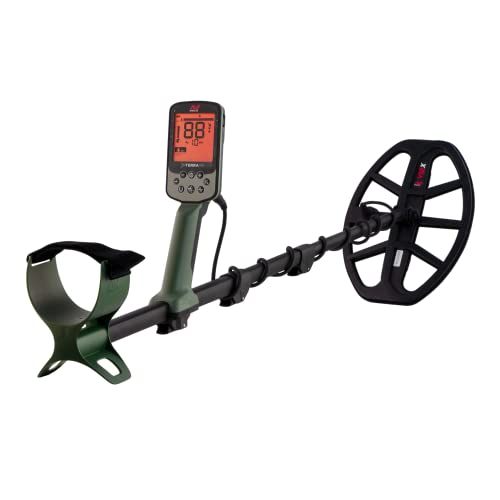
$282.14Minelab publishes IP68 waterproofing to 16 ft, 30 discrimination segments, 2.9 lb, a 25 inch packed length, a control pod flashlight and handgrip vibration. It switches between single frequencies rather than running several at once, which is the compromise that funds the rest.
Best for: rivers, wading and wet ground on a tight budget
Check price on Amazon
Nokta Simplex Ultra
$299.00Nokta publishes full waterproofing to 16 ft, a carbon fibre shaft retracting to 25 inches, 2.6 lb and online firmware updates. The listing states plainly that Bluetooth headphones are not included, which is worth knowing before you budget.
Best for: long sessions, travel and surf wading
Check price on Amazon
Garrett AT Pro
$459.99Garrett publishes submersibility to 10 feet, proportional audio with tone roll, 40 levels of high-resolution iron discrimination and MS-2 headphones in the box. The audio carries more information than the number on the screen, which is why so many detectorists learned on it and stayed.
Best for: all-terrain hunting and shallow water
Check price on Amazon
Nokta The Legend Pro Pack
$659.00The Pro Pack includes both the 6 inch and 11 inch DD coils, and Nokta publishes two simultaneous multi-frequency profiles plus 4, 10, 15, 20 and 40 kHz single frequencies. Two coils and that frequency spread at this price is the best raw value in the roundup.
Best for: someone who wants a second coil from day one
Check price on Amazon Minelab Equinox 700
$749.00Minelab publishes Multi-IQ with four single frequencies, full waterproofing to 16 ft, three detect modes, 2.8 lb on carbon fibre shafts, a 24 inch packed length and low latency wireless headphones included. It is the point on the curve where more money stops buying more finds for most people.
Best for: the one machine most adults should buy
Check price on AmazonWhen is a flagship genuinely worth it?
When your ground is fighting you. Heavily mineralised red clay, black sand, salt surf and sites that have been hunted since the 1970s are the conditions where flagship processing earns its price, and they are the only ones. Minelab Equinox 900 adds two more single frequencies, a Gold mode, a second coil in the box and what Minelab calls 119 high-resolution target IDs over the 700. Minelab Manticore adds transmit power and a two-dimensional target display. XP Deus II removes the cable entirely.
Minelab Equinox 900
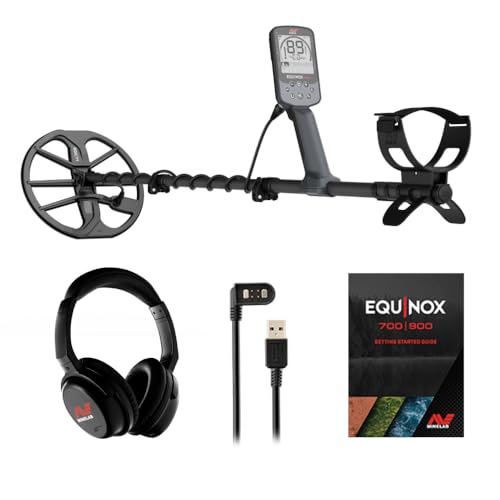
$999.00Ships with both the EQX 11 and EQX 6 waterproof Double-D coils, six single frequencies alongside Multi-IQ, four modes including Gold, 119 high-resolution target IDs, 2.8 lb and 16 ft of waterproofing. The extra coil alone closes a good part of the gap to the 700 price.
Best for: one machine that covers park, field, beach and gold
Check price on Amazon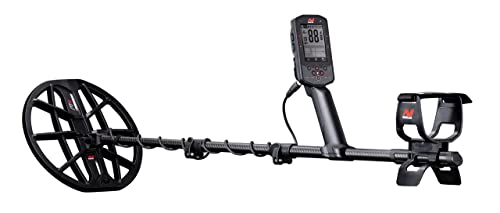
Minelab Manticore
$1,499.00Minelab publishes Multi-IQ+ as 50 percent more power than traditional models, with a 2D target ID map, 10 search modes including Goldfield, IP68 waterproofing to 16 ft and a fold from 56.7 to 24.8 inches. The 2D display separates targets a single number cannot.
Best for: mineralised ground and heavily hunted historic sites
Check price on Amazon
XP Deus II
$1,299.00Fully wireless from coil to headphones with no cable at all, IP68 to 66 feet, 12 simultaneous multi-frequency programs and 49 single frequencies from 4 to 45 kHz, with a 5 year warranty. XP lists bone conduction headphones as an optional extra rather than included.
Best for: all-day sessions and anyone who hates cables
Check price on Amazon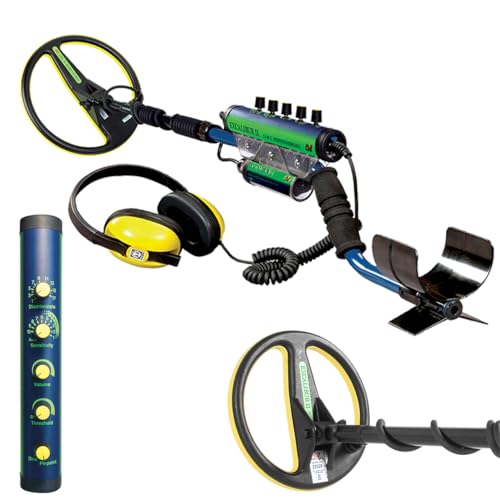
Minelab Excalibur II 1000
$1,699.00A BBS broad-band-spectrum machine running 1.5 to 25.5 kHz with a NiMH pack Minelab publishes at up to 12 hours, built for diving and surf. Minelab does not describe a numeric target ID display for it, and the side-mount shaft for surf wading is listed as an optional accessory.
Best for: diving and salt water surf hunting
Check price on AmazonWho should not buy this tier: Do not buy any of these as a first machine. A flagship does not find targets a beginner will hear, it gives an experienced operator finer control over decisions a beginner does not yet know they are making, and the menu depth actively slows learning. Skip the Minelab Manticore if your ground is mild and damp, because the power it sells you is power against mineralisation you do not have. Skip the Minelab Excalibur II 1000 entirely unless you genuinely hunt salt water, because it is a specialist and a poor general machine on land. And if you own a working mid-range detector, a second coil and a better pinpointer will change your find rate more than any of these will.
What should you buy before you buy a better detector?
In order: a pinpointer, a proper digger, and a second coil. A Garrett Pro-Pointer AT at $109.99 turns a five minute recovery into a thirty second one and means you cut a smaller hole, which is the difference between being invited back to a permission and not. A Lesche Digging Tool and Sod Cutter with sheath cuts a clean plug that can be replaced so the ground looks untouched. The digger roundup explains why a full size shovel is usually the wrong answer.
A second coil is the cheapest change to what your machine actually finds. A 6 inch Double-D such as the Minelab EQX 06 Coil (6 inch) separates a coin from a nail three inches away, which a stock 11 inch coil blends into one confused signal. The coil size selector weighs trash density against how much ground you need to cover, and the frequency chart explains which band suits your targets. After that, a LimbSaver Comfort-Tech Metal Detector Sling and a pair of NoCry Professional Gel Knee Pads, because you kneel for every single target and fatigue costs you more finds than any specification on this page.
How we chose
Nothing on this page has been swung by us. We did not test these machines in person and we will not pretend otherwise. Every specification here is taken from the manufacturer's own published listing or manual, named in the sources at the foot of the page, and where a maker does not publish a figure the table says so rather than carrying a guess. The ranking is built from what each machine is documented to do, what it costs, and the consistent pattern of what owners report about the ground each one suits. Treat it as a shortlist to argue with, not a verdict.
Sources
- Minelab Equinox 700 and 900 instruction manual
- Minelab Manticore instruction manual
- Minelab X-Terra Pro and Vanquish product specifications
- Nokta The Legend and Simplex Ultra user manuals
- Garrett ACE and AT series owner manuals
- XP Deus II product specifications
Frequently asked questions
What is the best metal detector for most people?
The Minelab Equinox 700 at $749.00, if the budget stretches. Minelab publishes Multi-IQ simultaneous multi-frequency, full waterproofing to 16 feet and 2.8 pounds on carbon fibre shafts, which covers park, field and beach from one body. If it does not stretch, the Minelab Vanquish 340 gives you multi-frequency for $258.99 and will not hold you back for a couple of seasons.
Is an expensive metal detector actually worth it?
Only in ground that is fighting you. On mild damp soil with an average coin, the practical difference between a good mid-range machine and a flagship is often an inch or two of depth. Where flagships genuinely pull ahead is separating a good target from nearby iron on sites that have been hunted for decades. If your ground is easy and your sites are fresh, spend the difference on a second coil and a pinpointer.
Do I need a waterproof metal detector?
Only if you intend to put the machine in water. Be precise about the difference: a waterproof searchcoil lets you sweep a shoreline or a shallow stream, while a fully waterproof machine can be submerged. Garrett states plainly that the ACE 200 has a waterproof coil and a control box that is not waterproof. The waterproof roundup on this site sets out which machines are which.
How much should a beginner spend on a metal detector?
Between $120.76 and $258.99, depending on how certain you are. The Bounty Hunter Tracker IV is the cheapest machine genuinely worth owning and costs little enough to be a fair way of finding out whether you like the hobby. Whatever you spend, reserve about a hundred dollars of the budget for a pinpointer and a digger, because those two change your results more than the next machine up would.
Will a better detector find deeper targets?
A little, and less than the price difference suggests. Depth is set mainly by target size, ground mineralisation and coil diameter, and only then by the machine. A slow overlapping sweep gives the electronics several looks at a deep target where a fast sweep gives one, so technique routinely outperforms hardware. Build a test garden with known targets at marked depths and measure your own ground rather than trusting any published figure.
Researched, not professional advice. This page is compiled from published specifications, manuals and owner-review consensus, not hands-on testing. Target ID numbers, depth figures and settings vary with soil chemistry, moisture, target size, depth, orientation and firmware version, so treat every figure here as a starting point and verify it against your own machine's manual and your own ground. As an Amazon Associate we earn from qualifying purchases.