Diggers and scoops
Lesche Digging Tool Review: The Reference Hand Digger, and Its One Buying Trap
Quick answer
Buy the Lesche if you cut plugs in turf and want a serrated blade that survives being levered on. Order the sheathed version at the same $59.95 rather than this one, and skip it entirely if CKG Double Serrated Hand Digger at $29.99 suits your budget.
Reviewed here

Lesche Digging Tool (right handed)
Lesche publishes a serrated root-cutting edge, a knife edge, a blade set perpendicular to the handle for leverage, and heat-treated alloy steel guaranteed not to bend.
Price was accurate when this page was compiled and changes often.
The Lesche Digging Tool (right handed) is the hand digger other hand diggers are compared with. Lesche publishes sharp serrated teeth that slice roots, weeds, vines and sod, a knife edge on the opposite side, a blade mounted perpendicular to the handle for leverage when prying, a high-strength alloy steel blade that is heat treated, tempered, rust resistant and guaranteed not to bend, a vinyl handle, and a 7 inch by 1.75 inch blade on a 12 inch overall tool.
All of that is true and it is still not the version most people should order. The identical tool is sold as Lesche Digging Tool and Sod Cutter with sheath at the same $59.95 with a belt sheath included, and the blade is sharp enough that carrying it without one is a poor idea. That is the buying trap, and the rest of this page is about whether you need a Lesche at all.
On this page
- What does a purpose-made digger do that a garden trowel does not?
- How does it compare with the other hand diggers worth owning?
- What each listing publishes about blade, steel and carry
- The honest weakness: you are paying twice for the same steel, and it only goes so deep
- What do owners consistently report?
- Who should buy it, and who should skip it
- What should you buy instead?
What does a purpose-made digger do that a garden trowel does not?
Three things, and all of them show up within a season. The first is cutting roots. Turf is held together by root mat, and a plain trowel tears it while a serrated edge slices it, which is the difference between a plug that goes back invisibly and a scar that the landowner notices. The second is leverage: Lesche mounts the blade perpendicular to the handle, so you can pry against soil without the blade folding, which is exactly what kills garden trowels. The third is the steel. A blade that is heat treated, tempered and published as guaranteed not to bend is being sold on the one failure mode that matters.
The practical result is a tool that cuts a clean three-sided plug you can hinge back, probe with a pinpointer, and fold down again so the grass survives. That method is the whole basis of the hole filling guide and of keeping permissions, which the code of conduct treats as the non-negotiable part of the hobby. A 7 inch blade also sets the tool honest limit: this is a plug and shallow target implement, not something to excavate a deep signal with.
How does it compare with the other hand diggers worth owning?
Published figures only, taken from each maker listing. Note that two of these entries are the same tool sold with and without a sheath.
The sheathed Lesche and this one are published at the same price, and CKG publishes a double serrated stainless digger with a sheath and belt loop for roughly half that.
| Model | Price | Serrated edge | Sheath included |
|---|---|---|---|
| Lesche Digging Tool (right handed) | $59.95 | Yes | - |
| Lesche Digging Tool and Sod Cutter with sheath | $59.95 | Yes | Yes |
| CKG Double Serrated Hand Digger | $29.99 | Yes | Yes |
| Root Slayer Heavy Duty Garden Trowel | $21.45 | - | - |
Figures are taken from each manufacturer's own published listing and specification sheet. A dash means the maker does not publish that figure for that model, not that the feature is absent.
What each listing publishes about blade, steel and carry
Dimensions matter more here than anywhere else in a detecting kit, because blade length sets what the tool can reach and weight sets whether you carry it.
Lesche publishes a 7 inch blade on a 12 inch tool in heat-treated alloy steel guaranteed not to bend, while CKG publishes a 10.24 inch stainless tool with double serration and a sheath for about half the money.
| Tool | Published blade or size | Material published | Sheath published |
|---|---|---|---|
| Lesche Digging Tool | Blade 7 in by 1.75 in, overall 12 in | High-strength alloy steel, heat treated | Not included in this version |
| Lesche with sheath | Blade 7 in by 1.75 in | Alloy steel, USA manufacture | Belt holder included |
| CKG Double Serrated Digger | 10.24 by 2.76 by 1.18 in | Stainless steel, double serrated | Sheath with belt loop included |
| Root Slayer Trowel | Inverted V tip, ripsaw serrations | Powder-coated carbon steel | Not published |
| Lesche Sampson 31 in | Blade 7.5 in by 4 in, overall 31 in | Serrated, pre-sharpened edge | Not published |
Quoted from each maker own published listing. The two Lesche hand digger entries are the same tool in different packaging, which is why their blade figures match.
The honest weakness: you are paying twice for the same steel, and it only goes so deep
Start with the version trap, because it costs real money. This listing is the right-handed tool without a sheath. Lesche Digging Tool and Sod Cutter with sheath is the same tool with a belt holder at the same $59.95. A blade Lesche describes as sharp enough to cut burlap, weed mat and twine should not be riding loose in a pouch next to your hand, so unless you already own a sheath, the sheathed listing is simply the better order. It is also a handed tool: the serration and knife edge are arranged for one hand, so a left-handed buyer needs the corresponding version rather than this one.
Second, the money against the alternative. CKG Double Serrated Hand Digger at $29.99 publishes double serrated stainless steel, a reinforced welded handle joint, a non-slip rubberised grip and a sheath with a belt loop, for roughly half the price. The Lesche is the better tool and the honest gap is not two to one: it is a better handle, a longer service life and USA manufacture. For a first digger, for a spare in the car, or for anyone who loses tools, the CKG is the rational purchase and the Lesche is the one you buy when the first one has proved you will keep detecting.
Third, and most important: a 7 inch blade on a 12 inch tool is a turf tool. It cuts plugs, it recovers shallow targets and it is the wrong implement for a deep signal in packed ground or clay. When the target is beyond hand-digger depth you need a T-handle shovel, and trying to reach it with a hand digger is how people wreck turf, and wrists. The shovel roundup covers where that line falls.
What do owners consistently report?
Longevity dominates the published owner reviews. People routinely describe using the same Lesche for many seasons, including in rocky ground, and the failures that do come up are usually the handle rather than the blade, which matches a maker that sells the blade on a no-bend guarantee. The serrated edge cutting roots rather than tearing them is the second consistent theme, particularly from people who hunt lawns and pastures where the turf has to go back neatly.
The complaints are consistent too, and they are practical: the tool is sharp enough to be a hazard without a sheath, it is heavy for its size in a pouch, and the vinyl handle becomes slippery in wet clay, which is why gloves such as Serious Detecting Gloves (large) at $13.95 come up repeatedly. Owners also report kneeling far more than they expected, which is what makes NoCry Professional Gel Knee Pads the accessory people wish they had bought first, and a pouch such as CKG Finds and Digger Pouch keeps digger, finds and trash separate so nothing sharp goes in with your hand.
Who should buy it, and who should skip it
Buy it if:
- You cut plugs in turf regularly and want the roots cut rather than torn.
- You lever against soil and stones and want a blade published as guaranteed not to bend.
- You already own a sheath, which is the only reason to choose this version over the sheathed one.
- You want a tool that will outlast several detectors.
Skip it if:
- You do not own a sheath, in which case order the sheathed version at the same price.
- You are left handed, since this listing is the right-handed tool.
- You are building a first kit on a budget. See the beginner kit.
- Your targets are deep or your ground is packed, where a T-handle shovel is the real answer.
What should you buy instead?
Three alternatives, each better than this listing at one specific thing.

Lesche Digging Tool and Sod Cutter with sheath
$59.95Lesche publishes the same 7 inch serrated blade with a belt holder included at $59.95, which is the same money as the version without one.
Best for: almost everyone buying a Lesche
Check price on Amazon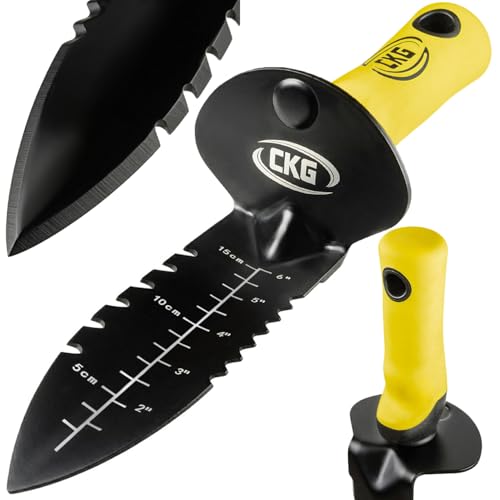
CKG Double Serrated Hand Digger
$29.99CKG publishes double serrated stainless steel, a reinforced welded handle joint, a rubberised grip and a sheath with belt loop at $29.99.
Best for: a first digger or a spare
Check price on Amazon
Lesche Sampson Pro-Series T-Handle Shovel, 31 inch
$89.40A 31 inch T-handle with a 7.5 by 4 inch serrated pre-sharpened blade at 2 lb 6 oz, for the signals a 12 inch hand tool cannot reach.
Best for: relic ground and packed soil
Check price on AmazonHow we chose
We did not test these machines in person and we publish no find claims. Picks are researched from manufacturer specifications and owner manuals, published listing features, waterproof ratings and warranty terms, and the recurring themes in verified owner reviews. We favour the established detector brands because coils, shafts and control boxes have to stay available years after a model is discontinued, and we place every pick in the tier where its price and capability honestly belong.
Sources
- Lesche digging tool product specifications and maker listing
- Lesche digging tool and sod cutter with sheath listing
- CKG double serrated hand digger product listing
- Published owner reviews of the Lesche digging tool
Frequently asked questions
Lesche digging tool vs CKG hand digger: is the Lesche worth double?
For a committed detectorist, usually yes, and it is not a two to one difference in capability. Lesche publishes heat-treated alloy steel guaranteed not to bend, a 7 inch serrated blade and USA manufacture. CKG publishes double serrated stainless, a reinforced welded joint and a sheath for roughly half. Buy the CKG first if you are new, and buy the Lesche when you know the hobby has stuck.
Does the Lesche digging tool come with a sheath?
This version does not. Lesche sells the same tool as a digging tool and sod cutter with a belt holder included at the same published price, which makes the sheathed listing the sensible order for most buyers. The blade is sharp enough to cut burlap, weed mat and twine, so carrying it loose in a finds pouch alongside your hand is not a good habit.
Is the Lesche digger available left handed?
The tool is handed, and this listing is the right-handed version. The serrated edge and the knife edge are arranged for a particular hand, so a left-handed user should order the corresponding version rather than adapting to this one. It matters more than it sounds, because the cutting edge orientation decides which way you can slice a plug comfortably.
Do I need a shovel as well as a hand digger?
On most ground, yes, eventually. A 12 inch hand digger with a 7 inch blade is a turf and shallow target tool, and it is excellent at that. Deep signals in packed soil, clay or relic ground need a T-handle shovel with a longer serrated blade and a handle you can put your weight behind. Trying to reach a deep target with a hand tool damages turf and wrists.
How do you cut a plug without killing the grass?
Cut three sides of a square rather than a full circle, push the blade in at an angle so the plug keeps a hinge of turf and roots on the fourth side, and fold it back like a flap. Probe the hole with a pinpointer, recover the target, then fold the plug down and tread it flat. Watered in and left alone, that plug knits back and the ground looks untouched.
Researched, not professional advice. This page is compiled from published specifications, manuals and owner-review consensus, not hands-on testing. Target ID numbers, depth figures and settings vary with soil chemistry, moisture, target size, depth, orientation and firmware version, so treat every figure here as a starting point and verify it against your own machine's manual and your own ground. As an Amazon Associate we earn from qualifying purchases.