Gold prospecting
Garrett Goldmaster 24k Review: 48 kHz and What That Number Actually Costs You
Quick answer
Buy the Goldmaster 24k if your ground is a known goldfield and your target is fine or flake gold, because Garrett publishes it at 48 kHz. Skip it for parks, coin sites or anywhere with foil and trash, because that same frequency reads every scrap of junk in the ground as loudly as it reads gold.
Reviewed here
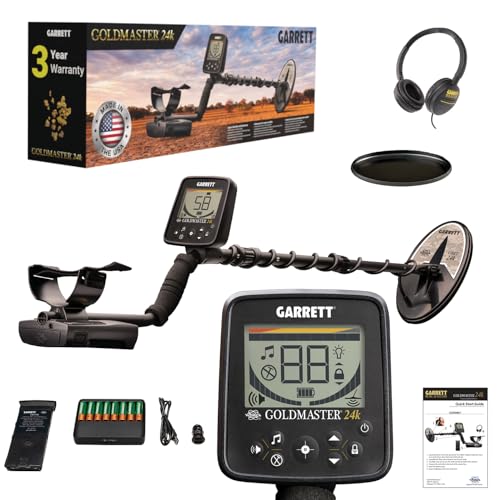
Garrett Goldmaster 24k
Garrett publishes a single 48 kHz operating frequency, which is high enough to return a signal from sub-gram gold that a coin machine running 5 to 15 kHz will not register at all.
Price was accurate when this page was compiled and changes often.
The Garrett Goldmaster 24k exists to do one job that a coin and relic machine cannot do at all: find gold small enough that ordinary VLF frequencies barely notice it. Garrett publishes the operating frequency as 48 kHz, a single high frequency rather than a switchable or multi-frequency design, and that number is essentially the entire specification sheet for this machine as Garrett has listed it.
That is worth saying plainly before anything else: Garrett's own listing for this model does not publish a features list, a weight, a coil size or a waterproof rating the way it does for the Garrett ACE 400 or the Garrett ACE Apex. What follows is built from what is actually published, which is the frequency and the price, plus the physics of what a 48 kHz machine does and does not do well. The frequency chart covers that physics in general terms, and it is worth reading before you order this machine rather than after.
On this page
- What does 48 kHz actually buy you?
- How does it compare on published specifications?
- What does each gold machine publish about ground balance and control?
- The honest weakness: the frequency that finds gold is the frequency that screams at foil
- What do owners consistently report?
- Who should buy it, and who should skip it
- What should you buy instead?
What does 48 kHz actually buy you?
Sensitivity to very small, very low-conductivity targets, which is exactly what a gold flake or a small nugget is. Frequency and target size have an inverse relationship in VLF detecting: low frequencies favour large, highly conductive targets such as a silver dollar, and high frequencies favour small, poorly conductive targets such as fine gold. At 48 kHz, Garrett has built a machine at the upper end of what VLF detectors commonly run, which is why this platform is sold as a goldfield tool rather than as a general-purpose detector.
The practical result is a machine that will register targets a park machine running single-digit kHz simply will not see. That is the entire case for owning one, and it is a narrow case: you need ground that actually carries gold, ideally a known field or a claim you hold or have permission to work, because a 48 kHz machine spends its sensitivity on gold-sized targets whether or not any gold is present. The best metal detector for gold roundup sets this model against the machines it is actually cross-shopped with.
How does it compare on published specifications?
Only figures each maker actually prints appear here. A dash means that maker publishes no figure for that model, and for this particular machine there are more dashes than most reviews on this site will show you.
Garrett publishes 48 kHz for the Goldmaster 24k, which is the highest single frequency of the four, and publishes no weight, coil size or waterproof rating for this model where the other three makers publish several.
| Model | Price | Operating frequency | Frequency type | Stock coil | Ground balance |
|---|---|---|---|---|---|
| Garrett Goldmaster 24k | $679.99 | 48 kHz | Single high frequency | - | - |
| Fisher Gold Bug Pro | $339.00 | - | - | - | - |
| Minelab Gold Monster 1000 | $899.00 | - | - | 5 in | Fully automatic |
| Fisher Gold Bug 2 | $739.00 | - | Single ultra-high frequency | 6 and 10 | - |
Figures are taken from each manufacturer's own published listing and specification sheet. A dash means the maker does not publish that figure for that model, not that the feature is absent.
What does each gold machine publish about ground balance and control?
This is the table that actually separates these machines day to day, because frequency alone does not tell you how much the operator has to manage.
Minelab publishes fully automatic ground balance for the Gold Monster 1000, while Garrett publishes a Ground Balance Window with manual and automatic modes for the AT Gold, and publishes no ground balance detail at all for the Goldmaster 24k.
| Machine | Published frequency | Published ground balance | Published water rating |
|---|---|---|---|
| Garrett Goldmaster 24k | 48 kHz, single high frequency | Not published in this listing | Not published in this listing |
| Fisher Gold Bug Pro | 19 kHz | Real-time computerized ground grab | Not published in this listing |
| Fisher Gold Bug 2 | 71 kHz | Manual 16-turn plus 3-position mineralization switch | Coils waterproof, control housing not stated |
| Minelab Gold Monster 1000 | 45 kHz | Fully automatic | Coil waterproof to 3 ft |
| Garrett AT Gold | 18 kHz | Manual and automatic, Ground Balance Window | Fully submersible to 10 ft |
Every figure is quoted from that maker own product listing. The Goldmaster 24k listing available to this site publishes frequency and price only, which is reported honestly rather than filled in from a manual this site has not been given.
The honest weakness: the frequency that finds gold is the frequency that screams at foil
Here is the trade the specification sheet does not spell out. Garrett publishes 48 kHz for the Goldmaster 24k because that is exactly what makes it sensitive enough to find sub-gram gold, and that is exactly why it is a liability on a trashy coin site. A high frequency VLF machine does not just favour gold: it favours every small, low-conductivity target, and that includes foil, small aluminium scraps and the fine wire and pull-tab trash that accumulates in any park or yard that has seen decades of human traffic. Where a coin machine running a lower frequency lets you discriminate that trash out with some confidence, a machine built to hear a flake of gold hears the foil with the same enthusiasm, because to the coil they are similar targets.
Second, the published information gap. Garrett's own listing tells you the frequency and the price and stops there. That is not this page failing to look hard enough; it is what the manufacturer chose to publish for this model, and it means you should not assume a weight, a coil size, a discrimination mode or a waterproof rating exists just because competing machines have one. If a spec matters to your purchase, get it from Garrett directly or from the printed manual before you buy, not from a retailer's paraphrase of the box.
Third, ground and terrain. This is not the tool you reach for on the walk back through a picnic area. Owning it alongside a general-purpose machine such as the Garrett ACE 400 or an Equinox 900, which Minelab markets with a dedicated gold mode, is the normal answer rather than expecting one machine to do both jobs well.
What do owners consistently report?
Published owner reviews of high-frequency gold machines in this class describe a consistent pattern rather than a Goldmaster-specific one: real sensitivity to targets a general-purpose detector misses entirely, paired with a much shorter effective range on anything but clean, low-trash ground. Owners moving into a known gold-bearing area report the frequency doing exactly what it is built to do. Owners who try to use the same machine as an everyday detector on mixed ground report exactly the chatter you would expect from a high-frequency single-purpose design meeting foil, bottle caps and old wire.
The other consistent theme is that a machine this specialised rewards learning the ground first. Detectorists in this niche consistently recommend running any new gold machine over a small, known test patch before trusting it on real ground. Bury your own test targets and write down what your own unit says, because published frequency tells you what the machine is built for and nothing about your specific dirt.
Who should buy it, and who should skip it
Buy it if:
- You detect on a known goldfield, a claim you hold, or ground with confirmed gold history.
- Your target is fine, flake or sub-gram gold that a general-purpose VLF will not register.
- You already own a general-purpose machine and want a dedicated high-frequency second unit.
- You are comfortable working from Garrett's manual rather than a rich product listing.
Skip it if:
- Your usual ground is a park, yard or beach with modern trash and foil.
- You want one machine that does gold and coins competently. Look at the Garrett AT Gold instead.
- You want a published weight, waterproof rating or discrimination mode before you buy.
- You want automatic ground balance so you can start swinging with less setup.
What should you buy instead?
Three alternatives, each better than the Goldmaster 24k at one specific thing.

Minelab Gold Monster 1000
$899.00Minelab publishes fully automatic noise cancelling, ground balance and sensitivity at 45 kHz with a coil waterproof to 3 ft, at $899.00, for a buyer who does not want to manage settings by hand.
Best for: a first gold machine with less to configure
Check price on Amazon
Garrett AT Gold
$640.99Garrett publishes 18 kHz, a Ground Balance Window with manual and automatic modes, iron audio and full submersion to 10 ft at $640.99, which covers small gold and mineralised relic ground from one detector.
Best for: buyers who want gold and relic capability together
Check price on Amazon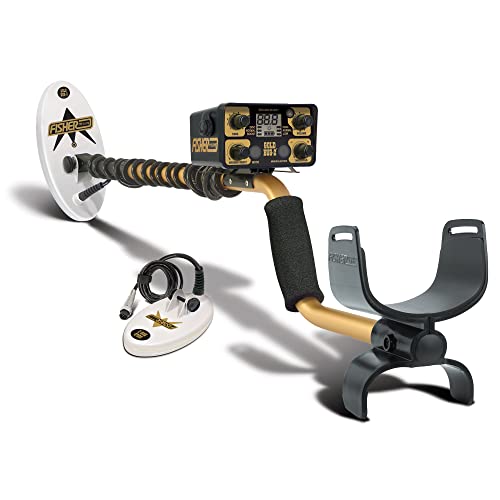
Fisher Gold Bug 2
$739.00Fisher publishes 71 kHz with 6 and 10 inch elliptical coils, a manual 16-turn ground balance and a 3-position mineralization switch, for the buyer chasing the smallest gold this catalog covers.
Best for: the smallest nuggets and flake gold in trained hands
Check price on AmazonHow we chose
We did not test these machines in person and we publish no find claims. Picks are researched from manufacturer specifications and owner manuals, published listing features, waterproof ratings and warranty terms, and the recurring themes in verified owner reviews. We favour the established detector brands because coils, shafts and control boxes have to stay available years after a model is discontinued, and we place every pick in the tier where its price and capability honestly belong.
Sources
- Garrett Goldmaster 24k product listing
- Fisher Gold Bug Pro and Gold Bug 2 product listings and manuals
- Minelab Gold Monster 1000 product listing
- Garrett AT Gold product listing
Frequently asked questions
Garrett Goldmaster 24k vs Fisher Gold Bug Pro: which should I buy?
It depends on whether you need a second, everyday machine as well. Garrett publishes a single 48 kHz frequency for the Goldmaster 24k with little else stated, which is a narrower, more specialised tool. Fisher publishes 19 kHz with real-time computerized ground balance and V-Break tone discrimination for the Gold Bug Pro, which is lower frequency but more usable as a relic machine in mineralised soil. Buy the Goldmaster for pure sensitivity, the Gold Bug Pro for versatility.
Is the Garrett Goldmaster 24k waterproof?
Garrett does not publish a waterproof rating for this model in the listing available to this site, so treat it as not rated for submersion until you confirm otherwise in the printed manual. Several other gold machines in this catalog do publish water ratings, including the Gold Monster 1000 coil to 3 feet and the AT Gold fully submersible to 10 feet, so check the specific model you are comparing rather than assuming this one matches.
Can the Goldmaster 24k find coins and relics as well as gold?
Technically any metal detector responds to any conductive metal, but a machine built around 48 kHz is tuned for small, low-conductivity targets, which means it will also respond strongly to foil, small aluminium scraps and similar trash on a mixed site. It is not the machine to bring to a park or an old house lot. Pair it with a general-purpose detector such as the ACE 400 for coin and relic work.
What frequency does the Garrett Goldmaster 24k run at?
Garrett publishes a single 48 kHz operating frequency, described in its own listing as a single high frequency rather than a switchable or simultaneous multi-frequency design. That places it among the higher published frequencies in this catalog, above the Gold Bug Pro at 19 kHz and the Gold Monster 1000 at 45 kHz, and below the Gold Bug 2 at 71 kHz.
Do I need a permit to prospect for gold with this machine?
Often yes, and the rules vary by country, state and specific parcel. Public land frequently requires you to check whether ground is an active mining claim before you prospect it, and some areas close prospecting seasonally or restrict it entirely. Confirm mineral rights and claim status separately from ordinary landowner permission, because the two are governed by different rules and treated separately by law enforcement.
Researched, not professional advice. This page is compiled from published specifications, manuals and owner-review consensus, not hands-on testing. Target ID numbers, depth figures and settings vary with soil chemistry, moisture, target size, depth, orientation and firmware version, so treat every figure here as a starting point and verify it against your own machine's manual and your own ground. As an Amazon Associate we earn from qualifying purchases.