Garrett Vortex
Garrett Vortex VX9 Target ID Chart and Iron Discrimination
Quick answer
The Garrett Vortex VX9 reads targets in the usual conductivity order and adds high-resolution iron discrimination, eight sensitivity levels and adjustable recovery speed. Garrett publishes single frequencies of 5, 9, 13, 18 and 25 kHz alongside simultaneous multi-frequency, and the frequency you choose shifts marginal readings.
The Vortex VX9 is the current Garrett flagship in this family and the published specification is unusually detailed. Garrett states it is fully submersible to sixteen feet, that it has a high-resolution ground balance system covering saltwater through to heavily mineralised soil, that it offers single frequencies of 5, 9, 13, 18 and 25 kHz plus simultaneous multi-frequency, and that the menu carries target Volume, Iron Volume, Sensitivity across eight levels, High Resolution Iron Discrimination, Recovery Speed, Backlight and Wireless.
That list matters for a target ID page, because each of those controls changes what the screen tells you. A target ID is not a fixed property of a buried object; it is the output of a measurement you have configured.
Top pick

Garrett Vortex VX9
Five published single frequencies plus simultaneous multi, eight sensitivity levels and full submersion to sixteen feet, which is a specification the ACE line cannot approach.
Price was accurate when this page was compiled and changes often.
On this page
What does the VX9 tell you about a target?
A conductivity score, a tone, and, if you are using the machine properly, a stability impression built from crossing the target twice. Garrett describes a single-scale target ID for the multi-frequency mode on this platform, which is a deliberate design decision: the alternative, a scale that changes with the frequency you selected, makes learned numbers useless every time you switch.
The ordering is the same one every VLF detector obeys. Iron at the bottom, foil and small thin gold low, nickels and aluminium through the middle, copper and silver at the top. What the VX9 adds is resolution in the ferrous range and the ability to change recovery speed, which together decide how well it copes when a good target sits against a nail.
What does each band read, and what moves it?
Bands and ordering, not manufacturer lookup values. Check the Vortex manual for the scale your firmware displays.
Garrett publishes eight sensitivity levels, adjustable recovery speed and high-resolution iron discrimination on the VX9, and all three change what the screen reports for a marginal target.
| Target | Position on the scale | Frequency that suits it | Control that most affects the reading |
|---|---|---|---|
| Nails, wire, small iron | Bottom | Any | High Resolution Iron Discrimination |
| Bottle caps and rusted steel | Bounces into the coin range | Any | Recovery Speed, plus crossing the target twice |
| Foil and thin chain | Low | 25 kHz | Sensitivity |
| Small thin gold | Low to lower middle | 18 or 25 kHz | Sensitivity and frequency |
| Nickel and mid conductors | Middle | Multi-frequency | Little; one of the stabler readings |
| Pull tabs and aluminium | Middle to upper middle | Any | Little |
| Thin hammered silver | Upper middle, lower when very thin | 13 or 18 kHz | Frequency |
| Copper cents and dimes | High | 5 or 9 kHz | Depth more than any setting |
| Quarters and large copper | High | 5 kHz | Depth |
| Large silver | Top | 5 kHz | Depth and orientation |
Positions describe the conductivity ordering rather than Garrett-published lookup values; the Vortex manual gives the scale your machine displays. Soil chemistry, moisture, depth, target orientation, corrosion and firmware all shift readings, and on this machine a firmware update delivered over USB-C can shift them too.
What does recovery speed change?
Recovery speed is how quickly the machine finishes processing one target and becomes ready for the next. Raise it and two targets an inch apart resolve as two signals rather than one confused blur, which is what you need in a nail bed. Lower it and the machine looks at each target for longer, which generally helps on deep isolated targets in clean ground.
Garrett lists Recovery Speed as a user-alterable setting on the VX9, alongside eight levels of sensitivity. Treat the two as a pair: a fast recovery speed with very high sensitivity in mineralised ground produces a machine that is talking constantly and telling you nothing. Slow down, drop a level, and listen.
What is high-resolution iron discrimination for?
Ordinary iron discrimination gives you a coarse ferrous or non-ferrous decision. High resolution splits the ferrous range into many more steps, so you can reject the small nails that dominate an old site while still hearing the larger ferrous objects that might be a buckle, a fitting or a coin lying against iron. Garrett lists it as a user setting on the VX9 menu.
The general rule still applies: reject as little as you can stand. The Vortex settings by site type page sets out where that discipline pays and where it merely costs you time, and the Apex frequency chart is worth reading alongside if you are comparing platforms.
What goes with a Vortex?
This is a submersible wireless machine, so the accessories that matter are the ones that survive water and keep latency low.
Garrett Vortex VX9
$599.99Five single frequencies plus multi, eight sensitivity levels and submersion to sixteen feet, at $599.99.
Best for: a Garrett owner stepping up from the AT series
Check price on Amazon
Garrett Vortex VX5
$399.99The same platform at 13 kHz or MD-MF, upgradeable to VX7 or VX9 later by paid software upgrade.
Best for: buying into the platform gradually
Check price on Amazon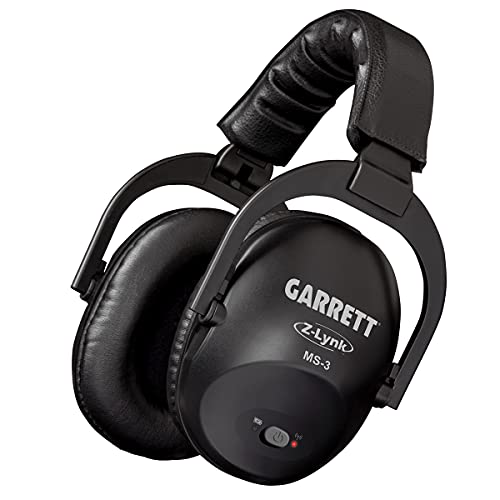
Garrett MS-3 Z-Lynk Wireless Headphones
$107.99Z-Lynk wireless, which is the system Garrett builds into this machine.
Best for: land hunting with the Vortex
Check price on AmazonHow we chose
We did not test these machines in person and we publish no find claims. Picks are researched from manufacturer specifications and owner manuals, published listing features, waterproof ratings and warranty terms, and the recurring themes in verified owner reviews. We favour the established detector brands because coils, shafts and control boxes have to stay available years after a model is discontinued, and we place every pick in the tier where its price and capability honestly belong.
Sources
- Garrett Vortex VX9 owner's manual
- Garrett Vortex VX9 published listing, for frequencies, submersion depth, sensitivity levels and menu settings
- Garrett Vortex VX5 published listing, for the 13 kHz and MD-MF options and the software upgrade path
Frequently asked questions
What frequencies does the Garrett Vortex VX9 offer?
Garrett states the VX9 provides single frequencies of 5, 9, 13, 18 and 25 kHz along with simultaneous multi-frequency options, so you can adapt to ground mineralisation and to the metals you are after. That is a wider published set than the ACE Apex offers, and it is the main technical reason to move up from the Apex to the Vortex line.
Is the Vortex VX9 target ID scale the same as an ACE?
Do not assume so. Garrett describes a single-scale target ID for the multi-frequency mode on this platform, and the Vortex manual gives the scale your firmware displays. The conductivity ordering is identical across all these machines, but the numbers attached to it are machine-specific. Bury your test targets again after any platform change.
How deep is the Vortex VX9 waterproof?
Garrett states the VX9 is fully submersible to sixteen feet, or five metres, which puts it in a different category from the ACE machines where only the searchcoil is waterproof. It also publishes a high-resolution ground balance system that covers conditions from saltwater to highly mineralised soil, which is what makes that submersion useful rather than merely survivable.
What does the VX5 give up compared with the VX9?
Garrett publishes the VX5 as offering 13 kHz or the MD-MF multi-frequency mode, against the VX9's five single frequencies plus multi. The VX5 listing also states the machine can be transformed into a VX7 or VX9 with paid software upgrades, so the platform lets you start lower and add capability without buying a second detector.
Does a firmware update change my target ID numbers?
It can. Garrett states the USB-C charging point on the Vortex can also be used to update the operating software as firmware updates are released, and any change to how a machine scores marginal returns can move a reading by a point or two. Rerun your buried test row after an update rather than assuming last season's card still applies.
Researched, not professional advice. This page is compiled from published specifications, manuals and owner-review consensus, not hands-on testing. Target ID numbers, depth figures and settings vary with soil chemistry, moisture, target size, depth, orientation and firmware version, so treat every figure here as a starting point and verify it against your own machine's manual and your own ground. As an Amazon Associate we earn from qualifying purchases.