Minelab Manticore
Minelab Manticore Battery Life And Specifications: What Minelab Publishes
Quick answer
The Manticore runs on an internal rechargeable pack rather than replaceable cells, so runtime is a budget rather than a spare you carry. Wireless audio, screen backlight, the flashlight, high volume and cold weather all shorten it. Measure your own runtime across three sessions and plan from that figure.
Minelab publishes a headline runtime for the Minelab Manticore in its specification sheet, the way every manufacturer does, and like every manufacturer that figure describes a set of conditions you will not be detecting in. It is measured at a moderate volume with the extras off. Turn on wireless audio, run the backlight and use the flashlight to fill holes in the dark, and the real figure lands somewhere below it.
Rather than repeat a number we cannot verify against your firmware and your unit, this page lists what Minelab publishes about the machine, explains which features cost you runtime and by roughly how much in relative terms, and gives you a way to find your own figure. On a machine with a sealed internal pack, that number is worth knowing before a long day rather than after one.
Top pick
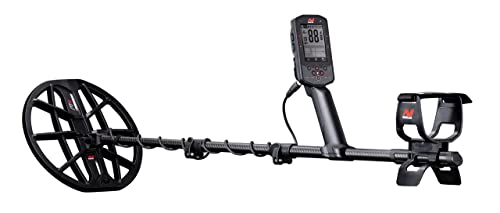
Minelab Manticore
An internal rechargeable pack, a 16 foot IP68 rating and a fold length of 24.8 inches, which is the combination most owners buy it for.
Price was accurate when this page was compiled and changes often.
On this page
What does Minelab publish about the Manticore?
These are figures from Minelab published material and the manufacturer listing, not estimates.
Minelab publishes a 16 foot IP68 waterproof rating for the Manticore, ten search modes across All Terrain, Beach and Goldfield, and a fold length of 24.8 inches from an extended 56.7 inches.
| Specification | Published figure | Why it matters |
|---|---|---|
| Technology | Multi-IQ+ simultaneous multi frequency | Minelab describes it as its highest powered simultaneous multi frequency platform |
| Waterproof rating | 16 feet, IP68 | Full submersion of the control box, not just the coil |
| Search modes | 10, across All Terrain, Beach and Goldfield | Covers inland, sand and surf, and nugget hunting from one machine |
| Target display | 2D target ID map plus numeric ID | Ferrous content and conductivity shown together |
| Length | Folds from 56.7 inches to 24.8 inches | Fits a pack and a car boot without dismantling |
| Power | Internal rechargeable pack | No spare cells, so runtime is a planning question |
| Lighting | Flashlight, display backlight and keypad backlight | Each one costs runtime when used |
| Feedback | Handgrip vibration plus audio | Useful in surf noise and for hard of hearing users |
Figures are as stated in Minelab published product material and the manufacturer listing. Check the specification sheet that shipped with your unit, because published runtime figures in particular have been revised across firmware versions on current machines.
What actually drains the battery?
Four things account for most of the difference between the headline figure and your day. Wireless audio runs a radio continuously, and it is usually the single largest avoidable drain. The display backlight costs steadily whenever it is on. The built in flashlight costs a lot while it is lit, which is fine for filling a hole and expensive if you leave it on for an hour. High volume through a speaker or headphones costs more than low volume, which is one more reason to run quieter audio and better headphones rather than louder audio and cheap ones.
Cold weather is the one people forget. Lithium packs deliver less usable capacity in the cold, so a winter session on a machine that comfortably covered a summer day can run short. If you hunt in the cold, keep the machine in the car rather than the boot on the drive out, and carry a power bank if your charging cable allows topping up in the field. The battery runtime calculator will turn your measured figures into a per hunt plan.
How do the drains compare?
Relative costs rather than percentages, because the exact figures depend on your firmware, your volume and the age of the pack.
Wireless audio and the flashlight are the two largest avoidable drains on an internally powered detector, while vibration and an occasional keypad backlight cost comparatively little.
| Feature | Relative cost | Practical advice |
|---|---|---|
| Wireless headphone link | High and continuous | Run wired on very long days, or when you are near water anyway |
| Built in flashlight | High while lit | Use a head torch for hole filling and keep the detector light for emergencies |
| Display backlight | Moderate and continuous | Lowest usable level, or off in daylight |
| High audio volume | Moderate | Good headphones let you run lower volume for the same clarity |
| Keypad backlight | Low | Leave it as you like it |
| Handgrip vibration | Low | Worth keeping on in surf and wind |
| Cold ambient temperature | Moderate and unavoidable | Warm start, and expect less than your summer figure |
Treat this as an ordering. The only number that applies to your machine is the one you measure, because pack condition and firmware both move the result.
How to measure your real runtime
- Charge fully and note the time. Start from a full charge and write down the clock time when you switch on, not an estimate afterwards.
- Hunt the way you normally hunt. Same audio, same backlight habits, same volume. A runtime measured with everything off is not your runtime.
- Record when the low warning appears. The warning, not the shutdown, is your planning number. That is when you want to be walking back.
- Repeat across three sessions. One session tells you very little. Three tells you whether your figure is stable and what your worst case looks like.
- Re measure once a year. Rechargeable packs lose capacity with age and cycles. A figure from two seasons ago will strand you eventually.
Accessories that affect runtime and survival
One of these saves battery, one saves the screen, and one is what you use when the wireless link is not an option.

Minelab ML105 Wireless Headphones
$180.00Minelab lists these for the Manticore, Equinox 700 and 900 and X-Terra Pro, and they include an aux cable so you can drop to wired on long days.
Best for: anyone who wants both options in one pair
Check price on Amazon
Manticore Control Box Cover
$25.00A fitted TPU film cover that the listing describes as dirtproof and splashproof and stable across temperatures.
Best for: protecting the most expensive screen in the range
Check price on Amazon
Gray Ghost Amphibian Headphones for Minelab
$169.95Wired and rated to 200 feet per the listing, which is the only kind of audio that works once the machine is under water.
Best for: surf and wading days
Check price on AmazonHow we chose
We did not test these machines in person and we publish no find claims. Picks are researched from manufacturer specifications and owner manuals, published listing features, waterproof ratings and warranty terms, and the recurring themes in verified owner reviews. We favour the established detector brands because coils, shafts and control boxes have to stay available years after a model is discontinued, and we place every pick in the tier where its price and capability honestly belong.
Sources
- Minelab Manticore instruction manual, power and charging chapter
- Minelab Manticore published product specification sheet
- Manufacturer listing specifications for the Manticore, ML105 and the Manticore control box cover
Frequently asked questions
Can I carry a spare battery for the Manticore?
No, the pack is internal rather than a set of replaceable cells, so the practical answer is to charge fully before a long day and carry a power bank with the correct cable if your machine supports topping up. Detectorists who regularly hunt all day plan around the low battery warning rather than the shutdown, and keep a wired headphone option so they can drop the wireless drain.
Does wireless audio really cost that much runtime?
It is usually the largest avoidable drain on any modern detector, because a radio link runs continuously rather than in bursts. Whether that matters depends on your sessions. If four hours covers your day, run wireless and enjoy it. If you routinely detect all day in remote spots, carrying a wired option and switching partway through is the simplest insurance.
Why does my runtime drop in winter?
Lithium packs deliver less usable capacity in cold conditions, and the effect is large enough to notice. A machine that comfortably covered a long summer session can fall short on a cold one at the same settings. Start with the machine warm rather than out of a cold car boot, and plan a shorter session until you have measured what your own unit does in the cold.
Should I run the battery flat before recharging?
No. That habit belonged to older cell chemistries. Modern rechargeable packs prefer partial charges and dislike being stored at either extreme, so topping up after a session is fine and running to empty repeatedly does not help. For long term storage, follow the guidance in the manual rather than leaving the machine at full charge or fully flat for months.
How do I know when the pack is wearing out?
Measure it. If the runtime you record across three sessions has fallen well below the figure you measured when the machine was new, and the drop persists across a full charge cycle, the pack is ageing rather than the weather being unkind. Note it now rather than discovering it in a field, and contact Minelab or your dealer about service options.
Researched, not professional advice. This page is compiled from published specifications, manuals and owner-review consensus, not hands-on testing. Target ID numbers, depth figures and settings vary with soil chemistry, moisture, target size, depth, orientation and firmware version, so treat every figure here as a starting point and verify it against your own machine's manual and your own ground. As an Amazon Associate we earn from qualifying purchases.