Garrett ACE Apex
Garrett ACE Apex Frequency Chart: 5, 10, 15 and 20 kHz Plus Multi
Quick answer
Garrett publishes six Multi-Flex options for the ACE Apex: 5 kHz, 10 kHz, 15 kHz, 20 kHz, Multi-Frequency and Multi-Salt. Low frequencies favour high conductors such as silver and copper, high frequencies favour small low conductors such as thin gold, and Multi-Salt exists for conductive wet sand.
Operating frequency is the most misunderstood specification in detecting, and the ACE Apex is a good machine to learn it on because Garrett hands you six options and lets you compare them on the same target in the same soil. The published list is 5 kHz, 10 kHz, 15 kHz, 20 kHz, Multi-Frequency and Multi-Salt.
The underlying physics is straightforward. A buried object responds to the changing field by carrying eddy currents, and how strongly it responds depends on the relationship between its size, its shape, its conductivity and the frequency of the field. Large, thick, highly conductive objects respond well at low frequencies. Small, thin, poorly conductive objects need a faster field to give a usable response at all.
Top pick

Garrett ACE Apex
Six frequency options in one machine, including a dedicated Multi-Salt setting, which is a genuinely unusual specification at this price.
Price was accurate when this page was compiled and changes often.
On this page
What is each Apex frequency actually for?
Garrett publishes the options. What each one favours follows from the physics of eddy current response rather than from any manufacturer claim about specific targets.
Garrett publishes six Multi-Flex settings on the ACE Apex, from 5 kHz for large high-conductive silver up to 20 kHz for small thin gold, plus Multi-Frequency and Multi-Salt.
| Setting | Favours | Typical use | Trade-off |
|---|---|---|---|
| 5 kHz | Large, thick, high conductors | Deep silver and large copper on clean ground | Poor response to small thin low conductors |
| 10 kHz | General coin range | Mixed coin hunting inland | A compromise in both directions |
| 15 kHz | Mid and lower conductors | Thin hammered silver, mid-range jewellery | Noisier in mineralised ground than 5 kHz |
| 20 kHz | Small, thin, low conductors | Fine gold chain, small jewellery, tiny targets | Loses confidence on deep large silver, more ground noise |
| Multi-Frequency | The whole range at once | The default for unknown mixed ground | A compromise by design, which is the point |
| Multi-Salt | Conductive wet ground | Wet salt sand and the surf line | Not the setting for dry inland ground |
Frequency options are as published by Garrett for the ACE Apex. What each favours follows from how eddy current response scales with target size, shape and conductivity, and the real-world result on your ground also depends on soil mineralisation, moisture and coil size.
Why does a higher frequency find smaller gold?
A target only signals back if the changing field drives a useful eddy current in it. Small, thin, poorly conductive objects support very little current at low frequencies, so their return is weak and the machine reports nothing or reports uncertainly. Raise the frequency and the field changes faster, the induced current rises, and the object becomes audible.
That is the entire argument behind dedicated gold machines. Garrett's own Goldmaster 24k is specified at 48 kHz, far above anything the Apex offers, and the Goldmaster settings page explains what that buys and what it costs. The Apex at 20 kHz sits in a useful middle ground: better on small gold than a coin machine, nowhere near a specialist prospecting detector.
What does a higher frequency cost you?
Ground noise and depth on high conductors. Mineralised soil responds more strongly at higher frequencies, so the same sensitivity setting produces more chatter and you end up giving sensitivity away. Meanwhile the large silver coin that reported confidently at 5 kHz becomes a marginal signal. There is no free choice here, only a trade you make knowingly per site.
This is why Multi-Frequency exists and why it is the sensible default. It is a compromise, but it is a compromise that fails gracefully in both directions rather than excelling in one and collapsing in the other. The settings by site type page maps each option to real ground.
How does the Apex compare with the Vortex frequency set?
Garrett publishes a different and wider set of single frequencies for the Vortex flagship: 5, 9, 13, 18 and 25 kHz alongside simultaneous multi-frequency, with a high-resolution ground balance system for ground ranging from saltwater to heavily mineralised soil. The VX5 is published as offering 13 kHz or the MD-MF multi-frequency mode, and Garrett states the VX5 can be upgraded to VX7 or VX9 by paid software upgrade.
If frequency flexibility is what you are buying, that difference is the argument for the Vortex line over the Apex. The Vortex VX9 target ID page sets out what the flagship gives you.
What does frequency flexibility need around it?
Frequency choice is worth little without the audio resolution to hear what it produces and the coil to put over the target.
Garrett ACE Apex
$384.99Six Multi-Flex options at $384.99, with a 6 by 11 Double-D Viper coil in the box.
Best for: learning what frequency actually does
Check price on Amazon
Garrett Vortex VX9
$599.99Five published single frequencies from 5 to 25 kHz plus simultaneous multi, submersible to sixteen feet.
Best for: a Garrett owner stepping up from the AT series
Check price on Amazon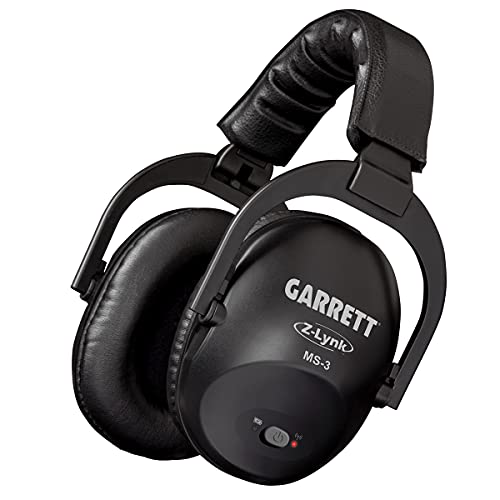
Garrett MS-3 Z-Lynk Wireless Headphones
$107.99Z-Lynk wireless with a volume control for lifting the weak signals a high frequency produces.
Best for: anyone chasing small targets
Check price on AmazonHow we chose
We did not test these machines in person and we publish no find claims. Picks are researched from manufacturer specifications and owner manuals, published listing features, waterproof ratings and warranty terms, and the recurring themes in verified owner reviews. We favour the established detector brands because coils, shafts and control boxes have to stay available years after a model is discontinued, and we place every pick in the tier where its price and capability honestly belong.
Sources
- Garrett ACE Apex owner's manual
- Garrett ACE Apex published listing, for the Multi-Flex frequency set
- Garrett Vortex VX9 published listing, for the comparison frequency set
- Garrett Goldmaster 24k published specification, for the 48 kHz operating frequency
Frequently asked questions
What frequencies does the Garrett ACE Apex run?
Garrett publishes six Multi-Flex options: 5 kHz, 10 kHz, 15 kHz, 20 kHz, Multi-Frequency and Multi-Salt. That is an unusual specification in this price class, where most machines run a single fixed frequency. It is the main technical argument for the Apex over the AA-powered ACE 300 and ACE 400, which run one frequency with a small adjustment for interference.
Is multi-frequency always better than single frequency?
No. Multi-frequency is better when you do not know what is buried, because it performs across the whole conductivity range instead of favouring one end. When you do know the target class, a single frequency aimed at it can report more confidently and more quietly. The skill is knowing which situation you are in, which comes from testing both on your own ground.
Will 20 kHz on an Apex find gold nuggets?
Small jewellery, yes, within reason. Prospecting for natural gold is a different job, and the machines built for it run far higher. Garrett specifies its own Goldmaster 24k at 48 kHz, which is more than double the Apex maximum, and that difference is precisely why a coin machine finds almost nothing in a goldfield while a dedicated machine finds grams of it.
Does frequency affect depth?
Indirectly and by target type. A low frequency generally reaches deeper on large high-conductive targets, while a high frequency reaches further on small low-conductive ones that a low frequency barely sees at all. Soil mineralisation complicates both, because mineralised ground responds more strongly at higher frequencies and forces you to reduce sensitivity.
Can I change frequency mid-hunt without recalibrating?
You can change it freely, but expect the machine to sound different and expect marginal target IDs to move, particularly at the bottom of the scale. Re-establish your noise ceiling after the change rather than assuming the sensitivity you were running still applies, because mineralised ground behaves differently at each setting.
Researched, not professional advice. This page is compiled from published specifications, manuals and owner-review consensus, not hands-on testing. Target ID numbers, depth figures and settings vary with soil chemistry, moisture, target size, depth, orientation and firmware version, so treat every figure here as a starting point and verify it against your own machine's manual and your own ground. As an Amazon Associate we earn from qualifying purchases.