Best by budget
Best Metal Detectors Under $300: What That Cap Actually Buys
Quick answer
Under $300 the honest ceiling is a single-frequency machine with a real target ID number and a waterproof body. The Minelab X-Terra Pro at $282.14 is rated IP68 to 16 feet. The Fisher F22 at $229.00 is the lighter all-rounder. Neither one solves wet salt sand.
Three hundred dollars is the most interesting price point in this hobby, because it is the first one where the machine stops being a toy and starts being a tool. Below about a hundred you are buying a noise-maker. Above about a thousand you are buying refinements that only matter once you can already read a signal. In between sits a band of machines that will find coins, rings and relics for years, and the ones under $300 are the band most people should start in.
What the cap costs you is specific and worth naming out loud: simultaneous multi-frequency. Every machine on this page is either a single-frequency detector or a switchable single-frequency detector. That is fine in soil and fine in fresh water, and it is the wrong technology for wet salt sand. If the beach is the whole reason you are buying, skip this page and read the under $500 roundup instead, because the cheapest genuine answer to salt sits just above this cap.
Top pick
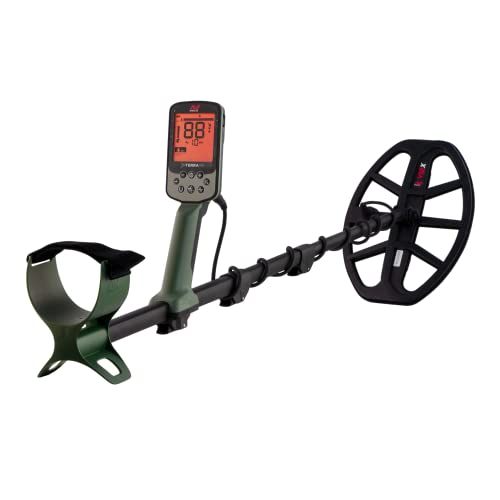
Minelab X-Terra Pro
Minelab publishes IP68 waterproofing to 16 feet, six preset modes across Park, Field and Beach, 30 discrimination segments and a 2.9 lb weight, at $282.14. Nothing else under the cap is fully submersible.
Price was accurate when this page was compiled and changes often.
On this page
- What does $300 actually buy in a metal detector?
- Beginner: the cheapest machines that are still worth swinging
- Intermediate: the machines that survive the first upgrade itch
- Expert: what an experienced detectorist buys under $300
- How do the machines under $300 compare on paper?
- What else does the first $300 have to cover?
- What are you actually giving up by staying under the cap?
What does $300 actually buy in a metal detector?
Four things, in rough order of how much they change your results. A numeric target ID on a 0 to 99 scale, so you can build an expectation before you dig. A coil big enough to cover ground, which in this band usually means somewhere between 8 and 11 inches. Adjustable sensitivity and discrimination, so the machine can be made to behave in your own soil. And in a few cases, a genuinely waterproof body rather than just a waterproof coil.
That last distinction catches more buyers than any other. Garrett states plainly in the Garrett ACE 200 listing that the searchcoil can be submerged in shallow water while the control box cannot. Bounty Hunter says the same thing in a different way about the Bounty Hunter Tracker IV, which it sells on an 8 inch waterproof coil. Minelab says something entirely different about the Minelab X-Terra Pro, which it rates IP68 and fully waterproof to 16 feet. Those are three different products even though all three listings contain the word waterproof.
What you do not get under the cap is simultaneous multi-frequency, with the partial exception of the Minelab Vanquish 340, which carries Minelab's Multi-IQ at $258.99 on a body with far fewer adjustments than the machines above it. You also do not get the deep menu, the fast recovery speed and the aftermarket coil ecosystem that the mid-range brings. The budget target ID comparison sets out how differently these machines number the same target, which is the single biggest surprise for anyone moving between them.
Beginner: the cheapest machines that are still worth swinging
The purpose of a machine at this end is to find out whether you actually enjoy walking slowly in a field for four hours. Most people discover they do not. The two below are the cheapest ways to answer that question without buying something so crude that it puts you off a hobby you would otherwise have liked.
Be honest about what happens next. If you stay in the hobby you will replace one of these inside two seasons, and that is fine. What you must not do is spend this money and then conclude that detecting does not work because a two-knob analogue machine could not separate a nail from a nickel.

Bounty Hunter Tracker IV
$120.76Bounty Hunter publishes three search modes, an 8 inch waterproof coil, a 2.6 lb weight and up to 25 hours of runtime on the Bounty Hunter Tracker IV at $120.76. There is no screen and nothing to configure, which is the point rather than the flaw.
Best for: finding out whether you like the hobby at all
Check price on Amazon
Garrett ACE 200
$149.99Garrett publishes a 0 to 99 digital target ID, a 6.5 by 9 inch waterproof PROformance coil, a weight under 3 lb and a three year warranty, at $149.99. It is made in the USA and the discrimination scale is simple enough to learn in an afternoon.
Best for: parks, yards and a first season of coin hunting
Check price on Amazon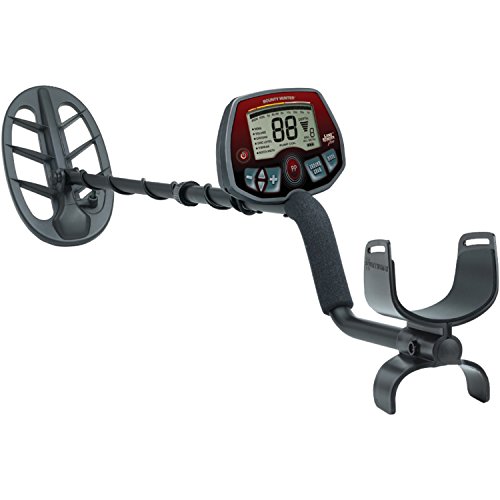
Bounty Hunter Land Ranger Pro
$173.00Bounty Hunter puts an 11 inch waterproof DD searchcoil on the Bounty Hunter Land Ranger Pro at $173.00, along with 99 points of target ID resolution, four tone ID and computerised ground balancing. An 11 inch DD is a lot of coil at this price.
Best for: covering open ground cheaply
Check price on AmazonIntermediate: the machines that survive the first upgrade itch
This is the tier most people should buy into directly. The machines here have a readable screen, enough adjustment to be tuned to your ground, and a coil that covers real acreage. They are not going to be embarrassing in three years, and two of them still get swung by people who own flagships.
The Minelab Vanquish 340 is the odd one out and deserves its own sentence. Minelab publishes Multi-IQ simultaneous multi-frequency on it, which is technology the rest of this page does not have, packaged with a 10 by 7 waterproof DD coil and three modes. The catch is that the adjustments are few and the body is water-resistant rather than submersible.

Fisher F22
$229.00Fisher publishes a weatherproof build, a 0 to 99 target ID with four-tone audio, notch and pinpoint, and roughly two pounds of weight, at $229.00. Light machines get swung for longer, and hours in the field beat specifications.
Best for: one machine for parks, fields and shallow water
Check price on Amazon
Minelab Vanquish 340
$258.99Minelab puts Multi-IQ simultaneous multi-frequency, a 10 by 7 waterproof DD coil and Coin, Jewelry and Relic modes on the Minelab Vanquish 340 at $258.99, with a padded carry bag in the box. You give up menu depth to get the frequency engine.
Best for: a beginner who wants multi-frequency from day one
Check price on Amazon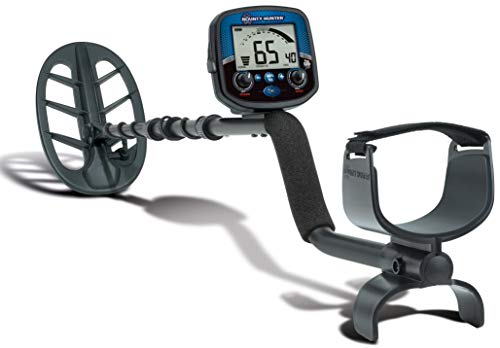
Bounty Hunter Time Ranger Pro
$219.00Bounty Hunter publishes an 11 inch waterproof DD coil, a backlit display, adjustable iron audio with V-Break and a notch window you can set yourself, at $219.00. The backlight matters more than it sounds at either end of the day.
Best for: dawn and dusk hunting on a budget
Check price on AmazonExpert: what an experienced detectorist buys under $300
Experienced people buy cheap machines all the time, but they buy them for a reason: a beater for wet ground, a second machine for a friend, or a specialist body for iron. All three below are bought that way, and all three are bought for a specific published capability rather than for general goodness.
The Minelab X-Terra Pro is here because it is the only genuinely submersible machine under the cap. The Nokta Simplex Ultra is here because Nokta builds it on a carbon fibre shaft that retracts to 25 inches and rates it to the same 16 feet. The Teknetics G2+ is here because of FeTone adjustable iron audio and V-Break, which is what you want on a site that is three quarters nails.
Minelab X-Terra Pro
$282.14Minelab publishes IP68 waterproofing to 16 feet, a PRO-SWITCH frequency engine, two each of Park, Field and Beach modes, 30 discrimination segments, handgrip vibration and a control pod flashlight, at $282.14 and 2.9 lb.
Best for: wading, rain and anyone who wants one machine for everything
Check price on Amazon
Nokta Simplex Ultra
$299.00Nokta publishes full waterproofing to 16 feet, a carbon fibre shaft that retracts to 25 inches, firmware updates over USB and a 2.6 lb weight, at $299.00. Note that Bluetooth headphones are not in the box.
Best for: wading, fresh water and rough handling
Check price on Amazon
Teknetics G2+
$299.00Teknetics publishes an 11 inch DD open elliptical coil, FeTone adjustable iron audio that turns iron down without muting it, V-Break custom tone breakpoints and Ground Grab balancing, at $299.00 and just over two pounds.
Best for: old sites where iron outnumbers everything else
Check price on AmazonWho should not buy this tier: Do not buy this tier as a first machine if the plan is two afternoons a year in the back garden. The Teknetics G2+ in particular gives you almost nothing until you can already tell a good signal from a ragged one, and its whole value is in controls a beginner will leave alone. The Minelab X-Terra Pro and Nokta Simplex Ultra are both bought largely for waterproofing, so if you will never detect in water or rain you are paying for a sealed body you do not need, and the Fisher F22 at $229.00 will find the same coins in the same park.
How do the machines under $300 compare on paper?
Read the waterproofing column first and the price column last. A waterproof coil and a waterproof detector are two different products, and that column is where the real differences between these machines live.
Only two machines under $300 in this catalog are published as fully submersible bodies rather than waterproof coils, and only one carries simultaneous multi-frequency.
| Machine | Price | Coil as supplied | Waterproofing as published | Frequency approach |
|---|---|---|---|---|
| Bounty Hunter Tracker IV | $120.76 | 8 inch | Waterproof coil only | Single frequency, analogue |
| Garrett ACE 200 | $149.99 | 6.5 by 9 inch concentric | Waterproof coil, control box is not | Single frequency |
| Bounty Hunter Land Ranger Pro | $173.00 | 11 inch DD | Waterproof searchcoil | Single frequency |
| Teknetics Delta 4000 | $189.00 | 8 inch | Waterproof search coil | Single frequency |
| Bounty Hunter Time Ranger Pro | $219.00 | 11 inch DD | Waterproof searchcoil | Single frequency |
| Fisher F22 | $229.00 | 9 inch | Weatherproof body | Single frequency |
| Nokta Simplex Lite | $249.00 | 9.5 inch DD | Waterproof, with vibration alerts | Single frequency |
| Minelab Vanquish 340 | $258.99 | 10 by 7 DD | Waterproof coil, water-resistant body | Multi-IQ simultaneous multi-frequency |
| Garrett ACE 300 | $269.99 | PROformance searchcoil with cover | Waterproof searchcoil | Single, adjustable frequency |
| Minelab X-Terra Pro | $282.14 | Supplied coil | IP68, fully waterproof to 16 ft | Switchable single frequencies |
| Nokta Simplex Ultra | $299.00 | 11 inch | Fully waterproof to 16 ft | Single frequency |
| Teknetics G2+ | $299.00 | 11 inch DD elliptical | Not stated in this listing | Single frequency |
Every figure here is quoted from the manufacturer listing or manual for that product. Where a maker does not publish a rating, the cell says so rather than guessing. None of these are measured results and none of them are a promise about your soil.
What else does the first $300 have to cover?
If $300 is your machine budget, buy the best machine you can. If $300 is your total budget, this is the uncomfortable part: a detector without a pinpointer, a digger and a pouch is a detector that finds targets and then loses them again in a pile of loose soil. The three below come to well under a hundred together and they will do more for your first season than the difference between any two machines on this page.
The pinpointer is the one that changes a day most. Recovery time is where beginners lose their hours, and the pinpointer roundup goes through the full range if you want to spend more than the minimum.

Minelab PRO-FIND 15
$69.00Minelab publishes full waterproofing to 5 feet, DIF interference reduction, audio indication and a lost alarm, at $69.00. It halves recovery time on the first day you own it and it does not stop doing that.
Best for: a first pinpointer on a strict budget
Check price on Amazon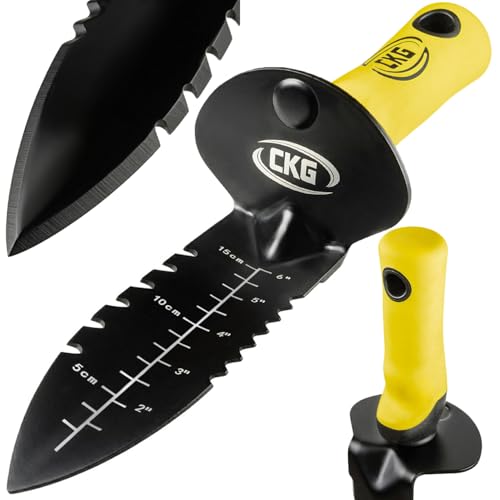
CKG Double Serrated Hand Digger
$29.99CKG publishes double serrated stainless edges that cut roots, a 10.24 inch length, a non-slip handle and a sheath with a belt loop, at $29.99. A serrated edge is what lets you cut a plug rather than tear a hole.
Best for: turf, garden soil and a first season
Check price on Amazon
Garrett Camo Digger's Pouch
$19.99Small, cheap and very hard to kill, at $19.99. Its real job is giving trash somewhere to go that is not the ground, which is the difference between being invited back to a permission and not.
Best for: a first finds and trash pouch
Check price on AmazonWhat are you actually giving up by staying under the cap?
Four things, and it is worth knowing which of them you will notice. Wet salt sand is the first and the biggest: a single-frequency machine reads a sheet of salt water as a broad conductive target, chatters, and forces you to run sensitivity so low that only shallow finds survive. No setting fixes that, which is why the beach question gets its own page in the beach roundup.
Second is recovery speed, which is how quickly the machine resets between two targets lying close together. On a clean field you will never notice. On a nineteenth century house site where every good target has a nail beside it, a slow machine simply does not report the good one. Third is the aftermarket coil ecosystem: the mid-range and flagship machines have small coils, big coils and elliptical coils available, and most of the budget bodies have one coil and that is the end of it.
Fourth is resale. A flagship holds value because there is a queue of people who want one used. A budget machine does not, so treat the money as spent. The honest way to make a cheap machine perform is to learn what your specific detector says about known targets in your own soil, and the test garden guide is the method for that. It costs nothing and it is worth more than the next $200 of machine.
How we chose
We did not test any of these machines in person and no find on this site is presented as ours. Every specification below is taken from the manufacturer listing or manual for that product, and where a maker does not publish a number we say so rather than inventing one. Picks were chosen on published capability, on the price in this catalog, and on how much of the hobby the machine still covers three seasons from now.
Sources
- Minelab X-Terra Pro product listing and instruction manual
- Minelab Vanquish 340 product listing
- Nokta Simplex Ultra and Simplex Lite product listings
- Garrett ACE 200 and ACE 300 product listings
- Fisher F22 product listing
- Bounty Hunter Tracker IV, Land Ranger Pro and Time Ranger Pro product listings
- Teknetics G2+ and Delta 4000 product listings
Frequently asked questions
Is a metal detector under $300 good enough to find silver coins?
Yes. Target ID ordering is physics rather than price: iron reads at the bottom of the scale, foil and small gold low, nickel and pull tabs in the middle, and copper and silver at the top. A Fisher F22 or an Garrett ACE 200 will put a silver dime in the same high band a flagship does. What the flagship buys is depth in difficult soil and the ability to hear that dime when a nail is lying across it.
Can I use a detector under $300 at the beach?
In dry sand above the tide line, yes. In the wet strip below it, a single-frequency machine will chatter and lose depth, because salt water is conductive and the detector cannot separate that sheet from a shallow target. The Minelab X-Terra Pro has Beach modes and is submersible to 16 feet, which helps, but the technology that genuinely solves salt is simultaneous multi-frequency and it sits above this cap.
Should I buy a used mid-range machine instead of a new budget one?
Often, yes, and experienced detectorists say so freely. A used machine from the $500 class usually outperforms anything new under $300. The risks are a coil with a hairline crack that only falses when wet, a body seal that has been opened, and no warranty. If you cannot inspect it and swing it first, the new machine with a warranty is the safer purchase.
How much of the budget should go on the detector itself?
Roughly three quarters, with the rest on a pinpointer, a serrated digger and a pouch. Recovery is where beginners lose their hours, so a Minelab PRO-FIND 15 at $69.00 and a CKG Double Serrated Hand Digger at $29.99 change more about a day in the field than the gap between two machines one step apart in price.
Do cheaper detectors go less deep, or just report less clearly?
Mostly the second. Raw depth on a coin-sized target in mild soil is broadly similar across this whole band, because it is set by coil size and physics more than by electronics. What separates machines is stability in mineralised ground, recovery speed between close targets, and how honestly the target ID behaves at the edge of range. Depth figures are always a range tied to a target size, a coil and a soil.
Researched, not professional advice. This page is compiled from published specifications, manuals and owner-review consensus, not hands-on testing. Target ID numbers, depth figures and settings vary with soil chemistry, moisture, target size, depth, orientation and firmware version, so treat every figure here as a starting point and verify it against your own machine's manual and your own ground. As an Amazon Associate we earn from qualifying purchases.