Best by budget
Best Metal Detectors Under $500: Where Multi-Frequency Starts
Quick answer
Five hundred dollars is where simultaneous multi-frequency arrives. The Minelab X-Terra Elite at $387.09 puts Multi-IQ on a fully waterproof body, the Minelab Vanquish 540 Pro-Pack at $399.00 ships with two coils, and the Garrett AT Pro at $459.99 remains the iron-audio standard.
The jump from $300 to $500 buys more than the jump from $500 to $900 does. That is not a figure of speech: it is where simultaneous multi-frequency, full IP68 waterproofing, rechargeable batteries and genuinely fast recovery all become available at once. Above this band you are buying refinement, extra modes and a better display. Inside it you are buying capability you did not previously have.
The awkward part is that the band is crowded, and several of the machines in it are competing on completely different axes. One is the cheapest multi-frequency body. One ships with two coils. One is a single-frequency machine from a previous generation that is still bought on the strength of its audio. Deciding between them means deciding what your ground is, not which specification sheet is longest. If the budget is firmer than the ambition, the under $300 page covers what the cheaper band gives up.
Top pick

Minelab X-Terra Elite
Minelab puts Multi-IQ simultaneous multi-frequency on the fully waterproof X-Terra body with two each of Park, Field and Beach modes and 30 discrimination segments, at $387.09. That is the cheapest honest answer to salt and mineralised ground in this catalog.
Price was accurate when this page was compiled and changes often.
On this page
- What changes between $300 and $500?
- Beginner: the first machine you will not resent in two seasons
- Intermediate: the multi-frequency machines this band exists for
- Expert: the specialists an experienced hunter buys in this band
- How do the machines under $500 compare on paper?
- Which of these is actually right for your ground?
What changes between $300 and $500?
One thing above all others: the frequency engine. A single-frequency detector transmits at one frequency and infers everything from what comes back. A simultaneous multi-frequency machine transmits several at once and compares the responses, which lets it separate a conductive ground signal from a conductive target. That is why Multi-IQ machines work on wet salt sand and single-frequency machines do not, and it is why the Minelab X-Terra Elite at $387.09 is a different class of tool from the Minelab X-Terra Pro despite sharing a body.
The second change is waterproofing that covers the whole machine. Nokta publishes IP68 and full submersion to 16 feet on both the Nokta Double Score and the Nokta Triple Score Pro Pack. Garrett publishes 16 feet on the Garrett Vortex VX5 and Garrett Vortex VX7, and 10 feet on the older Garrett AT Pro. Those are ratings for the detector, not for you, and the Minelab waterproof ratings reference and its Nokta equivalent collect the published figures brand by brand.
Third is what comes in the box. The Minelab Vanquish 540 Pro-Pack arrives as a Pro-Pack with both the 12 by 9 and the 8 by 5 coils, which means the trash-separation answer is already solved on day one rather than being a $300 accessory purchase later. That is worth real money and it is easy to overlook when comparing headline prices.
Beginner: the first machine you will not resent in two seasons
Buying into the bottom of this band rather than the top of the one below it is the single best-value decision in the hobby. Both picks here are fully waterproof, both are current-generation, and both have enough adjustment to be learned properly without having so much that you never leave the menu.
The Nokta Double Score is the one most people overlook. Nokta publishes multi-frequency, IP68 submersion to 16 feet, Bluetooth and a rechargeable 3250 mAh pack rated to 12 hours, at $349.00. That is a lot of current-generation machine for the money.
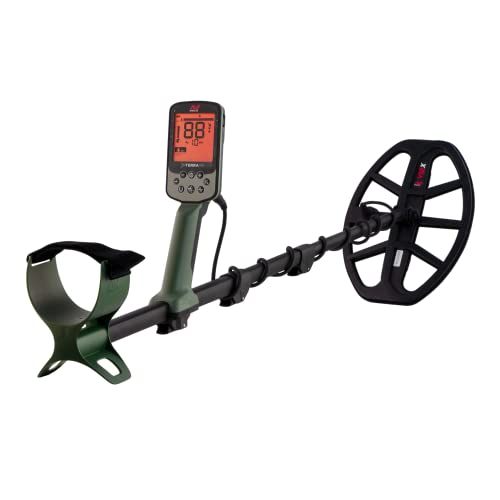
Minelab X-Terra Pro
$282.14Minelab publishes IP68 waterproofing to 16 feet, six preset search modes, 30 discrimination segments, handgrip vibration and 2.9 lb, at $282.14. It is the cheapest way into a fully submersible machine and it leaves budget for a pinpointer.
Best for: a first serious machine with money left over
Check price on Amazon
Nokta Double Score
$349.00Nokta publishes simultaneous multi-frequency, IP68 submersion to 16 feet, Bluetooth and a rechargeable 3250 mAh battery rated to 12 hours, at $349.00. Rechargeable matters more than it sounds once you stop buying AA cells every fortnight.
Best for: a beginner who does not want to upgrade soon
Check price on Amazon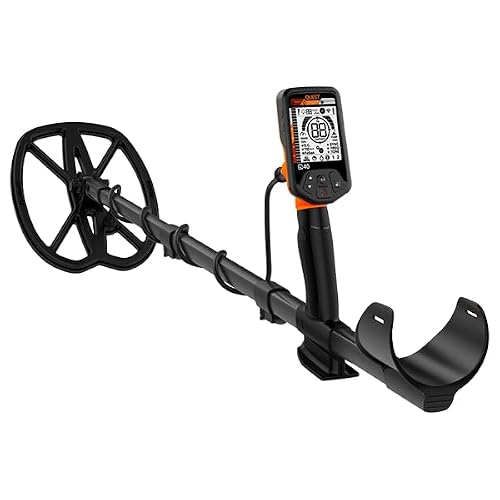
Quest Q40
$326.03Quest publishes a water-resistant build, a built-in rechargeable lithium battery, low latency wireless headphones in the box and cam-lock three section rods, at $326.03. Third-party coils are available for it, which is unusual in this band.
Best for: smaller users and anyone who wants wireless audio included
Check price on AmazonIntermediate: the multi-frequency machines this band exists for
These three are the reason to have a $500 budget rather than a $300 one. All three are simultaneous multi-frequency or explicitly multi-salt capable, which means all three will work in the wet strip of a beach and in mineralised inland soil where a single frequency machine gets noisy.
Choose between them on what is in the box and on which brand's menu you find readable. The Minelab Vanquish 540 Pro-Pack gives you two coils. The Minelab X-Terra Elite gives you full submersion. The ACE Apex gives you five selectable single frequencies plus multi and Multi-Salt, and Z-Lynk wireless, which Garrett publishes as six times faster than Bluetooth. The ACE 400 versus Apex comparison is worth reading if you are weighing Garrett against Garrett.
Minelab X-Terra Elite
$387.09Minelab publishes Multi-IQ simultaneous multi-frequency on the fully waterproof X-Terra body, with two each of Park, Field and Beach modes, 30 discrimination segments, a control pod flashlight and handgrip vibration, at $387.09.
Best for: one machine for salt, fresh water and mineralised soil
Check price on Amazon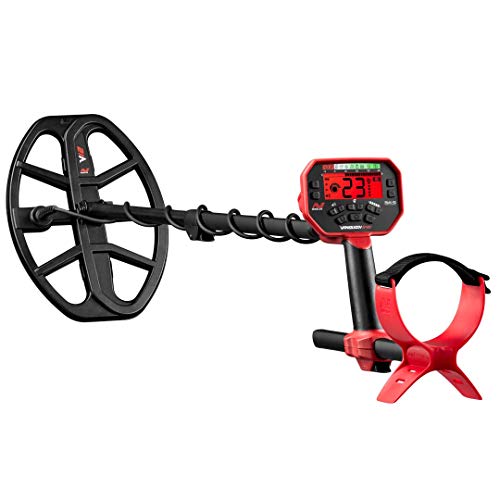
Minelab Vanquish 540 Pro-Pack
$399.00Minelab ships the Pro-Pack with both the 12 by 9 V12 and the 8 by 5 V8 coils, Multi-IQ running five frequencies at once, four modes, iron bias control and Bluetooth headphones, at $399.00 and 2.8 lb. The second coil alone is worth most of the price gap.
Best for: trashy parks and open fields with one purchase
Check price on Amazon
Garrett ACE Apex
$384.99Garrett publishes 5, 10, 15 and 20 kHz single frequencies plus Multi-Frequency and Multi-Salt, iron volume control, a 6 by 11 DD Viper coil, Z-Lynk wireless and a lithium battery rated to 15 hours, at $384.99 and 2.5 lb.
Best for: a Garrett owner who wants salt capability and wireless
Check price on AmazonExpert: the specialists an experienced hunter buys in this band
Everything here is bought for one job. The Garrett AT Pro is a single-frequency machine from an older generation that people still buy in numbers, because Garrett publishes proportional audio, tone roll and 40 levels of iron discrimination, and because the aftermarket coil support for the AT body is the deepest of any machine at this price. The AT Pro review covers its weaknesses honestly.
The Fisher F75 is bought for weight and speed in iron. The Garrett Vortex VX7 is bought because Garrett lets you unlock it into a VX9 later with a paid software upgrade, which is a genuinely unusual thing to be able to buy.

Garrett AT Pro
$459.99Garrett publishes proportional audio with tone roll, 40 levels of high-resolution iron discrimination, submersion to 10 feet and MS-2 headphones in the box, at $459.99. Its audio carries more information than its number does, which is the whole reason people keep it.
Best for: iron-heavy sites and shallow fresh water
Check price on Amazon
Fisher F75
$419.00Fisher publishes double-filter discrimination modes for trashy ground, a magnetic mineralisation bar graph and readout, trigger-actuated FastGrab ground balance, a 0 to 99 target ID and typically 40 or more hours from four AA cells, at $419.00.
Best for: all-day relic hunting where weight decides the day
Check price on Amazon
Garrett Vortex VX7
$499.99Garrett publishes Multi-Salt mode, MD-MF multi-frequency, five search modes plus pinpoint, adjustable reactivity and built-in Z-Lynk, at $499.99, and states that it can be unlocked to VX9 later by software rather than by buying another machine.
Best for: someone who expects their requirements to grow
Check price on AmazonWho should not buy this tier: Do not buy the Garrett AT Pro for wet salt sand. It is single frequency, Garrett rates it to 10 feet rather than 16, and on a conductive salt sheet it will chatter in exactly the strip where the jewellery is. Do not buy the Fisher F75 as a first machine either: its value is in mineralisation readouts and double-filter modes that a beginner will never touch, and it is a worse park machine than the Minelab Vanquish 540 Pro-Pack for half the reasons and none of the money. And do not buy the Garrett Vortex VX7 for the upgrade path alone, because the upgrade costs money you could have put towards the VX9 in the first place.
How do the machines under $500 compare on paper?
The frequency column is the one that decides a beach and the one that decides mineralised inland soil. Everything else on this table is a preference.
Seven of the machines under $500 in this catalog are published as simultaneous multi-frequency or multi-salt capable, and five are published as fully submersible to at least 16 feet.
| Machine | Price | Frequency approach | Waterproofing as published | What is in the box |
|---|---|---|---|---|
| Minelab X-Terra Pro | $282.14 | Switchable single frequencies | IP68 to 16 ft | Machine and coil |
| Fisher F44 | $307.00 | Single frequency | Weatherproof body | Machine and large LCD |
| Quest Q40 | $326.03 | Single frequency | Water-resistant | Wireless headphones included |
| Fisher Gold Bug Pro | $339.00 | 19 kHz single frequency | Not stated in this listing | Machine and coil |
| Nokta Double Score | $349.00 | Simultaneous multi-frequency | IP68 to 16 ft | Rechargeable 3250 mAh pack |
| Garrett ACE 400 | $357.99 | Single, adjustable frequency | Waterproof searchcoil | Searchcoil cover included |
| Garrett ACE Apex | $384.99 | 4 singles plus Multi and Multi-Salt | Waterproof searchcoil | 6 by 11 Viper coil, Z-Lynk ready |
| Minelab X-Terra Elite | $387.09 | Multi-IQ simultaneous multi-frequency | Fully waterproof body | Machine and coil |
| Minelab Vanquish 540 Pro-Pack | $399.00 | Multi-IQ, five frequencies at once | Water-resistant interface | V12 and V8 coils, Bluetooth headphones |
| Garrett Vortex VX5 | $399.99 | 13 kHz or MD-MF multi | 16 ft | Z-Lynk built in, upgradeable |
| Fisher F75 | $419.00 | Single frequency | Waterproof DD coil, rain cover available | Machine and coil |
| Garrett AT Pro | $459.99 | Single frequency | 10 ft | MS-2 wired headphones |
| Nokta Triple Score Pro Pack | $499.00 | Simultaneous multi-frequency | IP68 to 16 ft | Sold as an accessory pack |
| Garrett Vortex VX7 | $499.99 | MD-MF plus Multi-Salt | 16 ft | Z-Lynk built in, upgradeable to VX9 |
All figures are quoted from the manufacturer listing or manual for that product. Where a rating is not published in the listing used here, the cell says so. Check the manual before submerging anything.
Which of these is actually right for your ground?
Work backwards from the site you will hunt most, not from the site you dream about. If that is a municipal park full of pull tabs and bottle caps, separation and a small coil matter more than depth, and the Minelab Vanquish 540 Pro-Pack arriving with an 8 by 5 coil already in the box answers the question directly. If it is a ploughed field, coil coverage and comfort decide the day, and an 11 inch class coil on a light body wins.
If it is any kind of salt water, the answer narrows sharply to the multi-frequency machines, and the reasoning is set out in full on the beach roundup. If it is a nineteenth century homestead, iron audio and recovery speed decide everything, which is why the Garrett AT Pro and the Fisher F75 are still bought new by people who could afford more.
One more consideration that nobody puts on a specification sheet: whether you will carry it. A machine that weighs three pounds and balances badly gets left in the car on a cold morning. Fisher publishes just over two pounds for the Fisher F75, Garrett publishes 2.5 lb for the Garrett ACE Apex, and Minelab publishes 2.8 lb for the Minelab Vanquish 540 Pro-Pack. The weight comparison collects the published figures, and a sling is a cheap fix if the machine you want is heavy.
How we chose
We did not test any of these machines in person, and nothing here is presented as a result we obtained. Specifications come from each manufacturer listing or manual and are attributed in the text where they appear. Picks were made on three questions: does the maker publish simultaneous multi-frequency, does the maker publish a submersion depth for the whole machine rather than the coil, and what is actually in the box.
Sources
- Minelab X-Terra Elite and Vanquish 540 Pro-Pack product listings
- Garrett ACE Apex, ACE 400, Vortex VX5 and VX7 product listings
- Garrett AT Pro product listing and owner manual
- Nokta Double Score and Triple Score product listings
- Fisher F75, F44 and Gold Bug Pro product listings
- Quest Q40 product listing
Frequently asked questions
Is simultaneous multi-frequency worth paying for under $500?
If you hunt salt water or mineralised soil, yes, and it is the main reason to have this budget at all. If you only ever hunt mild inland soil and dry parks, the practical gain is smaller than the marketing suggests, and a well-set single-frequency machine like the Garrett AT Pro will keep up. The honest test is whether wet sand is in your plans within the next two years.
Why is the Garrett AT Pro still recommended when it is single frequency?
Because of its audio and its coil ecosystem. Garrett publishes proportional audio, tone roll and 40 levels of iron discrimination, which together tell an experienced ear more about a target than a two-digit number does. It is also the most widely supported body for aftermarket coils at this price. It is still the wrong machine for wet salt sand, and nothing about its audio changes that.
Does a rechargeable battery matter, or are AA cells fine?
Both work, and each fails differently. Rechargeable machines like the Nokta Double Score, which Nokta rates at 12 hours from a 3250 mAh pack, mean no ongoing cost and no mid-hunt fumbling. AA machines can be revived anywhere by anyone with a spare set, which matters on a trip. What is not negotiable is noticing when the cells are low, because a detector behaves differently before it stops working.
Should I buy the Pro-Pack with two coils or a better single-coil machine?
Two coils, in almost every case. A small coil in trash and a standard coil in the open cover more genuinely different situations than a one-step upgrade in model does. The Minelab Vanquish 540 Pro-Pack Pro-Pack ships with the 12 by 9 and the 8 by 5, and buying a second coil separately for any of these machines typically costs a large fraction of the machine itself.
Will a $500 machine find gold?
Small natural gold needs a high operating frequency, which is why the Fisher Gold Bug Pro runs 19 kHz and dedicated prospecting machines run far higher. A multi-frequency coin machine will find larger nuggets and gold jewellery perfectly well. For fine gold in known goldfields it is the wrong tool, and the specialist machines are covered in the gold roundup rather than here.
Researched, not professional advice. This page is compiled from published specifications, manuals and owner-review consensus, not hands-on testing. Target ID numbers, depth figures and settings vary with soil chemistry, moisture, target size, depth, orientation and firmware version, so treat every figure here as a starting point and verify it against your own machine's manual and your own ground. As an Amazon Associate we earn from qualifying purchases.