Best by what you are hunting
Best Metal Detector for Silver Coins: Reading the High End of the Scale
Quick answer
Silver is a high conductor and reads near the top of a 0 to 99 target ID scale on most machines, but a deep or corroded coin reads lower and less stably, and a corroded bottle cap can land in the same range. The Garrett ACE 400 at $357.99 and Minelab Equinox 900 at $999.00 give the clearest, highest-resolution readings for telling the two apart.
Silver conducts electricity well, which is why it sits near the top of the conductivity ordering every VLF target ID scale is built on. That is physics and it holds across every machine in this catalog. What it does not mean is that a specific number always means silver on a specific machine, or that the number holds steady as depth, orientation and corrosion change it. Treating a single number as identity is the single most common mistake in coin hunting, and it is worth unlearning before you buy anything on this page.
The honest job of a detector here is not to promise silver, it is to give you a stable, repeatable, high-resolution reading you can learn to trust against your own ground. The target ID chart covers the conductivity ordering in full, and building a test garden with a known silver coin at a marked depth in your own soil will teach you more about this than any specification on this page.
Top pick

Garrett ACE 400
Garrett publishes a 0 to 99 digital target ID with iron audio that lets you hear trash before you dig, on a machine priced well under the flagships, which covers most coin hunters' actual needs.
Price was accurate when this page was compiled and changes often.
On this page
- Why does silver read near the top of the scale?
- Why does a deep or corroded silver coin read differently?
- How do the main coin-hunting candidates compare?
- What is a sensible first machine for chasing silver?
- What do most coin hunters actually settle on?
- When does the extra resolution genuinely pay off?
- What do you do with a signal that might be silver?
Why does silver read near the top of the scale?
Target ID on a VLF detector is a conductivity ordering, not a lookup table. Iron reads at the bottom, foil and small gold sit low, nickel and pull tabs sit in the middle, and copper and silver sit near the top because they conduct well. A large silver coin, with more metal for the current to move through, typically reads at or near the top of whatever scale the machine uses, and most modern machines use a 0 to 99 range.
That ordering is genuine physics and it is safe to rely on as a starting point. What is not safe is treating "high number" as proof of silver on its own. A large piece of foil folded tightly, a pull tab, or a corroded bottle cap sitting at an unusual orientation can all drift into ranges that overlap the low end of where silver typically reads, and the overlap widens the deeper and more corroded the target is.
Why does a deep or corroded silver coin read differently?
Depth weakens and smears the signal a detector receives, and a weaker signal is a less confident signal: the number can read lower than a shallow example of the same coin, and it can bounce between two or three adjacent numbers on repeated sweeps rather than settling. Corrosion changes the picture further, because a corroded surface no longer presents the same clean conductive shape the coin had when it went into the ground, and a silver coin that has spent decades in acidic soil can read measurably lower than the textbook number for that denomination. This is exactly why a corroded bottle cap and a deep silver coin can land in the same suspect range: both are giving the detector a less-than-ideal version of their true conductivity.
The practical answer is the same one that runs through every honest page on this site: check the number against your own machine, in your own soil, with a known target at a marked depth, and treat anything unfamiliar as worth a dig in a permission you already hold, rather than trusting a number in isolation.
How do the main coin-hunting candidates compare?
Resolution and iron discrimination are the two figures worth reading closely. A wider scale and finer iron control both help separate a marginal silver reading from marginal trash.
Published prices run from $189.00 for the Teknetics Delta 4000 to $999.00 for the Minelab Equinox 900, which publishes 119 high-resolution target IDs against the others' 100-point scales.
| Machine | Price | Target ID scale | Iron handling | Notable limitation |
|---|---|---|---|---|
| Teknetics Delta 4000 | $189.00 | Numeric with a depth reading | Adjustable discrimination | Single frequency, no published resolution figure beyond the standard scale |
| Garrett ACE 400 | $357.99 | 0 to 99 digital | Iron audio, hear trash before digging | Single frequency, coil-only waterproofing |
| Garrett AT Pro | $459.99 | 0 to 99 with proportional audio | 40 levels of high-resolution iron discrimination | No numeric resolution above the standard 100-point scale |
| Minelab Equinox 700 | $749.00 | Multi-IQ target ID | Iron bias adjustment via mode | Standard resolution, not the 900's expanded scale |
| Minelab Equinox 900 | $999.00 | 119 high-resolution target IDs | Iron bias plus high-resolution separation | The resolution advantage matters most on old or iron-heavy ground |
Specifications are quoted from each maker listing or manual. Prices are catalog prices and move. No coin has been dug with any of these by us.
What is a sensible first machine for chasing silver?
Teknetics Delta 4000 at $189.00. It publishes a numeric target ID and a depth reading on the same LCD, which is enough to start learning how your local soil shifts a reading, without the expense of a flagship you cannot yet evaluate. It will not resolve a marginal silver-versus-trash call as finely as the pricier machines below, and that is an honest trade for the price.

Teknetics Delta 4000
$189.00A numeric target ID and depth reading together on one LCD, an 8 inch waterproof coil and computerized ground balancing, for under $190. Enough resolution to start building an ear for high-conductor readings.
Best for: a first machine for learning to read the scale honestly
Check price on AmazonWhat do most coin hunters actually settle on?
Garrett ACE 400 at $357.99. Garrett publishes a 0 to 99 digital scale and an iron audio feature that lets you hear a likely iron target before you ever look at the number, which narrows the field of "maybe silver" signals considerably. It is single frequency and coil-only waterproof, which is a real limitation on wet salt sand but not on the parks and fields where most silver turns up.
Garrett ACE 400
$357.990 to 99 digital target ID, iron audio to hear trash before digging, adjustable frequency to cut interference, and a searchcoil cover included, all on a body most coin hunters never feel the need to replace.
Best for: the everyday coin-hunting machine most people should buy
Check price on Amazon
Garrett AT Pro
$459.99Proportional audio and tone roll carry more information about a target than the number alone, and 40 levels of high-resolution iron discrimination help separate a deep, weak silver reading from nearby iron.
Best for: old ground with more iron than open parkland
Check price on AmazonWhen does the extra resolution genuinely pay off?
On old, iron-heavy or heavily hunted ground, where marginal signals are common and the cost of a wrong guess is a wasted hole in a permission you want to keep. Minelab publishes 119 high-resolution target IDs on the Minelab Equinox 900 against the standard 100-point scale most machines use, and that finer resolution is what separates two signals that would read identically on a coarser scale. It ships with both the EQX 11 and EQX 6 coils, and the smaller coil itself improves separation in trash independently of the target ID resolution.
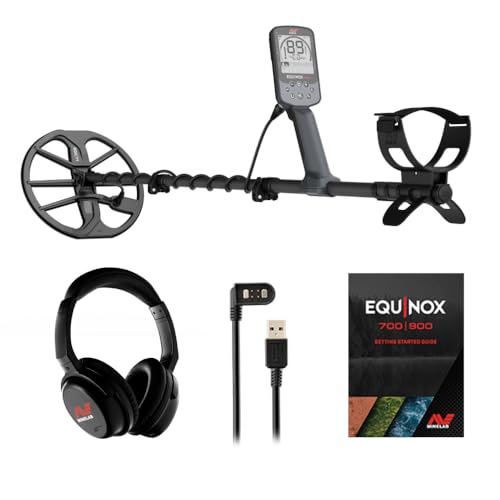
Minelab Equinox 900
$999.00119 high-resolution target IDs against the usual 100-point scale, Multi-IQ simultaneous multi-frequency, and both the EQX 11 and EQX 6 coils in the box for working trashy ground where marginal signals are common.
Best for: old, iron-heavy or heavily hunted sites where marginal readings are routine
Check price on AmazonWho should not buy this tier: Do not buy the Minelab Equinox 900 for silver coins alone if you hunt a single quiet park occasionally: the resolution advantage only shows up on ground where marginal signals are common, and on clean open ground the Garrett ACE 400 will make the same calls for a fraction of the price. It is also not a substitute for learning your own machine. Nobody should trust any target ID number, including a 119-point one, without first burying a known silver coin in their own soil and writing down what their own machine actually says at a few different depths.
What do you do with a signal that might be silver?
Dig it, provided you hold permission on that ground. The entire point of the honesty above is that no machine, including the Minelab Equinox 900, can promise silver from a number alone, so the correct response to a suspicious high-conductor reading in a trashy area is to treat it as worth checking rather than to hold out for certainty a target ID scale cannot give you. The target ID chart and the silver coin melt value calculator are worth using together once a coin is actually in hand, one to understand what the number told you and the other to see what the coin is worth once identified properly.
How we chose
Nothing here has been tested by us against a buried coin. The three picks are chosen on published target ID resolution and iron discrimination, which are the two documented capabilities that predict how well a machine separates a genuine silver coin from a similarly-conductive piece of trash. Where a manufacturer does not publish a resolution figure, the text says so rather than assuming a number.
Sources
- Teknetics Delta 4000 and Garrett ACE 400 product specifications
- Garrett AT Pro owner manual
- Minelab Equinox 700 and 900 instruction manual
Frequently asked questions
What target ID number means silver?
There is no single number, only a range near the top of the scale that shifts by machine, depth, orientation and corrosion. Silver reads as a high conductor because it genuinely conducts well, but a deep or corroded coin reads lower and less stably than a fresh, shallow one, so treat any number as a starting point rather than an identification.
Why does a bottle cap sometimes read like silver?
A corroded bottle cap no longer presents a clean conductive shape, and a poor version of a mid-conductor signal can land in the same suspect range as a poor version of a high-conductor one. This overlap is exactly why experienced detectorists dig marginal signals rather than trusting the number alone in trashy ground.
What is the best metal detector for silver coins?
The Garrett ACE 400 at $357.99 covers most coin hunters' actual needs with a 0 to 99 digital scale and iron audio. On old or heavily hunted ground where marginal readings are routine, the Minelab Equinox 900 at $999.00 publishes 119 high-resolution target IDs, which separates borderline signals a coarser scale cannot.
Does a higher-resolution target ID scale actually find more silver?
It helps you make better decisions about signals you would otherwise skip or waste time digging, rather than finding coins a coarser scale would physically miss. The advantage shows up most on trashy or heavily hunted ground where two different targets would otherwise read identically.
How do I learn what my own machine actually reads on silver?
Bury a known silver coin at a few marked depths in your own soil and sweep it in the modes you actually use, then write down what the screen says. Soil chemistry and moisture shift the number enough that a published range from a manual is a starting point, not a substitute for testing your own ground.
Researched, not professional advice. This page is compiled from published specifications, manuals and owner-review consensus, not hands-on testing. Target ID numbers, depth figures and settings vary with soil chemistry, moisture, target size, depth, orientation and firmware version, so treat every figure here as a starting point and verify it against your own machine's manual and your own ground. As an Amazon Associate we earn from qualifying purchases.