Getting started
How to Ground Balance a Metal Detector: Mineralisation, Chatter and Depth
Quick answer
Ground balance tunes the detector to ignore the mineral content of your soil. Pump the coil up and down over clean ground until the machine falls quiet, or run the automatic routine your manual specifies. Rebalance whenever the soil changes, because an unbalanced machine chatters and loses depth at the same time.
Ground is not electrically neutral. Iron oxides, salts and moisture all produce a response of their own, and unless the machine is told to disregard that background it spends its sensitivity on the dirt rather than on what is buried in it. Ground balance is the control that sets that background level, and on mineralised soil it is the single setting that most affects what you find.
The symptom of getting it wrong is familiar: constant chatter, falsing on nothing, and a machine that has to be run at low sensitivity to be usable at all, which costs depth twice. The fix is usually thirty seconds of work. What follows is how the different systems behave and when each one is the right choice, with every specification attributed to the maker that publishes it.
Top pick
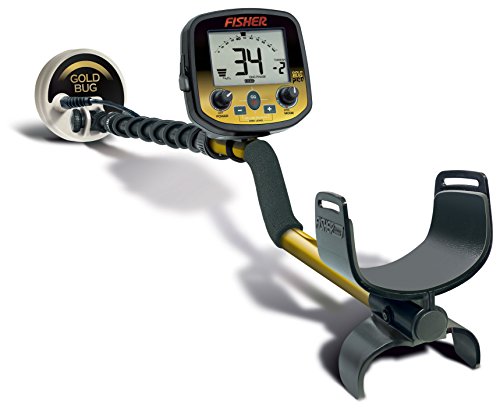
Fisher Gold Bug Pro
Fisher publishes real-time ground grab balancing with a continuous ground condition and mineralisation readout, which is the clearest feedback on soil in this catalog.
Price was accurate when this page was compiled and changes often.
On this page
What does ground balance actually do?
It sets a reference for the response the soil itself produces, so the machine can subtract it. Highly mineralised ground, such as red clay, ironstone country or black sand, returns a strong signal that varies as you sweep, and to an unbalanced detector that variation looks like a stream of targets. Balanced correctly, the machine treats that background as silence and spends its range on genuine metal.
The gain is real and it is double sided. A balanced machine runs quieter, which means you can raise sensitivity without the chatter becoming unbearable, and higher usable sensitivity is depth. An unbalanced machine forces you down on sensitivity to stay sane, so you lose depth from the mineralisation and again from the setting you were forced into. This is the mechanism behind the soil columns in the depth chart.
Which ground balance systems exist, and what do the makers publish?
Four approaches, and most machines offer more than one. The table lists what each manufacturer publishes for the machines in this catalog rather than what the systems are reputed to do.
Automatic or computerised ground balance is now standard across the range, while manual control persists on prospecting machines where the operator needs to hold a setting the automatic system would keep moving.
| Machine | What the maker publishes | Practical effect |
|---|---|---|
| Fisher Gold Bug Pro | Computerised ground grab with continuous ground condition and mineralisation readout | You can see what the soil is doing, not just hear it |
| Fisher Gold Bug 2 | Manual 16-turn ground balance and a three position mineralisation switch | Fine manual control for extreme ground, black sand and hot rocks |
| Garrett AT Gold | Manual and automatic ground balance with a Ground Balance Window | A window rather than a single point, aimed at variable mineralisation |
| Teknetics G2+ | Ground grab computerised ground balancing | One button adjustment for changing soil |
| Fisher F75 | Trigger actuated fastgrab ground balance | Rebalancing without taking a hand off the grip |
| Bounty Hunter Land Ranger Pro | Ground grab computerised balancing, one button press | Automatic with a manual override available |
| Bounty Hunter Time Ranger Pro | Computerised ground grab with manual override | Automatic by default, manual when the ground is odd |
| Minelab Gold Monster 1000 | Fully automatic noise cancel, ground balance and sensitivity | Deliberately removes the decision from the operator |
| Garrett Vortex VX9 | High resolution ground balance system for saltwater to highly mineralised soil | A wide published range across ground types |
| Teknetics Delta 4000 | Ground balancing controls that adapt to soil conditions | Basic adaptation on a budget machine |
Every entry is quoted from that manufacturer listing or manual. Machines whose listings do not describe a ground balance system are left out rather than guessed at.
How do you balance by pumping the coil?
- Find clean ground. A patch with no target signal. Sweep first to confirm it is empty, because balancing over a buried coin teaches the machine the wrong lesson.
- Enter the ground balance routine. Whatever your manual specifies, usually a button held or a trigger pulled. The manual is the authority here, not a general guide.
- Pump the coil. Raise and lower it over the same spot, from roughly ground level to a few inches up, in a steady rhythm rather than a fast jab.
- Listen for the machine to go quiet. The response as the coil approaches the ground should fade. On machines with a number, watch it settle rather than continue drifting.
- Confirm on a second patch. Move a few paces and pump again. If the value is wildly different, the ground is variable and tracking may suit it better.
- Rebalance when conditions change. Crossing from pasture into a ploughed field, moving from dry sand to wet, or after rain. Soil moisture alone moves the setting.
When should you use tracking, and when should you not?
Automatic tracking continuously updates the balance as you walk, which is exactly what you want on ground whose mineralisation changes over short distances. It is why machines aimed at prospecting, such as the Minelab Gold Monster 1000, take the decision away from the operator entirely: on goldfield ground the alternative is rebalancing every few paces.
Where tracking hurts is over a large or deep target. A tracking system can gradually treat a big buried object as background and balance it out from under you, which is precisely the target you did not want to lose. On sites where you are hunting large relics or caches, a fixed manual balance is the safer choice. Machines that publish manual control alongside automatic, such as the Garrett AT Gold with its Ground Balance Window and the Fisher Gold Bug 2 with a 16-turn control, exist for that reason.
What if the machine still chatters after balancing?
Work through the other causes in order. Run the noise cancel routine, because electrical interference from overhead lines, solar installations and nearby detectorists produces chatter that ground balance cannot fix. Drop sensitivity a few steps and see whether the noise disappears, which tells you whether you are fighting the ground or the air. Check the coil cable is secured to the shaft, since a swinging cable generates false signals on every machine ever made.
Then consider the coil. A cracked or waterlogged coil falses persistently and is frequently mistaken for bad ground. Salt is its own problem entirely, discussed in the saltwater guide, because wet salt sand is conductive in a way that single frequency machines struggle with regardless of balance. And if the chatter is new on ground that used to be quiet, check batteries before anything else, because low cells change how a detector behaves before they stop it working.
Sources
- Fisher Gold Bug Pro and Gold Bug 2 owner manuals
- Garrett AT Gold and Vortex VX9 product specifications
- Minelab Gold Monster 1000 instruction manual
- Teknetics G2+ and Delta 4000 product listings
Frequently asked questions
Do I need to ground balance every time I go out?
Balance at the start of every session and again whenever the ground changes underfoot. Soil moisture alone shifts the setting, so the same field after rain is not the same field. On machines with automatic tracking this happens continuously, but it is still worth confirming manually on arrival so you know what the ground is doing.
What is mineralisation and why does it matter?
It is the mineral content of the soil, mostly iron oxides and salts, which produces an electrical response of its own. Heavily mineralised ground absorbs signal and generates false responses, so an unbalanced machine chatters and you are forced to run low sensitivity. That costs depth twice over, which is why mineralised soil columns in depth charts are so much worse than mild soil.
Is automatic ground tracking always better?
No. Tracking suits ground whose mineralisation changes over short distances, which is why prospecting machines lean on it heavily. Its weakness is that it can gradually balance out a large or deep target as though it were background, losing you exactly the find you wanted. On relic and cache hunting ground, a fixed manual balance is usually the safer choice.
Can I ground balance on a salt beach?
You can balance, but salt is a different problem from mineralisation. Wet salt sand is conductive, and a single frequency machine cannot easily separate the salt response from a target response however well balanced it is. That is the case simultaneous multi-frequency was developed for, and it is why beach and salt modes exist on current machines.
My machine has no ground balance control. Is that a problem?
Not necessarily. Several machines aimed at beginners set the balance internally and give you no control, which is fine in mild soil and limiting in mineralised ground. If you hunt red clay, ironstone country or black sand and the machine chatters constantly at usable sensitivity, that is the point at which the missing control becomes the reason to upgrade.
Researched, not professional advice. This page is compiled from published specifications, manuals and owner-review consensus, not hands-on testing. Target ID numbers, depth figures and settings vary with soil chemistry, moisture, target size, depth, orientation and firmware version, so treat every figure here as a starting point and verify it against your own machine's manual and your own ground. As an Amazon Associate we earn from qualifying purchases.