Legend settings
Legend settings for a freshwater lake or river shallows
Quick answer
Detecting in a freshwater lake or river shallows, the Nokta The Legend Pro Pack wants medium to high sensitivity, medium recovery speed and the stock 11 inch coil. Good fit for this ground. The Legend is a sensible machine for a freshwater lake or river shallows.
The Legend is a sensible machine for a freshwater lake or river shallows. Nothing about this ground works against the machine. The settings below are a starting point, and the useful work is calibrating them to what your own soil does to your own readings.
Top pick

Nokta The Legend Pro Pack
Ships as a Pro Package with both 6 inch and 11 inch DD coils, with two simultaneous multi-frequency profiles plus 4, 10, 15, 20 and 40 kHz single frequencies.
Price was accurate when this page was compiled and changes often.
On this page
- What is a freshwater lake or river shallows actually like to detect?
- What should I set my Legend to in a freshwater lake or river shallows?
- What can the Legend realistically do here?
- How to calibrate this to your own ground
- Other machines that suit a freshwater lake or river shallows
- What else you need in a freshwater lake or river shallows
What is a freshwater lake or river shallows actually like to detect?
Submersion without the salt problem. Fresh water removes the conductivity issue entirely, so the requirement is simply that the machine is rated to go under, and that your headphones are wired rather than wireless.
The targets you are realistically there for are jewellery and coins lost from swimming areas. That, plus how mineralised the ground is, is what decides every setting below.
What should I set my Legend to in a freshwater lake or river shallows?
In a freshwater lake or river shallows the Legend wants medium to high sensitivity, medium recovery speed and the stock 11 inch coil.
| Setting | Starting point | Why |
|---|---|---|
| Sensitivity | Medium to high | Mild ground supports a high setting, so take the depth it offers. |
| Discrimination | Light, reject iron only | Rejecting more than you need to costs you targets you would have wanted. |
| Recovery speed | Medium | Slower processing buys depth where there is nothing crowding the target. |
| Ground balance | Balance at the start and again if the threshold changes | Balanced ground is quieter ground, which makes a faint signal audible. |
| Audio | Wired waterproof headphones. No wireless system works underwater | Wireless does not transmit underwater at any useful range, so a wired set is a requirement and not a preference. |
| Coil | Stock 11 inch is the right starting point | Coil choice is a coverage and separation trade, matched to the ground. |
| Water | Fine, the Legend is rated to 16 ft | This is the one specification on the page that is absolute. No setting works around it. |
These are starting points, not specifications. Your machine's manual is the authority on what each control does and what range it offers, and the numbers that matter are the ones you get in your own soil. Settings also move between firmware versions.
What can the Legend realistically do here?
Ground in a freshwater lake or river shallows is moderately mineralised, which means depth on a coin-sized target sits in the middle of whatever this machine manages in ideal conditions.
| Target | How it behaves here | What to do about it |
|---|---|---|
| Coin-sized non-ferrous | Reads clearly at moderate depth, less stably deeper | Check it from two directions before digging. A signal that holds from both is worth the hole. |
| Small gold and thin chains | Marginal, and easy to walk over entirely | A smaller coil and less discrimination is how you stop missing these. |
| Large relics and iron-backed targets | Loud, sometimes masked by nearby iron | Usually straightforward. |
| Aluminium trash | Occasional | Easy to live with. |
No manufacturer publishes a depth figure in inches for these machines, and anyone printing one has invented it. Depth varies with target size, orientation, corrosion, moisture and mineralisation, so the only figure worth having is the one you measure yourself.
How to calibrate this to your own ground
- Bury known targets. Bury a coin, a small piece of gold or a thin chain, and a pull tab at measured depths in the ground you actually hunt, and leave them for a few weeks so the soil settles.
- Walk the test bed. Sweep it with the Legend at the settings above and write down what you get: the reading, how stable it is, and at what depth it disappears.
- Change one thing. Move a single setting, walk the bed again, and record the difference. Changing several at once tells you nothing about which one mattered.
- Write it on the machine. Keep the settings that worked on a card in your pouch. A setup you can reproduce is worth more than one you found once and cannot remember.
Other machines that suit a freshwater lake or river shallows
Machines that handle this ground comparably well, for anyone still choosing.
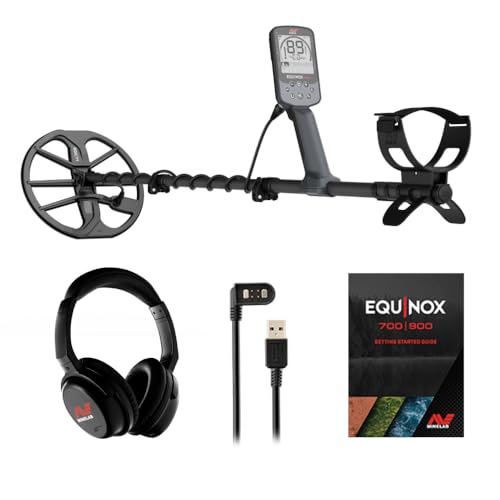
Minelab Equinox 900
$999.00Ships with both the EQX 11 and EQX 6 waterproof Double-D coils, offers six single frequencies alongside Multi-IQ, and is submersible to 16 feet at 2.8 lb.
Best for: the one machine that covers park, field, beach and gold
Check price on Amazon
Minelab Equinox 700
$749.00The lower half of the current Equinox pair: Multi-IQ simultaneous multi-frequency, fully waterproof, with the EQX 11 coil.
Best for: most serious hobbyists who do not need the 900's extra modes
Check price on Amazon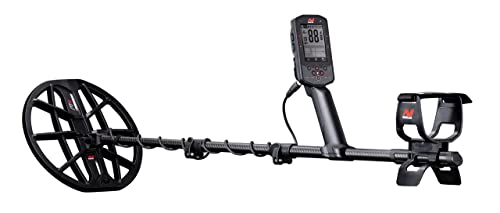
Minelab Manticore
$1,499.00Minelab's high-power Multi-IQ+ platform with a two-dimensional target display, and the deepest machine the brand sells outside gold-specific models.
Best for: an experienced detectorist chasing depth in mineralised ground
Check price on Amazon
Nokta The Legend 2
$999.00The successor to The Legend, again a fully waterproof simultaneous multi-frequency machine.
Best for: buyers who want the current Nokta flagship
Check price on AmazonWhat else you need in a freshwater lake or river shallows
The machine is rarely the limit. Recovery speed and the right recovery tool decide how many of the targets you hear actually end up in the pouch.

CKG 304 Stainless Sand Scoop
$89.99The same design in 304 stainless at half the price of the flagship scoops.
Best for: a first beach scoop
Check price on Amazon
Minelab Equinox Waterproof Headphones
$170.00Wired and waterproof. Wireless does not work under water, so a submerged machine needs these.
Best for: submerging an Equinox
Check price on AmazonHow we chose
We did not test these machines in person and we publish no find claims. Picks are researched from manufacturer specifications and owner manuals, published listing features, waterproof ratings and warranty terms, and the recurring themes in verified owner reviews. We favour the established detector brands because coils, shafts and control boxes have to stay available years after a model is discontinued, and we place every pick in the tier where its price and capability honestly belong.
Sources
- Nokta The Legend Pro Pack instruction manual and published specifications
- Manufacturer product listing features for this model
Frequently asked questions
What sensitivity should I run on the Legend in a freshwater lake or river shallows?
Start at medium to high and work from there. The rule that matters more than the number is that a machine running so hot it chatters is a machine that is hiding faint deep signals in its own noise. Turn it up until it becomes unstable, then come back down a step, and re-check whenever the ground changes.
Is the Legend a good choice for a freshwater lake or river shallows?
Yes. Nothing about this ground works against the machine. The settings below are a starting point, and the useful work is calibrating them to what your own soil does to your own readings. The settings above are a starting point rather than a prescription, and the work worth doing is calibrating them against buried known targets in your own soil.
What coil should I use in a freshwater lake or river shallows?
Stock 11 inch is the right starting point. Coil choice changes target separation more than any menu setting, so it is the first thing to reconsider when a site is not producing. Coils are machine-specific and often series-specific, so check the compatibility chart for your own detector before ordering, because a coil that does not fit is an expensive mistake.
Can the Legend get wet in a freshwater lake or river shallows?
Fine, the Legend is rated to 16 ft. This is the one specification on the page that is absolute: sensitivity and discrimination are preferences you can experiment with, and a waterproof rating is not. A waterproof searchcoil and a fully submersible machine are different things, and confusing them is how control boxes die.
Do I need permission to detect in a freshwater lake or river shallows?
Almost certainly, and you should assume yes. Get the landowner's permission before detecting on any ground you do not own, in writing where you can. Many public parks and recreation grounds prohibit detecting outright, national parks and protected archaeological sites are off limits in most jurisdictions, and the rules vary by country, state, county and individual parcel. Check before you go.
Researched, not professional advice. This page is compiled from published specifications, manuals and owner-review consensus, not hands-on testing. Target ID numbers, depth figures and settings vary with soil chemistry, moisture, target size, depth, orientation and firmware version, so treat every figure here as a starting point and verify it against your own machine's manual and your own ground. As an Amazon Associate we earn from qualifying purchases.