Minelab Vanquish
Minelab Vanquish 540 Settings By Site Type: Which Mode For Park, Field And Beach
Quick answer
Minelab lists Coin, Jewellery, Relic and Custom modes on the Vanquish 540 plus pinpoint. Choose the mode for the target class, fit the small coil in trash and the large one in the open, adjust iron bias in single steps, and let the machine auto select its soil settings as designed.
The Minelab Vanquish 540 Pro-Pack is built around not needing much setting up. Minelab states that it auto selects the best settings for your soil so you do not have to choose frequencies or ground balance, runs Multi-IQ simultaneous multi frequency underneath, and gives you modes, iron bias, ten volume settings, automatic noise cancelling and a pinpoint function. That is the whole machine, and it is a short list on purpose.
So the decisions that matter on a Vanquish are which mode, which coil and how much iron bias. This page works through those by site type. The Pro-Pack version ships with both the larger V12 and the smaller V8 coil, which means the single most effective adjustment available to you on a trashy site is already in the bag rather than being another purchase.
Top pick
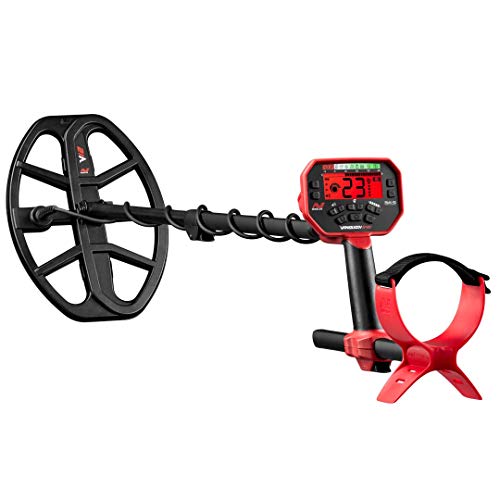
Minelab Vanquish 540 Pro-Pack
Multi-IQ, four modes, two coils and wireless headphones in one package, at a price most beginners can justify.
Price was accurate when this page was compiled and changes often.
On this page
What do the Vanquish modes actually change?
Each mode is a saved configuration of discrimination pattern, tone arrangement and separation behaviour aimed at a target class or a ground type. Minelab describes Coin, Jewellery, Relic and Custom modes on the 540, with Park, Field and Beach language used for the ground types those configurations suit. Pinpoint is a separate non motion function for locating a target precisely once you have found it.
Custom is the one people ignore and should not. Once you know a site well, saving the configuration you actually use there means you stop rebuilding it at the start of every session. Set it up once, dig a season with it, and adjust it when the site teaches you something. The Vanquish target ID chart is worth reading alongside this, because what a mode changes shows up first in how targets sound.
Which mode and coil for which site?
Find your site and read across. The coil column is the one that makes the biggest practical difference.
On the Vanquish 540 the mode choice follows the target class while the coil choice follows trash density, and swapping to the smaller supplied coil does more on a trashy park than any menu change.
| Site | Mode | Coil | First adjustment |
|---|---|---|---|
| Busy park, modern trash | Coin or Custom | Small | Raise iron bias one step if flat iron keeps reading high |
| Old lawn, deeper coins | Coin | Large | Slow the sweep right down and overlap properly |
| Sports field and school ground | Coin | Large, small where trash concentrates | Grid it rather than wandering |
| Jewellery hunting on grass | Jewellery | Small | Accept the tabs, that is the cost of the target class |
| Ploughed field, spread relics | Relic | Large | Cover ground systematically, mark hot areas |
| Dry sand above the tide line | Coin or Jewellery | Large | Little needed, dry sand is mild ground |
| Wet sand and surf line | Beach configuration | Large, small in heavy shell trash | Slow down and expect a noisier machine |
| River and lake margins | Coin or Relic | Small | Watch footing, and keep the control box dry |
Mode names follow Minelab published material for the Vanquish 540. The coil and adjustment advice is method rather than published values. Note that the Vanquish control box is water resistant rather than submersible, which is covered in the waterproof ratings page.
How much iron bias, and when?
Iron bias decides how eagerly the machine calls a doubtful response ferrous. Raise it when you keep digging flat rusty iron that reads high, which is the classic frustration on old farm ground and around demolished buildings. Lower it when you suspect good targets are hiding beside iron and the machine is throwing them away, which is the classic frustration on old house sites that have already been hunted.
Change it one step at a time and dig ten targets before you judge the change. Two steps at once on a site you do not know well teaches you nothing, because you cannot tell which step did what. That is the same discipline that applies to sensitivity on every other machine, and it is the difference between owning a detector for five years and actually learning one.
Troubleshooting a Vanquish that will not settle
Symptom, cause, fix. Work one row at a time.
Most Vanquish instability traces back to electrical interference, wet salt sand or a coil that is too large for the trash, rather than to anything that needs a menu change.
| Symptom | Likely cause | What to do |
|---|---|---|
| Chatter with the coil held still | Electrical interference | Run the automatic noise cancel, move away from power lines and other detectorists |
| Noisy on wet sand near the water | Conductive salt loading the machine | Use the beach configuration, slow the sweep, expect more falsing |
| Every signal sounds alike in trash | Coil too large for the target density | Fit the smaller supplied coil |
| Deep signals sound thin and vanish | Sweeping too fast or coil held too high | Slow down, keep the coil brushing the ground, overlap |
| Digging endless flat iron | Iron bias set low for the site | One step up, dig ten targets, reassess |
| Suspect masked coins beside iron | Iron bias set high for the site | One step down, and fit the small coil |
| Machine dying mid session | Alkaline cells near the end of their life | Carry spares, or run rechargeable cells |
The Vanquish runs on replaceable AA cells rather than a sealed pack, which is one of its quiet advantages: a spare set in the bag removes the runtime question entirely.
What to add to the Pro-Pack
With two coils and headphones already supplied, the sensible additions are recovery and power.

Minelab PRO-FIND 35
$99.00Waterproof to 10 feet per Minelab with ferrous tone ID, which turns a five minute hole into a one minute hole.
Best for: every Vanquish owner without one
Check price on Amazon
Minelab ML85 Wireless Headphones
$125.00Low latency wireless built for detectors, which ordinary Bluetooth is not, because normal Bluetooth delay ruins pinpointing by ear.
Best for: replacing a lost or failed headphone set
Check price on Amazon
Minelab PRO-FIND 15
$69.00Waterproof to 5 feet per Minelab with audio indication, and the cheapest route out of digging blind.
Best for: a first pinpointer
Check price on AmazonHow we chose
We did not test these machines in person and we publish no find claims. Picks are researched from manufacturer specifications and owner manuals, published listing features, waterproof ratings and warranty terms, and the recurring themes in verified owner reviews. We favour the established detector brands because coils, shafts and control boxes have to stay available years after a model is discontinued, and we place every pick in the tier where its price and capability honestly belong.
Sources
- Minelab Vanquish series instruction manual, search modes and audio chapters
- Minelab Vanquish 540 published product specification sheet
- Manufacturer listing specifications for the Vanquish 540 Pro-Pack, PRO-FIND 35 and ML85
Frequently asked questions
Do I need to ground balance the Vanquish 540?
Minelab describes the machine as auto selecting the best settings for your soil, so there is no manual balance routine to run as there is on the X-Terra or Manticore. If the machine gets noisy, the useful responses are the automatic noise cancel, the configuration built for the ground you are on, a slower sweep and lower expectations on wet salt sand rather than hunting for a balance control.
Which coil lives on the machine by default?
For most people the larger supplied coil, because most sessions involve covering ground. Swap to the small one the moment a site turns trashy, which usually means a park, an old house site or anywhere with dense iron. The Pro-Pack including both is the main reason it is worth more than the base package for anyone hunting varied ground.
Can I take the Vanquish into the water?
No. The coil is waterproof and the control interface is water resistant, which means rain and splashes are fine and submersion is not. If you want to detect in the water you need a machine rated for full submersion, such as the X-Terra, Equinox or Manticore bodies. Treat wading with a Vanquish as a way to destroy it.
Are the included wireless headphones good enough?
For most park and field use, yes, and they save you a purchase. What matters is that they are low latency rather than ordinary Bluetooth, because standard Bluetooth delay makes pinpointing by ear impossible. If you lose or break them, replace them with a detector specific low latency set rather than whatever music headphones are in the drawer.
Should I use Custom mode?
Once you know a site, yes. Custom exists so you can save the configuration you actually hunt a particular site with, rather than rebuilding it every visit. Set it up after you have dug enough targets to know what the site holds, then leave it alone for a season. Constant reconfiguring is how people spend years without learning a machine properly.
Researched, not professional advice. This page is compiled from published specifications, manuals and owner-review consensus, not hands-on testing. Target ID numbers, depth figures and settings vary with soil chemistry, moisture, target size, depth, orientation and firmware version, so treat every figure here as a starting point and verify it against your own machine's manual and your own ground. As an Amazon Associate we earn from qualifying purchases.