Gifts by who they are
Metal Detecting Gifts for Beginners: Why the Answer Is Not a Detector
Quick answer
Do not buy a beginner a detector unless they have named the model they want. Buy the kit that makes their first season work instead: a pinpointer such as Minelab PRO-FIND 15 at $69.00, a serrated digger at $29.99, and a finds pouch that drains.
This page exists to say one thing before anything else. Do not buy somebody a metal detector as a surprise unless they have told you which one they want, by name. It sounds like the obvious gift and it is the one most likely to disappoint. Choosing a machine depends on the ground they will hunt, the money they want to spend and how much menu they will tolerate, and the person receiving the gift is the only one who knows all three. A detector chosen for somebody else usually ends up in a cupboard, and it is an expensive thing to have to be polite about.
What actually decides whether a beginner keeps detecting is not the machine. It is whether the first few outings are comfortable and productive. Beginners give up because they cannot find the target once the machine has told them it is there, because they are digging with a trowel that will not cut, because their knees are soaked, and because everything they find goes into a pocket and comes home as a handful of wet grit. All four of those are cheap to fix, and all four make better gifts than a detector.
Top pick

Minelab PRO-FIND 15
Minelab publishes full waterproofing to 5 feet, DIF technology so it does not interfere with the detector, intensifying audio and a lost alarm, and it is the cheapest way to stop a beginner digging blind and losing faith in the machine.
Price was accurate when this page was compiled and changes often.
On this page
Why is a surprise detector the wrong gift?
Because there is no best detector, only a best detector for a particular person on particular ground. Somebody hunting dry parks needs nothing like the machine somebody hunting wet salt sand needs, and the second costs considerably more. A beginner who has been reading about this for weeks already has a shortlist, and buying off that shortlist is a wonderful gift. A beginner who has not been reading about it does not yet know what they want, and a machine chosen on their behalf commits them to a path they did not pick.
There is a second problem that is less obvious. A more expensive detector is generally harder to use, not easier, because the extra money buys adjustability rather than simplicity. Hand a beginner a flagship and they will leave everything on factory presets and gain almost nothing from the difference. If you want to point them at the research rather than make the decision for them, our best machines for beginners page and the beginner guide are both written for exactly that.
What should you buy a beginner instead?
Fix the four things that make early sessions miserable, in order of how much difference they make. The first is finding the target in the hole, which is where most new detectorists lose their patience, and it is solved by a tool that costs less than most people expect.
Minelab PRO-FIND 15
$69.00Minelab publishes full waterproofing to 5 feet, DIF technology so it does not upset the detector, audio that intensifies as the probe closes in, a lost alarm after inactivity and a belt holster, at $69.00. A beginner without one digs a wide hole and often loses the target entirely.
Best for: a first pinpointer, and the fastest way to make early hunts work
Check price on Amazon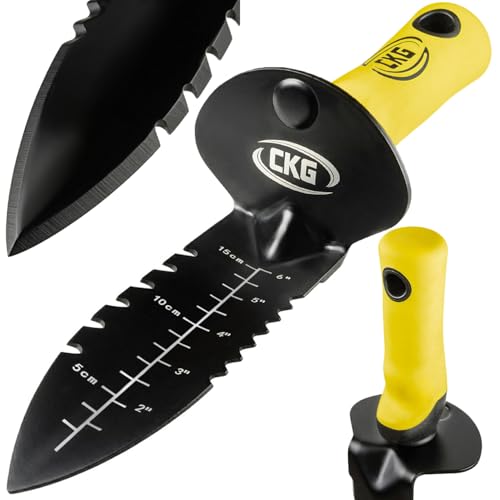
CKG Double Serrated Hand Digger
$29.99CKG publishes a stainless blade with double serrated edges that cut through roots and rope like a saw, a reinforced welded handle joint, a non-slip ergonomic grip and a sheath with a belt loop, at $29.99. Serration is what a garden trowel lacks and what turf actually requires.
Best for: cutting a plug that goes back so nobody can tell
Check price on Amazon
CKG Finds and Digger Pouch
$24.99Separate compartments for finds, trash and the pinpointer, plus drainage holes so it does not fill with wet soil. CKG publishes 8.2 by 3.9 by 11.8 inches with universal belt or strap mounting, at $24.99. Beginners carry everything in one pocket and lose the good things among the bad.
Best for: keeping a first silver coin away from rusted nails
Check price on AmazonWhat makes the difference in the first month?
Comfort, and the ability to keep going for three hours instead of one. None of these are exciting gifts and all three are things a beginner would never think to buy, which is precisely what makes them good to receive.

NoCry Professional Gel Knee Pads
$26.99NoCry publishes high-density EVA foam with a gel cushion, breathable polyester mesh, a heavy-duty protective cap, reinforced elastic straps with military-grade rivets and a lifetime warranty, at $26.99. Every target means kneeling, often on wet ground.
Best for: anybody who wants a second and third hour out of a session
Check price on Amazon
Serious Detecting Gloves (large)
$13.95Serious Detecting publishes palm foam padding for digging, touchscreen-capable thumb, index and middle fingers, and a hook-and-loop closure, at $13.95. What comes out of old ground is broken glass and rusted tin long before it is treasure.
Best for: old house sites, beaches, and anywhere with buried rubbish
Check price on Amazon
Rechargeable AA NiMH Batteries, 8 pack
$10.49Amazon Basics publishes 2,000 mAh NiMH cells rechargeable up to 1,000 times, holding 80 percent capacity for two years and arriving pre-charged, in an eight pack at $10.49. Low batteries change how a detector behaves before they stop it working, which baffles beginners.
Best for: any AA-powered machine, which most entry detectors are
Check price on AmazonWhat does a complete beginner kit cost?
Assuming they have a machine or are choosing one themselves, this is the supporting kit that makes the first season work, in the order worth buying it.
The whole supporting kit that turns a frustrating first season into a productive one starts at $69.00 for the pinpointer and none of the individual items exceeds $26.99.
| Buy it in this order | Item | Price | The problem it solves |
|---|---|---|---|
| First | Minelab PRO-FIND 15 | $69.00 | Finding the target in the hole instead of widening it |
| Second | CKG double serrated digger | $29.99 | Cutting root mat, which a garden trowel will not do |
| Third | CKG finds and digger pouch | $24.99 | Finds and trash travelling home in the same pocket |
| Fourth | NoCry gel knee pads | $26.99 | Wet knees ending the session after an hour |
| Fifth | Detecting gloves | $13.95 | Broken glass and rusted metal in the hole |
| Sixth | Rechargeable AA cells | $10.49 | A machine behaving oddly on tired batteries |
| Seventh | Rechargeable headlamp | $19.99 | Backfilling the last hole properly after dark |
| Eighth | Illuminated jewellers loupe | $8.99 | Reading a date or mint mark on the first old coin |
Prices are catalog prices at the time of writing and will move. Descriptions are drawn from each maker listing. This ordering is our judgement about what most affects a beginner, not a manufacturer recommendation, and none of it has been used by us.
What should you tell them along with the gift?
Two things, and the second one matters more than any purchase. The first is that burying known targets in their own garden and writing down what their own machine says is the single most useful hour a beginner can spend, because every target ID number is specific to that machine in that soil. Our test garden guide sets out how, and it costs nothing.
The second is that this hobby runs entirely on goodwill. Permission comes from landowners who have been asked properly, and it disappears the moment somebody leaves a hole in a lawn. A beginner who learns to cut a neat plug and tread it back gets invited onto better ground than one who finds more. The guide to filling a hole and the guide to getting permission are both worth passing on with the gift.
How we chose
We did not test any of this in person and nothing here is based on our own use. Every specification is taken from the manufacturer's published listing, and where a maker publishes no figure we leave the gap rather than filling it. The ordering on this page is driven by one question specific to beginners: which purchase most reduces the chance that they stop after a month?
Sources
- Minelab PRO-FIND 15 product listing
- CKG Double Serrated Hand Digger product listing
- CKG Finds and Digger Pouch product listing
- NoCry Professional Gel Knee Pads product listing
- Amazon Basics rechargeable AA NiMH product listing
Frequently asked questions
What should I buy someone who wants to start metal detecting?
Not a detector, unless they have named one. Buy the supporting kit that makes their first season work: a pinpointer such as Minelab PRO-FIND 15 at $69.00, a serrated digger at $29.99 and a pouch that drains. Then let them choose the machine, which is the one decision that genuinely depends on their ground and their budget.
Does a beginner really need a pinpointer?
It is the accessory that most shortens the learning curve. Without one, a new detectorist knows a target is somewhere in a patch of soil and widens the hole until they find it, which is slow, bad for the turf and often ends with the target lost in the spoil. A pinpointer turns that into a few seconds.
Is an expensive detector easier for a beginner?
Usually the opposite. The extra money buys adjustability rather than simplicity, so a flagship offers more settings to get wrong. A beginner who leaves everything on factory presets gains very little from the price difference. Simplicity and low weight matter far more in a first machine than raw capability does.
What is the most common beginner mistake a gift can prevent?
Digging with the wrong tool. A garden trowel cannot cut root mat, so plugs tear, holes look bad and permissions get withdrawn. A serrated digger such as the CKG Double Serrated Hand Digger at $29.99 fixes it for very little money, and it protects the thing beginners most need, which is somewhere good to detect.
Should I buy a beginner a book or a membership instead?
Both work well alongside a tool, and a local club is worth more than most equipment at this stage because experienced members share ground and settings. If you want a free addition to any gift, point them at building a test garden, where burying known targets in their own soil teaches more about their machine than any accessory will.
Researched, not professional advice. This page is compiled from published specifications, manuals and owner-review consensus, not hands-on testing. Target ID numbers, depth figures and settings vary with soil chemistry, moisture, target size, depth, orientation and firmware version, so treat every figure here as a starting point and verify it against your own machine's manual and your own ground. As an Amazon Associate we earn from qualifying purchases.