Best upgrades and support gear
Best Metal Detecting Gear for Travel: Packing a Machine Properly
Quick answer
The Minelab GO-FIND 44 at $218.99 folds down smallest and cheapest for a family trip. The Nokta Simplex Ultra at $299.00 retracts to 25 inches and adds full waterproofing for a more capable travel machine. The XP Deus II at $1,299.00 is fully wireless with no cable at all, the lightest way to travel with a flagship.
A travel machine is judged on packed length and weight first, and on capability a distant second, because a detector that will not fit in your luggage or your car does not get used at all. What packs small changes by design more than by price: a carbon fibre shaft that retracts to 25 inches beats a heavier machine with more features every time you are trying to close a suitcase.
This page covers three real points on that ladder, plus the carry gear that actually keeps a travel machine safe rather than just small. If your trip is specifically to a beach or saltwater destination, read this alongside the beach machine roundup, since a travel-friendly body and a salt-capable body are not automatically the same machine.
Top pick

Nokta Simplex Ultra
A carbon fibre shaft retracting to 25 inches at 2.6 lb, fully waterproof to 16 feet, which covers most travelers who want one capable machine rather than a cheap toy or a flagship they have to insure.
Price was accurate when this page was compiled and changes often.
On this page
- What actually matters for a travel detector?
- Should you check a detector as luggage or carry it on?
- What is the right travel machine for a family trip?
- What is the step up for a more serious traveling hunter?
- What is the best travel machine for someone who already owns a flagship?
- What accessories actually round out a travel kit?
- Should you research sites before you travel or after you arrive?
- Does renting or borrowing a machine ever beat traveling with your own?
What actually matters for a travel detector?
Packed length and weight first, waterproofing second if the destination includes a beach, and durability of the folding mechanism third. Minelab publishes the Nokta Simplex Ultra shaft as retracting to 25 inches, and the Minelab X-Terra Pro packs to the same 25 inches at 2.9 lb. The Minelab GO-FIND 44 is built around folding small and light from the start rather than being a full-size machine adapted for travel, which is why it remains a common family and travel pick even though it trails the others on raw capability.
Should you check a detector as luggage or carry it on?
Carry it on whenever airline rules allow, in a padded bag rather than loose. A High Plains 50 inch Detector Carry Bag at $23.95 fits most fully assembled S-curve style machines and includes zippered pockets for headphones and a pinpointer, which keeps a whole kit together rather than scattered across a suitcase. If checking is unavoidable, a harder case or a heavily padded bag such as the 53 inch Heavy Duty Detector Carry Bag at $34.95 matters more, since checked luggage is handled far less carefully than a carry-on.
What is the right travel machine for a family trip?
Minelab GO-FIND 44 at $218.99. Minelab builds it around folding down small and light from the outset, includes a 10 inch waterproof coil, two camouflage skins and a carry bag in the box, which covers most of what a once-a-trip family machine needs without buying accessories separately.

Minelab GO-FIND 44
$218.99A 10 inch waterproof coil, a carry bag and two camouflage skins included, built around folding small and light rather than being a full-size body adapted afterward.
Best for: a family vacation or an occasional-use travel machine
Check price on AmazonWhat is the step up for a more serious traveling hunter?
Nokta Simplex Ultra at $299.00. Nokta publishes a carbon fibre shaft that retracts to 25 inches, full waterproofing to 16 feet, and 2.6 lb, which is light enough to pack easily while being a genuinely capable machine for a beach or a wading trip rather than a compromise built purely around folding small. Nokta states plainly that Bluetooth headphones are not included, worth budgeting for separately if wireless audio matters to the trip.
Nokta Simplex Ultra
$299.00A carbon fibre shaft retracting to 25 inches at 2.6 lb, fully waterproof to 16 feet with online firmware updates. Bluetooth headphones are not included per the listing.
Best for: a beach or wading trip that needs a real machine, not just a small one
Check price on Amazon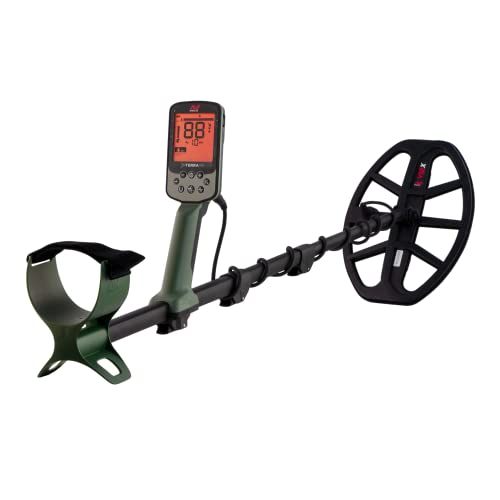
Minelab X-Terra Pro
$282.14Packs to 25 inches at 2.9 lb with IP68 waterproofing to 16 ft, six preset search modes and a control pod flashlight, a genuine alternative to the Simplex Ultra with switchable single frequencies instead of a carbon shaft.
Best for: a traveler who wants Park, Field and Beach presets built in
Check price on AmazonWhat is the best travel machine for someone who already owns a flagship?
XP Deus II at $1,299.00. XP builds it fully wireless from coil to headphones with no cable at all, which is precisely what an experienced traveler wants: nothing to snag on a zipper, nothing to lose in an overhead bin, and IP68 waterproofing to 66 feet on top of it. It is genuinely the lightest way to travel with flagship-level multi-frequency performance, and it is also the most expensive machine on this page by a wide margin.

XP Deus II
$1,299.00Fully wireless from coil to headphones with no cable at all, IP68 to 66 feet, 12 simultaneous multi-frequency programs and 49 single frequencies, with a 5 year warranty.
Best for: experienced travelers who fly regularly with their gear
Check price on AmazonWho should not buy this tier: Do not buy the XP Deus II for a once-a-year vacation; the Minelab GO-FIND 44 or the Nokta Simplex Ultra does that job for a fraction of the cost and a fraction of the risk of checking or insuring an expensive machine. It is also the wrong choice for a beginner: learn any flagship's menu system at home over a full season before flying with it, not at the destination where you have the least time to troubleshoot a setting you do not understand. And it is not the right travel case unless you pack it in a genuinely protective bag; a $1,300 machine deserves better than the cheapest carry bag on this page.
What accessories actually round out a travel kit?
A padded bag, a compact pinpointer and a modular pouch, in that order. The XP Finds Pouch with MOLLE attachment at $26.68 uses MOLLE webbing to add or remove a pinpointer holster and other attachments as needed, which suits a trip where you are packing one flexible pouch rather than several dedicated ones. A pinpointer such as the Minelab PRO-FIND 15 at $69.00 adds almost no weight or bulk to a travel kit and shortens recovery time on unfamiliar ground where you have less time budgeted per site than you would at home. None of these three needs to match the detector's brand, since a pouch, a bag and a pinpointer are universal in a way a coil is not.
Resist packing a full accessory collection for a short trip. A digger, a pinpointer and a pouch cover the overwhelming majority of what a travel session actually needs, and every additional item is something to lose, something to explain at security, and something that makes the bag heavier for a trip where weight was the whole point of the exercise in the first place.
Should you research sites before you travel or after you arrive?
Before, wherever possible. Arriving at a destination with no researched permission and no sense of local rules wastes the least flexible resource on a trip, which is time, and it is also how well-meaning travelers end up detecting somewhere they should not have. The researching detecting sites guide covers the general method, and applying it before a trip rather than during one turns a travel session from an improvised walk with a detector into an actual plan with a realistic chance of a permitted, productive outing.
Does renting or borrowing a machine ever beat traveling with your own?
For a single vacation with no real intention of detecting again soon, yes, and it avoids every problem this page covers: nothing to pack, nothing to insure, nothing to check or damage in transit. Some destinations with an active detecting tourism trade offer rentals or guided outings with a machine already provided, which is worth searching for specifically before assuming you need to travel with your own. The calculation changes once you detect regularly enough that owning a dedicated, genuinely portable machine such as the Minelab GO-FIND 44 pays for itself across more than one trip, at which point owning one outright is the better long-term choice.
The middle case, someone who travels several times a year and detects seriously each time, is exactly who the Nokta Simplex Ultra and XP Deus II on this page are aimed at: frequent enough travel that a rental becomes an ongoing cost and an inconvenience, but not yet frequent enough that carrying a full accessory collection on every trip makes sense either. Buy for that middle case honestly rather than for the vacation you take once and the trips you imagine taking someday, since a machine sized for imagined future travel usually just sits unused at home between the trips that never quite materialise, which defeats the entire purpose of choosing something specifically for how well it travels.
How we chose
Picks here are chosen on published packed length, weight and waterproofing, the three figures that actually predict how well a machine survives a trip. Nothing has been packed or flown by us. Where a maker does not publish a folded length, the text says so rather than estimating one.
Sources
- Minelab GO-FIND 44 and X-Terra Pro product specifications
- Nokta Simplex Ultra user manual
- XP Deus II product specification
Frequently asked questions
What is the best travel metal detector?
For most family trips, the Minelab GO-FIND 44 at $218.99, since it is built around folding small and light from the outset and ships with a carry bag. For a more capable machine that still packs down well, the Nokta Simplex Ultra at $299.00 retracts to 25 inches and adds full waterproofing.
Should I check a metal detector as luggage or carry it on?
Carry it on in a padded bag whenever airline rules allow, since checked luggage is handled far less carefully. If checking is unavoidable, use a heavily padded bag or a hard case rather than the machine's original box, and remove the coil separately if the bag allows it.
Is the XP Deus II worth the cost for travel specifically?
Only for an experienced detectorist who already knows the machine's menu system and travels with gear regularly. Its fully wireless design and light weight genuinely suit frequent travel, but it is an expensive and complex first machine to learn at a vacation destination.
Do detecting laws change when I travel to a different state or country?
Yes, significantly. Permission requirements, protected site rules and treasure or portable antiquities reporting schemes all vary by jurisdiction, and a destination can also have separate rules about exporting finds across a border. Research the specific local rules before detecting anywhere new.
What carry bag actually protects a travel detector?
A padded bag sized for your specific fully assembled machine, such as the High Plains 50 inch bag at $23.95 for most S-curve style detectors, with separate zippered compartments for headphones and a pinpointer so the whole kit travels together.
Researched, not professional advice. This page is compiled from published specifications, manuals and owner-review consensus, not hands-on testing. Target ID numbers, depth figures and settings vary with soil chemistry, moisture, target size, depth, orientation and firmware version, so treat every figure here as a starting point and verify it against your own machine's manual and your own ground. As an Amazon Associate we earn from qualifying purchases.