Minelab X-Terra
Minelab X-Terra Pro Target ID Chart: Bands, Segments And Frequency Shift
Quick answer
X-Terra Pro target ID follows the same conductivity ordering as every Minelab: iron lowest, foil and thin gold low, nickels and small rings mid, copper and silver high, across the 30 discrimination segments Minelab publishes. Changing the operating frequency shifts where low conductors land, so recalibrate when you switch.
The Minelab X-Terra Pro is a selectable single frequency machine, and that one fact governs how you should read its target IDs. On a simultaneous multi frequency machine the numbers stay broadly put. On a machine where you choose the frequency, the relationship between a target and its number changes with the frequency you selected, because higher frequencies respond more strongly to small and low conductive targets.
Minelab publishes 30 discrimination segments for the X-Terra Pro and the same six search modes as the Elite, so the structure of the scale is documented. What is not documented, by Minelab or by anyone honest, is a coin by coin lookup table, because the reading depends on your soil. Below is the ordering, the usual bands, and the method for pinning them down in your own ground.
Top pick
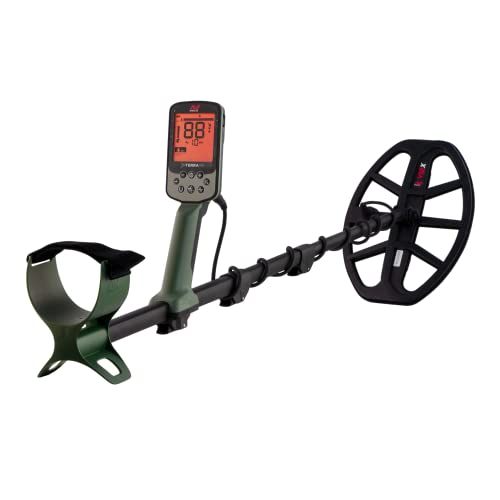
Minelab X-Terra Pro
IP68 waterproof to 16 feet with 30 discrimination segments and switchable frequencies, at the price most people expect to pay for a first serious machine.
Price was accurate when this page was compiled and changes often.
On this page
What does the X-Terra Pro scale actually represent?
It represents conductivity ordering, sorted from ferrous at the bottom to high conductors at the top, and displayed against the 30 discrimination segments Minelab specifies for the machine. Segments are how you accept or reject bands of targets. The numeric reading is how you judge an individual signal. The two are different tools for the same underlying measurement.
Because the X-Terra Pro lets you choose the operating frequency, you have a degree of control most beginners do not realise they have. A higher frequency lifts the response of small, low conductive targets such as thin gold and small hammered silver. A lower frequency favours large high conductors. Neither is better. They suit different targets, and they will give you different numbers for the same object, which is precisely why a number copied from a forum thread may not match yours. The Minelab ID scale comparison explains how far that problem extends across the range.
X-Terra Pro target ID bands
Bands rather than values. Wide on purpose, and expect them to move when you change frequency.
On the X-Terra Pro the conductivity ordering runs iron at the bottom, foil and thin gold low, nickels and small gold rings in the middle, and copper and silver coins in the upper part of the scale, with a large overlap between gold and aluminium that no setting removes.
| Target class | Position on the scale | Frequency sensitivity | Common confusion |
|---|---|---|---|
| Small iron, nails, wire | Bottom, often below the non ferrous range | Little change with frequency | Nothing, until it masks a coin beside it |
| Large flat iron, can lids | Can wrap into the high conductor bands | Little change with frequency | Reads like a large silver coin |
| Foil and thin gold chain | Low | Rises noticeably at higher frequencies | Foil wrappers on any picnic site |
| Small gold rings and US nickels | Low to middle | Rises at higher frequencies | Aluminium screw caps |
| Pull tabs and aluminium scrap | Middle | Rises at higher frequencies | Mid weight gold rings, unavoidably |
| Zinc cents and small brass | Upper middle | Modest change | Screw caps and washers |
| Copper cents and clad dimes | Upper | Little change | Heavier aluminium |
| Silver coins and large copper | Top of the scale | Little change, favoured at lower frequencies | Large flat iron wrapping high |
Positions rather than fixed numbers, because the machine offers selectable frequencies and the reading moves with the one you choose. The 30 discrimination segment figure is from Minelab published specification material for the X-Terra Pro.
How much does changing frequency move the numbers?
Enough to matter, and mostly at the low conductive end. Small gold, thin chains, foil and small hammered silver all respond more strongly as the operating frequency rises, so they lift relative to the rest of the scale. Large high conductive targets such as silver dollars and copper pennies barely move. The practical result is that a small gold ring might sit close to a nickel at one frequency and noticeably different at another.
Do not try to hold two sets of numbers in your head. Pick the frequency that suits the site, learn that configuration properly, and keep a written card of your reference readings for the one or two frequencies you actually use. If you use the machine on wet sand as well as inland, expect the numbers to behave differently there too, which is covered in the X-Terra Pro site settings guide.
What to do when a number will not settle
Run this checklist before you decide the machine is at fault.
Most unstable target IDs come down to five causes: depth, iron alongside the target, mineralised or salty ground, electrical interference, or a target sitting on edge rather than lying flat.
| Symptom | Likely cause | Fix or next step |
|---|---|---|
| Number drops and wanders on every sweep | Target near the depth limit for the coil and soil | Average several sweeps, dig if the site justifies it |
| Good number one way, iron the other | Iron sitting beside a non ferrous target | Smaller coil, sweep from several angles, dig carefully |
| Whole scale scattering everywhere | Ground needs balancing, or salt is loading the machine | Rebalance, drop sensitivity, use the beach configuration on salt |
| Random chatter with the coil still | Electrical interference | Run noise cancel, change frequency, move away from power lines |
| Small consistent number on something large | Target lying on edge | Approach from ninety degrees, then decide |
| Numbers changed since last week | Different frequency selected, or the ground has dried out | Check the frequency, recheck your reference targets |
The single most useful habit is checking from a second direction. Most doubtful signals resolve into either a firm answer or an obvious piece of iron once you sweep across them rather than along them.
Coils and audio that suit the X-Terra Pro
Minelab lists specific EQX coils as compatible with the X-Terra Pro, which is unusual value in a machine at this price.

Minelab EQX 06 Coil (6 inch)
$225.00Minelab lists the EQX 06 as fitting the X-Terra Pro and submersible to 16 feet with it, and positions it for high trash areas and small targets.
Best for: iron heavy parks and old sites
Check price on Amazon
Minelab EQX 15 Coil (15 inch)
$290.00Also listed by Minelab as compatible with the X-Terra Pro to 16 feet, with more depth capability than the smaller EQX coils.
Best for: open fields and beaches
Check price on Amazon
Minelab ML105 Wireless Headphones
$180.00Minelab lists these low latency wireless headphones as compatible with the X-Terra Pro, with an aux cable for wired use.
Best for: anyone tired of cable snags
Check price on AmazonHow we chose
We did not test these machines in person and we publish no find claims. Picks are researched from manufacturer specifications and owner manuals, published listing features, waterproof ratings and warranty terms, and the recurring themes in verified owner reviews. We favour the established detector brands because coils, shafts and control boxes have to stay available years after a model is discontinued, and we place every pick in the tier where its price and capability honestly belong.
Sources
- Minelab X-Terra Pro instruction manual, target identification and discrimination chapters
- Minelab X-Terra Pro published product specification sheet
- Manufacturer listing specifications for the X-Terra Pro, EQX 06, EQX 15 and ML105
Frequently asked questions
Do X-Terra Pro numbers match Equinox numbers?
Do not assume so. Minelab has used different target ID resolutions across its range, and the X-Terra Pro is a selectable single frequency machine while the Equinox 700 and 900 run simultaneous multi frequency. The ordering of targets is the same on both because the physics is the same, but the specific number is not portable. Calibrate whichever machine you are holding with your own reference targets.
Which frequency should I use for coins?
For larger high conductive coins such as silver and copper, a lower frequency is the traditional choice and tends to give a steadier reading. For small thin silver, small gold and fine jewellery, a higher frequency lifts the response. Pick one, learn its numbers properly, and only switch when the target class you are chasing changes rather than switching on every hunch.
What are the 30 discrimination segments for?
They are how you tell the machine which bands of conductivity to accept and which to ignore. More segments means finer control, so you can reject one narrow band of junk without also rejecting the band your target sits in. Use them sparingly. Every band you reject is a band you can no longer hear, and old sites hide good targets right beside junk.
Why does a bottle cap read like a coin?
Because a steel cap is large, flat and presents a broad surface to the coil, which can produce a strong response that wraps into the high conductor bands. It is the classic false positive on every brand of machine. Sweeping from several angles helps, since caps tend to be less consistent than coins, and the ferrous indication on your machine will often give it away.
Does the X-Terra Pro show a depth reading I can trust?
Treat any depth indicator as an estimate calibrated around coin sized targets. Large objects read shallower than they are and small ones read deeper, and mineralised ground skews the result further. It is useful for deciding how carefully to open a hole. It is not a measurement, and a pinpointer will tell you far more once you have cut the plug.
Researched, not professional advice. This page is compiled from published specifications, manuals and owner-review consensus, not hands-on testing. Target ID numbers, depth figures and settings vary with soil chemistry, moisture, target size, depth, orientation and firmware version, so treat every figure here as a starting point and verify it against your own machine's manual and your own ground. As an Amazon Associate we earn from qualifying purchases.