Garrett AT Pro
Garrett AT Pro Coil Compatibility Chart: Which Coils Fit and What They Do
Quick answer
The Garrett AT Pro ships with the 8.5 by 11 DD PROformance coil and accepts other AT series coils on the same connector, including the 5 by 8 DD sniper, the Mars Sniper 10 by 6 and the NEL Hunter 12.5 by 8.5. Bigger buys depth on large targets, smaller buys separation in trash.
Coil choice is the largest single change you can make to how an Garrett AT Pro behaves, and it is cheaper than a new machine. The coils share a connector and a shaft mount across the AT line, so an AT Pro, an Garrett AT Max and an Garrett AT Gold can generally swap coils between them, but the machines run at different frequencies and the same coil will not behave identically on each.
What follows is what each coil is for, not a ranking. A 5 by 8 is not a worse coil than a 12.5 by 8.5, it is a different tool, and the site decides which one is correct on a given day.
Top pick
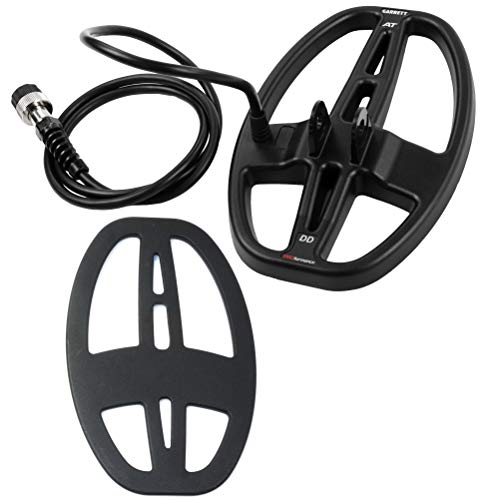
Garrett 5 by 8 DD PROformance Coil
The single most useful second coil for an AT Pro, because separation in trash finds more than raw depth does in most parks.
Price was accurate when this page was compiled and changes often.
On this page
Which coils fit a Garrett AT Pro?
Every coil below is listed by its manufacturer as fitting the AT series or the AT Pro specifically. Always check the exact variant at the point of purchase, because some aftermarket makers cut machine-specific versions of the same coil.
The Garrett AT Pro runs a stock 8.5 by 11 DD coil, and the practical alternatives are a 5 by 8 DD for trash separation, a 10 by 6 DD as a middle option and a 12.5 by 8.5 DD for open ground coverage.
| Coil | Size | Type | Best use | Fitment note |
|---|---|---|---|---|
| Garrett 8.5 by 11 PROformance DD Coil | 8.5 x 11 in | DD | General purpose, the stock coil | Garrett lists it for the AT Pro and AT Gold |
| Garrett 5 by 8 DD PROformance Coil | 5 x 8 in | DD | Iron infested sites, tight spots, old house sites | Garrett lists it for the AT series |
| Mars Sniper 10 by 6 DD Coil | 10 x 6 in | DD | A middle ground when the 5 by 8 feels too small | Listed for AT Gold, AT Max and AT Pro |
| NEL Hunter 12.5 by 8.5 Coil for AT Pro | 12.5 x 8.5 in | DD | Open fields, beaches, covering ground | This variant is cut for the AT Pro, check before ordering for another AT |
| Garrett 8.5 by 11 DD Coil Cover | Cover only | Skid plate | Protecting the stock coil | Fits the stock 8.5 by 11 AT series coil |
Fitment statements come from each product listing. The NEL Hunter listing in this catalogue specifies the Garrett AT Pro, and NEL produces machine-specific versions, so confirm the variant rather than assuming one coil covers the whole AT line.
What does a smaller coil actually buy you?
Separation and control. A 5 by 8 illuminates a smaller volume of ground, so when a dime lies four inches from a nail, the coil can see them as two objects rather than averaging them into one confused signal. It also fits between tree roots, along fence lines and into the corners of old foundations where an 8.5 by 11 simply will not go. The trade is coverage, and covering a large field with a small coil is punishing work. The coil coverage calculator puts a number on that penalty before you commit a weekend to it.
The other effect people underestimate is that a smaller coil usually runs more stably at higher sensitivity in mineralised ground, because it is averaging less hostile soil at any moment. On a hot site, the 5 by 8 can end up effectively as deep as the stock coil despite the smaller footprint.
When is a larger coil the right answer?
Open ground with low trash, and large targets. The NEL Hunter 12.5 by 8.5 Coil for AT Pro covers noticeably more ground per sweep and reaches deeper on big objects, which suits fields, pasture and dry beach. Its own listing notes that it copes well with high and medium soil salinity, which is one of the few honest advantages available to an AT Pro owner working a beach, though it does not turn a single frequency machine into a salt machine. That limitation is set out in full on the settings by site type page.
The costs are real: more weight on the end of the shaft, more masking in trash and a larger pinpoint footprint, which means bigger holes unless you carry a pinpointer such as the Garrett Pro-Pointer AT. On weight, the AT series weight comparison is worth reading before you hang a large coil on a machine you already find heavy.
Do AT Pro coils fit the AT Max and AT Gold?
Mechanically and electrically the AT series coils share a common fitting, and Garrett sells the 5 by 8 and the stock 8.5 by 11 across the line, with the Mars Sniper listing naming the AT Gold, AT Max and AT Pro together. What does not transfer is behaviour. The AT Gold runs at a higher frequency aimed at small gold, the AT Max at a different frequency again, so the same coil produces different sensitivity to small low conductors on each machine.
Aftermarket coils are where care is needed. Some makers produce separate versions per model, and a coil described for the AT Pro is not automatically the right stock number for an AT Max. If you own more than one AT machine, the practical approach is to keep the coils you swap most often on the machine they were bought for, and check the AT Max settings before assuming a favourite park setup carries across.
How do you choose between them on a given day?
Look at the ground, not the catalogue. Dense trash, old house site, anywhere you can see bottle caps on the surface: fit the 5 by 8. Open pasture, ploughed field, dry beach: fit the biggest coil you own. Mixed ground where you want one coil for the day: the stock 8.5 by 11 remains a sensible compromise, which is why Garrett ships it.
Whatever you fit, re-run your ground balance after the swap and re-check your buried test targets, because the same soil reads differently through a different coil. That interaction is why the depth ranges on the AT Pro depth chart are quoted against a specific coil, and why anyone quoting a depth without naming one is guessing.
Sources
- Garrett AT Pro owner's manual, searchcoil section
- Garrett 8.5 by 11 and 5 by 8 PROformance coil product listings
- NEL Hunter 12.5 by 8.5 and Mars Sniper 10 by 6 product listing specifications
Frequently asked questions
What coil comes with the Garrett AT Pro?
Garrett supplies the AT Pro with the 8.5 by 11 DD PROformance searchcoil, and sells that same coil separately as a replacement. It is a reasonable general purpose choice, wide enough to cover ground at a sensible rate and small enough to work in moderate trash. Most owners keep it as the default and add a smaller coil for iron infested sites rather than replacing it.
Is the 5 by 8 coil worth buying for an AT Pro?
On trashy ground it is the most productive accessory available for the machine. It separates targets that the stock coil merges, fits into corners and along foundations, and often runs more stably at higher sensitivity in mineralised soil. It covers less ground per sweep, so it is the wrong choice for large open fields. Most AT Pro owners end up owning both and choosing per site.
Will a NEL coil made for the AT Pro work on an AT Max?
Do not assume so. NEL produces machine-specific versions of the same coil pattern, and the catalogue listing for the Hunter 12.5 by 8.5 here specifies the Garrett AT Pro. Coils across the AT line share a common fitting in general, but the safe approach with any aftermarket coil is to buy the variant named for your exact model rather than relying on family compatibility.
Does a coil cover reduce detection depth?
Not meaningfully. A skid plate adds a few millimetres between the coil windings and the ground, which is trivial compared with the depth lost to soil mineralisation or a poor ground balance. The abrasion protection is worth far more than the theoretical loss. Do check periodically for grit and sand trapped underneath, because that can cause false signals and wear the housing.
How much depth does the NEL Hunter add over the stock coil?
On coin sized targets in clean ground, typically an inch or two, and more on large objects because a bigger coil illuminates more volume. In trash it can find less than the stock coil by masking good targets beside iron. Treat it as a coverage and large target coil rather than a straightforward depth upgrade, and test it against buried targets in your own soil before believing any figure.
Researched, not professional advice. This page is compiled from published specifications, manuals and owner-review consensus, not hands-on testing. Target ID numbers, depth figures and settings vary with soil chemistry, moisture, target size, depth, orientation and firmware version, so treat every figure here as a starting point and verify it against your own machine's manual and your own ground. As an Amazon Associate we earn from qualifying purchases.