Flagship machines
XP Deus II vs Minelab Equinox 900: Wireless Against Simplicity
Quick answer
The XP Deus II wins on weight, wireless and published waterproof depth, at 66 ft and $1,299.00. The Equinox 900 wins on price and simplicity at $999.00, with two coils in the box. Both run simultaneous multi-frequency, so target performance is closer than the price gap suggests.

XP Deus II
$1,299.00Fully wireless from coil to headphones, 49 single frequencies from 4 to 45 kHz, 12 multi programs, IP68 to 66 ft and a published five year warranty.
Best for: long sessions, and anyone who wants the lightest possible flagship
Check price on Amazon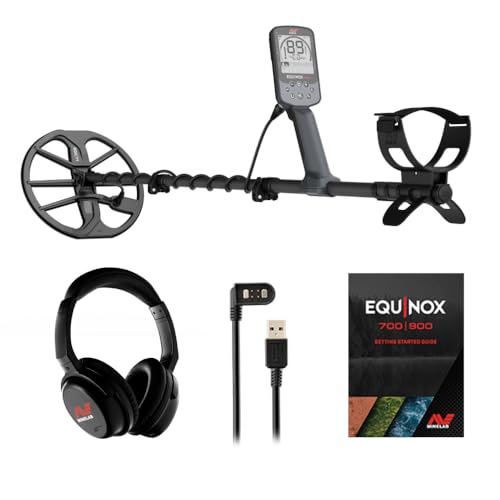
Minelab Equinox 900
$999.00Multi-IQ plus six single frequencies, four modes, 2.8 lb, 16 ft, and the EQX 11 and EQX 6 coils included, for less money.
Best for: the one machine that covers park, field, beach and gold
Check price on AmazonBuy the Deus II if the cable is what you hate about detecting and the Equinox 900 if the menu is. That is the shortest honest summary of these two machines. XP publishes a fully wireless design from coil to remote to headphones, 49 single frequencies from 4 to 45 kHz, 12 simultaneous multi-frequency programs, a 66 ft IP68 rating and a five year warranty. Minelab publishes six single frequencies plus Multi-IQ, four modes, 16 ft, 2.8 lb and two coils in the box, for a good deal less money.
Neither of those lists tells you which finds more, and neither maker publishes a depth figure you could compare. What the lists do tell you is how the two companies think. XP sells configurability and weight saving; Minelab sells a machine you switch on and hunt. Both approaches produce good detectorists, and the frequency chart shows why 49 frequencies and 6 frequencies are far less different in the ground than they are on paper.
On this page
What does fully wireless actually change?
More than it sounds like. On a conventional machine the coil cable runs up the shaft to the control box, which means a cable to wrap, a cable to snag and a connector to flood. XP publishes the Deus II as wireless from the coil onward, with headphones running a proprietary radio protocol the company publishes as ten times faster than Bluetooth low latency. That matters because ordinary Bluetooth delay makes pinpointing by ear impossible, which is why detector makers all build their own low latency systems.
The Equinox answer is more conventional and cheaper: a cable up the shaft and Minelab ML105 Wireless Headphones or the included low latency set for audio. Minelab also sells Minelab Equinox Waterproof Headphones as a wired waterproof option, which matters because no wireless system works under water. If you dive or work in surf, both machines need a wired set, and that is a cost neither listing mentions.
How do the published specifications compare?
The catalog holds only what the makers print. XP publishes an unusually complete listing; Minelab publishes a more complete spec block.
The Deus II is published as waterproof to 66 ft against the Equinox 16 ft, and the Equinox is the only one of the two that publishes a weight and a packed length.
| Model | Price | Frequency type | Target ID range | Stock coil | Coil type | Waterproof depth | Weight | Collapsed length | Headphones included | Search modes |
|---|---|---|---|---|---|---|---|---|---|---|
| XP Deus II | $1,299.00 | - | - | - | - | - | - | - | - | - |
| Minelab Equinox 900 | $999.00 | Simultaneous multi-frequency plus 6 single frequencies | 0 to 99 | 11 and 6 | Double-D | 16 ft | 2.8 lb | 24 in | Yes | 4 |
Figures are taken from each manufacturer's own published listing and specification sheet. A dash means the maker does not publish that figure for that model, not that the feature is absent.
Where does each machine actually win?
Six rows, three each. Nothing in this table is a measurement of what either machine finds, because neither maker publishes one.
XP publishes 49 single frequencies, a 66 ft waterproof rating and a five year warranty, while Minelab publishes a lower price, two coils in the box and a 2.8 lb weight.
| Question | XP Deus II | Minelab Equinox 900 | Who wins |
|---|---|---|---|
| Price | $1,299.00 | $999.00 | Minelab, by a clear margin |
| Frequencies | 49 single, 4 to 45 kHz, plus 12 multi programs | 6 single plus Multi-IQ, 5 at once | XP on paper, a draw in the ground |
| Waterproof rating | 66 ft, IP68 remote and coil | 16 ft (5 m) | XP, and it is not close |
| Coils in the box | Not published in this listing | 11 in and 6 in Double-D | Minelab |
| Published weight | Not published in this listing | 2.8 lb, carbon fibre shafts | Minelab, on published record |
| Warranty | 5 years, published | Not published in this listing | XP |
| Learning curve | 49 frequencies and 12 programs to understand | Four modes, switch on and hunt | Minelab, for most buyers |
Every cell is taken from the manufacturer listing. Rows marked not published are gaps in the maker own record rather than absent features.
Is 49 single frequencies better than six?
Only if you will use them, and almost nobody uses more than three. Frequency is a bias rather than a boundary: low favours silver and copper, high favours small gold, and the middle does most things acceptably. Having 49 steps between 4 and 45 kHz lets you tune around electrical interference and chase a specific target class, which is genuinely useful to someone who hunts one site repeatedly and keeps notes. To everyone else it is a menu.
The more important number on both machines is the simultaneous multi-frequency mode, because that is what handles wet salt sand and mineralised ground. XP publishes 12 multi programs, Minelab publishes Multi-IQ running five frequencies at once. Both work. If you want to understand what changes underneath, the frequency chart is the page to read rather than either spec sheet.
Who should buy the Deus II?
People who detect for long sessions and feel it, people who dive or work deep water, and people who genuinely enjoy configuring a machine. XP publishes a 66 ft rating, which is a different category from the 16 ft both Minelab flagships carry, and the fully wireless build removes the failure point most detectors eventually develop. The five year published warranty is the longest in this catalog.
Buy it also if you are coming from another Deus. Familiarity with a menu that deep is worth real money, and moving to a simpler machine can feel like losing tools you know how to use.
Who should buy the Equinox 900?
Most people, most of the time. It costs less, arrives with the small coil that makes trashy ground workable, publishes its weight and packed length honestly, and asks you to learn four modes rather than a programming environment. The coil and headphone ecosystem around it is the largest in the hobby, from Minelab EQX 15 Coil (15 inch) for open fields to Coiltek 10 by 5 NOX Search Coil for iron-infested ground.
It is also the better first flagship. A machine you understand fully beats a machine you understand partly, every season. If you are deciding between Minelab bodies rather than between brands, the 900 against the 700 is the page to read, and the answer there surprises people.
Sources
- XP Deus II product listing and specifications
- Minelab Equinox 700 and 900 instruction manual
- Minelab Equinox 900 product listing and specifications
- Minelab ML105 and Equinox waterproof headphone specifications
Frequently asked questions
Does the Deus II find more than the Equinox 900?
Neither maker publishes a comparable depth or sensitivity figure, so there is no sourceable answer. Both are simultaneous multi-frequency machines with modern processing, and the published differences are weight, wireless design, waterproof rating, frequency count and price. Anyone claiming a measured advantage for either machine is reporting an impression, which is worth something but is not a specification.
Is the Deus II worth the extra money over the Equinox 900?
It is if you want the fully wireless build, the 66 ft rating or the five year warranty, and it is not if you want a machine that switches on and hunts. The gap between the two prices also buys a large coil, a pinpointer and a harness for the Equinox, which is a complete upgrade to a day of detecting rather than a different control box.
Can either machine be used under water with wireless headphones?
No. Radio does not travel usefully through water, so wireless audio stops working the moment the headphones go under, on every machine ever built. Both detectors need a wired submersible set for diving or surf work. Minelab publishes waterproof wired headphones for the Equinox, and the Deus II listing publishes an optional bone conduction set. Budget for that separately if you hunt water.
Which one is lighter?
Minelab publishes 2.8 lb for the Equinox 900 with carbon fibre shafts. XP does not publish a weight in this listing, so we do not print one, although the Deus II is widely described as the lightest flagship on the market because of its cable-free design. Balance matters more than the total in any case, and a sling changes how any machine in this class feels.
Researched, not professional advice. This page is compiled from published specifications, manuals and owner-review consensus, not hands-on testing. Target ID numbers, depth figures and settings vary with soil chemistry, moisture, target size, depth, orientation and firmware version, so treat every figure here as a starting point and verify it against your own machine's manual and your own ground. As an Amazon Associate we earn from qualifying purchases.